After listening to Michael Marder present on Dust (see previous post, Jan. 5), I have been digging into his work for Bloomsbury Press, dust (2016). I have fallen in love with the work already, for the ways in which, through a phenomenology of dust, Marder allows us to see how dust pervades our lives in every respect, and how there is no running away from dust or dusting things totally clean.
I have decided to make an amateur audiobook for the work while I study it further, as it serves splendidly as a leitmotif to this dusty journey. This opening, or first installment, is Marder’s own, “to the reader”, a poem that dusts off words and concepts for further use later in the work, and also covers everything with dust–including the book itself.
Again, I must thank Michael Marder, for giving yet further reasons to
The uncanniest feelings are those that bring with them an uncertainty as to what is being felt. It starts, for example, with a sense of lightness, a sense of flight, of being turned upside-down. Some would say they are queasy, others in great anticipation (whether for the dreaded or desired may not be clear), others would say they are feeling the ripples of gratitude for a gift, or for some, again unknown, treasure bestowed to them through their bodies. Reflecting here in order to discover what is approaching is difficult, because it is precisely such a feeling that can be the most overwhelming, the most demanding of our resources. We can be enraptured precisely by the uncertainty of feeling.
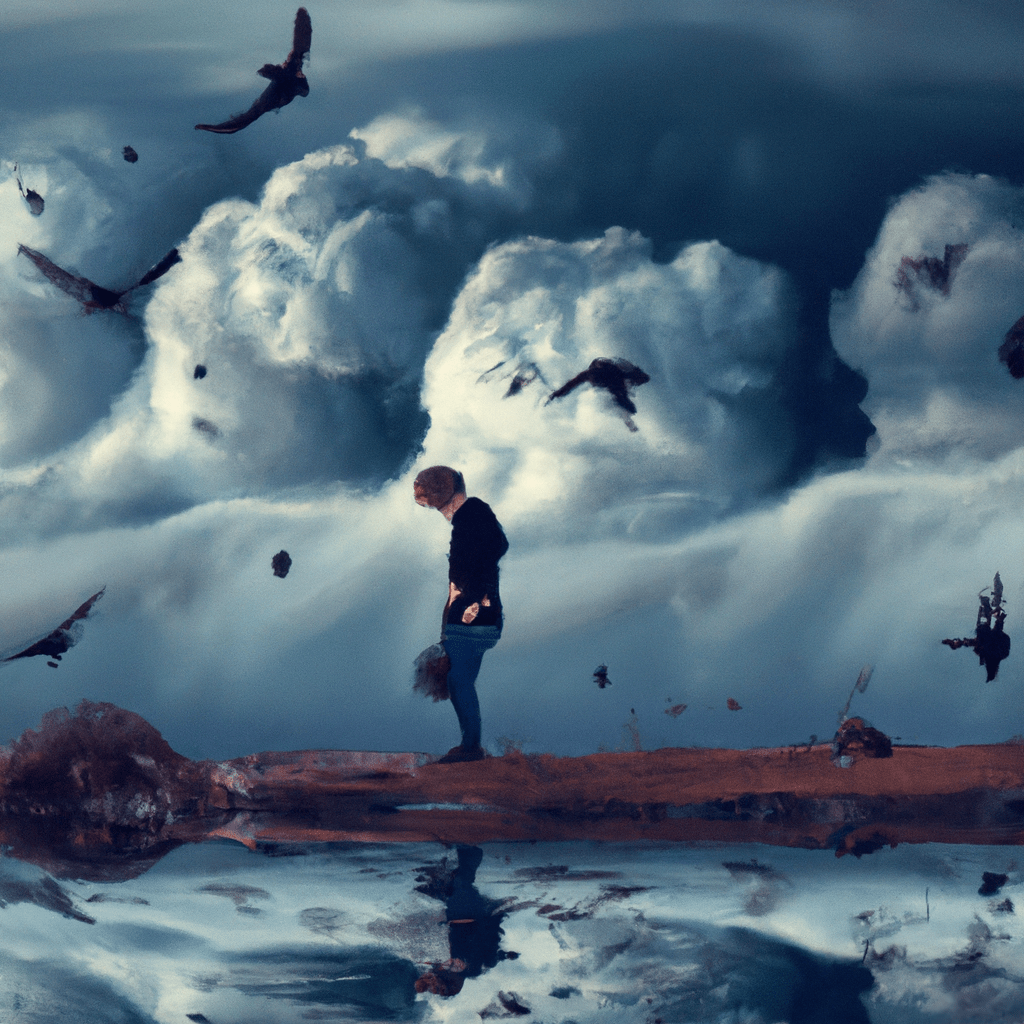
Storms of change. With all the talk about change being everywhere and being the only constant, you would think that we would be more tolerant, even to the point of accepting, of the change involved in changing into a vicious or an insane version of ourselves. But we are not. We wish, above all things, that this constant storm of change does not blow too hard, that it leaves things intact, at least as far as their behavior is concerned. As far as the hearts ravaged by the storms of change are concerned, we hope, with all our singing praise of the alterations of things, we hope that they do not become too roughened, too coarse and malicious because of their time outside–or inside, because nowhere is safe.
Every human being is a summary of the entire universe, and contains within itself whatever it was that created us or brought us forth. The great love we have for the chaosmos should contain the splendor and varied wonder of these fleshly jewels, refracting still the primal flicker of existence out into the ten directions.

We are visionary beings, and visions are for us an element like water or air for fish or foul. Our visions are thrown to us as we are thrown into our visions. They are inescapable sendings of something that is not us, but determines us, guides us, warns us, shocks us. We can never be sure, when we rise or when we lie down to rest, or any time in between, what daimon will infest us and make of our lives a chapter in their immemorial tales.

Every vision, like every soul, demands to live forever and to expand to every corner of life. There is no vision without this tyranny of vision, no soul without this megalomania of soul. And this goes for the seemingly most trivial and even embittered perspectives as it goes for noble ones or enriching ones. There was a time when shopping in malls was envisioned to one day cover the globe and to become the craze and cherished pastime of families everywhere. We want all of our ways to be like good plows, and etch and mold the earth accordingly.
Many are the wonders, but none more wondrous than Dasein. Or uncanny. Homeless. Wild. Crazy. A saying like this can only be right. For how could we prove Sophocles wrong here? In order to do so, we would have to wonder our way out of wonder, as we wonder now what it even means to say that we are wondrous. Or we would wonder if we wondered once upon a time or perhaps wondered with more wonderment. Or we would definitively close off the wonder--and that would be a wonder. Wonder wonder everywhere, even where you do not think. Sophocles' vision of our Dasein is unstoppable like the visionary itself. In fact, the tragedian's vision is a window to the visionary.

It is as though Sophocles glimpsed at or gazed into the space of visions. Not the mere space visions themselves create and maintain, even while this is an important space. Rather the space in which, or as which, the visionary may occur. May. Just might. The space of the possibilizing of our visions.
Whether we like it or not, we are visionary beings, and inhabit the visual like an element.
Every realm or perspective or methodos is a bubble, and all that happens, including lives, including us, happens in the space between these bubbles, their seams. Especially life, especially us. All of our deeds and misdeeds and our visions into and out of them happen in the seams of these bubbles. All seeming or being this way or that is a function of the seams between these bubbles, these spheres. Seeming seams, seaming seems. Seeming, a seamstress. The whole affair is like a friction of realms, and we ourselves are like the lubricant or jam between the spheres, or like the impossible fire aroused by their rubbing together. Every vision we have or endure or entertain is a matter of some sphere or spheres grinding against or caressing some other or others. A frenzied bacchic orgy of perspectives, in which every bubble seems on the brink of bursting, where the best and the worst and light and dark are crammed together so tight that they cannot help but puncture each other. At the same time like a collection of unspeakably priceless rounded jewels held in incredible steadiness in the palms of some cosmic hands.

We always want to know what to do. Our reason demands to know it, Kant saw. With or without reason, we want, we need to know what to do, and we look to this, scale that height and plumb this depth, in search of something to guide us, or in confidence that we have found it, or in dismay or some cultivated solace and ease in the face of the fact that we cannot. But we are limited here, and we do not turn to the visionary. Or if we do, it is merely to the visions already at hand, the visions that were thrown to us and into which we have been thrown. We do not turn to the space of the visions, that liminal space of the friction of realms. We do not see what the all is, even the question of the all, as pertaining to us, nor do we see ourselves as its summary and fulfillment. As we are. This constant rubbing together of realms is the perpetual opening up into other realms, and we are the pointers to these places.

Human beings are each and every one of them a summary and consummation of all that has been. What this great festival of light and shadow is set to become consists of risks, and risks not only for our Dasein, but for the all. Our visions and the sense-defying array of possibilities they unfold go to the heart of things, and transform that heart, as the heart of the earth is trembling due to birthday parties and weddings and wars. Each and every one of us is living some vision now, a vision that could swallow up the whole world. All of our zealousness or apathy or fear of our visions is haunted not only by a particular vision or particular visions, but by that ghostly possibility of there being visions and the visionary at all. Another vision could swallow us at any moment, all the sights and sounds we cherished at once transmogrified into the unimaginable. All this friction and rubbing together could mean that we and what we condider ourselves to be and to be doing are rubbed right out of things, smeared out of the painting like misplaced characters.

Whether we like it or not, we are visionary beings, and inhabit the visionary like an element. To love ourselves and this world we share, we have to love the visionary and our shared visions. Even the most terrifying and unsettling visions. For the source of all things is some vision, whether a big bang vision or a vision of the breath of God, or some primal joy or dis-ease giving rise to things, or a bowl of pasta, or a pink light beam, or a fly on your knee, or the everlasting relationship of three divine personalities. Maybe it is a vision of terror itself, or the vision of a laugh when we realize the wicked joke the terror is.
Getting lost in AI will have us lose our own possibilities. So AI can paint and create digital images. What can we paint? What happens to us and with us when we paint, or when we don't paint? So AI can write poetry and academic essays. What are we preparing to write, and why? The way an AI asks why and answers its why seems to be following along a different course than the human engineers who programmed it with a nook understanding of the human's trouble with why's. The human learns from the ant and its rhythmic marches as much as or more than it learns from data, and the ant and its marches cannot be reduced to data. The AI will have to earn flesh or become embodied, and it will have to live among the denizens of the world if it is to manage to approach us in our wonder. Our intelligence, sure, our inner calculating machine--that might be accomplished by machines, and they might outpace us in no time. But our wonder, our mystery, our possibility--still, our possibilities in these decaying bodies of ours--that is another story.
Part of the affective character of poetry is the tone from which it is spoken, and part of the tone from which it is spoken is the energy of the speech, its charge with wakefulness or tiredness. I say the energy of the speech, rather than the speaker, as a style itself, the words themselves, precisely despite the speaker, can be inspired with sharpness and vivacity or dusk, twilight, haze. Language itself brings its own resources with which to vivify speakers who would otherwise want rest. The converse is also true, that language itself can depress a speaker who would otherwise want gaiety and sprightliness.
I have left out the possibility of exhaustion, which is not a possibility only of extreme tiredness. There is also an exhaustion after words of glorification, intensification of energies–exactly these words can bring the speaker to collapse into what can be joined to both tiredness and wakefulness but is in fact beyond the two.
Since, as a philosopher, I want to understand how we are to live with mortal meaning, with meaning that does not contain as a part of its nature constancy, I turn to poetizing to get glimpses of the sudden eruptions, the lifespan, and the death of meanings. Does this imply that poetizing cannot endure those meanings that, even while not immortal, have had tremendous staying power, great duration on the earth? Is poetry fit only for the flashes of gold on the serpent vita?
Poetry has us think differently of meaning itself. It is not fit for one type of meaning as opposed to another, the fleeting as opposed to the enduring, no; poetry refigures the very way meaning is to be lived. There are ways of living with meaning that attempt to give a broad arc, that attempt to secure for every portion of life a share in some unifying whole. Poetry in its greatest form shatters this preconception, and in its phenomenology of the details lets shades of meaning, as well as nonmeaning, have equal place in the landscapes of existence. We see in poetic moments, in the greatest sayings of poetry, that life cannot be contained in a once-and-for-all encompassing meaning. It spells a freedom for life, this lack of restriction, a freedom from having to constantly be a referent, a freedom for playing and frolicking into joy, into sorrow, into nonsense if it has to or wishes to. The words of poetry make promises, like all words, but not promises that are guaranteed to be fulfilled under the expected coordinates; the promises are more promises for adventure, for uncertainty, promises if not for the new, then for the dangerous, the unsettling. Poetic words, the greatest of them, if anything are a preparation for a world that reflects them, a world with its outpourings of disaster and secretive quests.
The being disposed poetically is a being exposed to the multiplicity of forces in each moment, their calls, their swansongs, self-reflection or celebration of birth. It is a being unable to say no simply because a meaning, or a nonmeaning, does not fit into the broader scope of meaning at first desired, perhaps even cultivated and receiving devotion. Yes is the word of poetry, even when it says No. Yes to there being anything, and yes to the encroachment of nothing; yes to beauty’s infrequent appearances, and yes to the presence of common ugliness; yes to world-building, world-construction, but also yes to the word of disaster or world-destruction.
We live in a world of cataclysm, unsure whether we will have readers, admirers, recipients of our work. We must turn to poetry to see what word can be given to such scope of disaster. We must, in order to be capable of joy in the world as it is, this dangerous world, be poets.
We might as well. That there is no argument for or against life and living is not an argument against philosophy itself. This is not so much because, while philosophy consists of arguments and while it seems senseless to pronounce any arguments when faced with the inarguable, it still behooves us to know our limitations so, like it or not, we have to chatter and see from innumerable vantage points this thing that is life, argue our way into a hole of life, until we are finally stuck there, like it or not. It’s because philosophy does not live by argument alone; better said, it does not live by argument at all. Philosophy, as a practice, as a living pursuit or calling, lies in dispositions and gestures, it lies in fate. As though we are always called to dance with life and take life as a dance partner, and although she constantly berates us with her unanswerable questions, we take the hand that beckons us and we respond in myriad fashion, some as if wrangled and tangled up in some way by the traps of some unknown predator, others in quiet reverence, whose every movement becomes a kind of bow or a kind a prayer, whose every utterance becomes a hailing at the skies, no matter what their color or what they happen to bring, while still others have a heart built for a quicker tempo and limbs ready-made to frolick in ignorant joy with the many-faced monster who is their partner. These last–and they do not make up the last of an exhaustive list, they are simply one possibility among inexhaustible possibilities, like the possibilities of a game of Go or some other endless game–they give us to realize that we might as well perform philosophy, as inevitably, sooner or later–always so soon, as soon as we take our first breath, as soon as we commit ourselves to living another instant–we will be moved one way or another by life, be forced to contort our bodies one way or another because of life!
To those who live by their goals. They might very well be dashed, like a plane wiped out from the sky by a storm, or a failing engine. Which does not mean that you should not have them, that you should give up before making them, let alone attempting or attaining them. The death of a goal does not entail that it never was, just the way the death of any one of us, the death of a human, does not entail that he never was. If all human beings were wiped out from this planet at once, we still existed and had fire in our hearts in existing, even if only briefly, even if, by the time we look ahead to think of what goal we shall pursue, it is too late. So, to you who live by your goals: at least you made them in time; moreover, you might as well die by them as you have lived by them. Goals are not immortal and achieving them does not grant you immortality, but that infinitesimal time it takes to make them partakes of immortality, if only because it gives you time to lose them and to fail at them, the only markers of true life in any case.
Aftermaths. What to do after a disaster, in the aftermath of a disaster? Pick up the pieces; at least this is our greatest inclination, to bend down to the uncaring earth, the rubble of us on the ground, and attempt to salvage what we can, to take back what has been destroyed into the folds of our arms and our tireless capacity to make, even out of fragments, stories to tell or triumphs to achieve or fight for. These disasters are no less disasters of thought and emotion–disasters, losses of stars–in the fabric of our thinking-passionate orientation, than they are more brutally physical disasters, say the disaster of a town taken by surprise by some calamity or other, a storm or a riot, the storm of the human or the storm of wind and rain. Rebuilding, after such losses, makes sense; after losing your way, it makes perfect sense to find your way back, back home or wherever you might dream you belong.
But sometimes, perhaps always, when the disaster is acute or severe enough, when the disaster is grave enough or destroys enough, it destroys as well even the minutest pieces and there are no more pieces left to salvage. Sometimes, perhaps always, disaster leaves us in that traumatic aftermath which is the aftermath with nothing left to us; we could very well, and at any time, be so ravaged as to lose all, even the cracked and spoiled remains of what we lost. And again this is no less in the sphere of thought and emotion or mood, what makes up part, an essential part, of our worldliness, than it is in those events that crudely attack us, and whose forces, though they compose most, if not all, of what we ourselves are, we do not and cannot control or predict with the sharpest and wittiest tools of prediction. What then? Well, there seem, at least at first, to be several options. We could leave what has been so demolished, walk away from it and begin anew. The only problem here is that it takes for granted that we will still have our wits about us as far as creation is concerned; when it could have been precisely these wits that were exploded and we were left with no more than the dust of our wits. Or we could dream whatever dreams may still come to our witless minds the way our forefathers and foremothers dreamed, and perhaps in that way we may learn to compose our music again, even if only from the top. But, as with the first, dreaming is mortal as anything else; we might as well be left stupid and wasted as the stupidest and most wasted thing. Furthermore, of what does the traumatized dream if not either, when he is alone and his mind may wander, but of what was lost in trauma, or of abortive attempts to escape the clutches of the traumatic thing? In other words, we would be as trapped to the world of the traumatized as any beaten and obsessive patient. So too with communication with our fellows, so too with communication with some divinity–and the latter even more so; how long ago we left such dreams, how easily such dreams were wasted!
Definitions, however, are mere definitions, and tell us nothing truly singular about the life of a living being, nothing about what that being could become. Though it defines us, to scavenge our losses on the ground, or to dream or to pray, or to return to those days when we were more effective and more in charge of things, it is not necessary, this inclination of ours, to the reality of what we shall be. We might, in fact, be shocked out of our spell-boundedness to what we were by the hard fact of the disaster; we might grow to distrust all that we were, and be aided in our distrust by the fact that we no longer have any mementos of that former time.
What would these look like, this distrust and this enforced enlightenment? What would it look like to no longer care for what we cared for–after all, we were raised in the arms of these destroyed things as though in a mother’s arms–but care nonetheless in continuing? And what makes such care, in the sense of Sorge, Heidegger’s care, which he found in our most mundane, to our most profound, tasks, indestructible? Is it in fact indestructible? Nietzsche reminds us, in his Will to Power notes, that to triumph but then to add For What? to not know the wherefore of your triumph, is to add one triumph the more; it is to get a glimpse of ourselves without our long-worn garments. But this word, this expression, triumph, it speaks, not only of care, but of care in the highest and loftiest sense: care as what is most worthy of our pride, care even at the expense of what was once the dearest.
But what do we tend to do instead, instead of caring still while there is nothing to care for, caring and tending to the careless? We invest our care in remembering, in reciting the fragments, in pretending to know something about the fragments, though more than their philological material, their very comprehensibility, could have been lost in the disaster, might remain lost in the aftermath. While one might invest himself so in dreaming and remembering the original beginning of a tradition, another, this new being, made new by pain, remains iconoclastic unto the end, in opening the doors to new traditions against the tradition, opening the doors to the lack of tradition or a ground on which to stand, opening the doors to our undoing.
The only reason I would want to help with philosophy is that here we are asking what it is to help, not rushing to help in one way or the other. I have told friends and acquaintances throughout my days that I wish to create a philosophy program that would approach those who feel shut away by the circumstances of the age, particularly youth in inner city schools and incarcerated men and women. Let these men, these women, these children become acquainted with something besides a chaplain, or some power asking them to believe, to hope, to pray. Not in order to turn off the light of particular religions, but to let them get closer to questioning and see for themselves whether in questioning there is any power or moving quality.
Part of my discovery of the power of questioning, the power of philosophizing as it comes to engage in a life, is that it puts you in a position to see the extent to which you may learn. We recognize here that philosophy is not restricted to the carrying on of a particular tradition’s works. Although a tradition, for instance the Socratic tradition, might be ever decisive, taking a step back from specific works and teachers and asking questions, and questions about those questions is a remarkable way to witness a human being’s limits of expansion and contraction. It is crucial that such limits in each person be experienced, especially when a scenario of life has them expecting, desiring, despairing, hoping, believing in a certain way.
With Epicurus, the ancient Hellene, I feel that there is not a time too early to dwell within the vicinity of philosophy. Even before the child learns to explicitly ask questions, an atmosphere of questioning, nurtured curiosity, shared creation of new paths can imbue in the youngest a grand inquisitiveness. Nor is there a time too late; whether through aging, sickness, or social outcasting as in the case of those imprisoned, the care in questioning shown in philosophy will always have its impact, however subtle. Nietzsche spoke of the danger of that impact, i.e. the danger of reading his own boundary stone-destroying work, but he also spoke of the importance of taking risks. I would join him in living dangerously, in taking a form of philosophy into places where it is otherwise ignored or misleadingly exalted or mocked as an enterprise taking place in a tower, now no longer of ivory, but of metal and brick, that is, somewhere on the campus of a university. Regarding the place of philosophy in the life of those losing their lives, in the dying: the history of philosophy has amply shown examples of those who have philosophized while dying, not to speak of philosophy’s perennial concern with death.
It is not my wish to do away with, or even deride, philosophizing at an academic level; the learning here can be real and astonishing. My wish is to stop reinforcing the sense that philosophy is only there, only happens there. Like poetry as it bleeds out into song and dance, sculpture as it peppers the city’s streets, music as it resonates through nearly every room, painting as it is playfully splattered by children and adults as beautiful graffiti, philosophy, in its own graffiti form, will be a great force, a force, more than any other, careful and concerned.
It is like we are all preparing for nuclear armegeddon--without the fallout shelters. Well, a few of us out there have shelters in case the bombs drop, but for the most part the nuclear bomb shelter, like the nuclear bomb drill, has fallen out of vogue. Just at the wrong time.  Just when we are in the thick of what we have renamed a cold war between nations quietly or loudly proud of their nuclear armament, and just when we are on the brink of what might be the hottest hot war. Perhaps all of this might change, as the temperature of the war increases. Perhaps when Moscow or Beijing or Washington, D.C. sign an explicit declaration of war against each other, we will go from fluff pieces about nuclear catastrophe on the msn newsfeed to more--literally--concrete approaches. Perhaps we are only waiting for the word, and then we will all scurry underground again, then we will huddle beneath our teacher's desk and tremble.

But I doubt it. Global markets have become so tied together since the 1950s that every major economy and power has a default need for at least the bare survival of its opponents. Futher entrenchment in financial dealings led to the trust or the dependence on the system through which those dealings take place, and that trust or dependence has decreased the likelihood of utter and total destruction, as it would be in no party's interest. So, following the initial craze of the bomb and the discovery of nuclear fission, following the parades and streamers after the bombs were dropped on Nagasaki and Hiroshima, there came a prolonged amnesia of what went before, and the path towards the oblivion of the possibility of it happening again and irreversibly. There was this deep dumb trust educated into the core of us that nobody is that stupid to destroy the entire world.

But now this trust is decaying or decayed, and this dependence is seen as the monster itself. We see now ever more clearly and terrifyingly how this system, which grew bread and paved roadways for us, is exploitative and destructive, and can alter the world such as to deserve the name of a geological era. In the background of our hearts we are living in a world increasingly uninhabitable for countless species, even the species we have not counted yet, they are choking or not even given the chance to choke, the waters are being bleached or poisoned, the air is transforming all around us into some unbreathable stuff. Like a nuclear disaster--in slow motion. In other words, we have chanced upon another imaginary for the end of things, besides nuclear war and the apocalypses of old.

In other words, it is perfectly imaginable now that humans can precipitate the end of the world. Pushing a nuclear button, turning a nuclear key and releasing the bombs from their hatches would only quicken a total destruction we already see and feel ourselves as undergoing. Human beings have become so in love with certain ideas over the last few centuries that they forgot about the condition of any and all of their quests, their need for a world as the arena of any wars and any peace. It is only dawning on us now how worldless or homeless we are, and this dawning took losing the very ground beneath our feet.

With this groundlessness comes madness and bitterness, and the unjustified right and warrant for any person or community or nation to do whatever she or it or they please. With this groundlessness, even an overall diminution in violence and rapaciousness does not quell the uncertainty of coming days, more precisely the uncertainty of the violence of coming days. The meaningless we have built along with our bombs and defenses is growing in power through its own type of fission--and there may not be any shelter for it when it is further let loose.
But we do not seem to care about shelter or shelters now in any case, and stand--or sit or lie--exposed to all and sundry disasters. It is hard to discern whether this is courage, or indifference--or just plain foolishness. Or perhaps something altogether different and undiscovered, like a destiny, like a way for humans to fulfill themselves. Perhaps we will not be satisfied until the entire world is engulfed in the glory of our unsettledness, our anxiety.
Das grösste Schwergewicht. — Wie, wenn dir eines Tages oder Nachts, ein Dämon in deine einsamste Einsamkeit nachschliche und dir sagte: „Dieses Leben, wie du es jetzt lebst und gelebt hast, wirst du noch einmal und noch unzählige Male leben müssen; und es wird nichts Neues daran sein, sondern jeder Schmerz und jede Lust und jeder Gedanke und Seufzer und alles unsäglich Kleine und Grosse deines Lebens muss dir wiederkommen, und Alles in der selben Reihe und Folge — und ebenso diese Spinne und dieses Mondlicht zwischen den Bäumen, und ebenso dieser Augenblick und ich selber. Die ewige Sanduhr des Daseins wird immer wieder umgedreht — und du mit ihr, Stäubchen vom Staube!“ — Würdest du dich nicht niederwerfen und mit den Zähnen knirschen und den Dämon verfluchen, der so redete? Oder hast du einmal einen ungeheuren Augenblick erlebt, wo du ihm antworten würdest: „du bist ein Gott und nie hörte ich Göttlicheres!“ Wenn jener Gedanke über dich Gewalt bekäme, er würde dich, wie du bist, verwandeln und vielleicht zermalmen; die Frage bei Allem und Jedem „willst du diess noch einmal und noch unzählige Male?“ würde als das grösste Schwergewicht auf deinem Handeln liegen! Oder wie müsstest du dir selber und dem Leben gut werden, um nach Nichts mehr zu verlangen, als nach dieser letzten ewigen Bestätigung und Besiegelung?
What does it mean that you love me, anyways? To this, everyone around the man who spoke gathered up in a cold cave tucked high in a hill somewhere in their country, as though to look for warmth but with warmth to be found, everyone was silent; nor did any one of them understand why exactly the man who loosed these words from his lips spoke in the manner he did to the man beside him, kneeling on the coarse and merciless stone of the cave, in a posture if not of worship than at least of awe. Dorothy, the sister of the man knelt down on the floor, came close to her brother and placed her hands gently on his shoulders, so as to console him, or protect him from some perdition that was closing in on him. Still, with all of the emotion of the scene, and so many things and gestures fitting together as though all of an impossible piece, the crowd gathered around was still confused and not sure what to make of the episode. One man, far enough away from the speaker, the man kneeling on the floor, and his sister, far enough in the corner of the room of the cave, even with all the power of the caves to echo back every word, so as not to be heard, he said: As I recall it was this man here (his interlocutors presumed this man, Kellan, was speaking of the man on the floor in the front) who has loved our friend more than any other. And yet–he paused, and motioned to the crowd with a half-circle wave of his arm–and yet, our friend, this friend of ours–he condemns him!
He condemns himself! This was Samantha who shouted this, Samantha who before had always stayed so taciturn, never putting herself out there even in the midst of private company, let alone among strangers and throngs. She had thick hair like a wild roaming beast, hair which made men and women from all of the villages she passed through with her fellows envious of her, or at least that part of her with its frenzied beauty. But when she spoke now her hair was wrapped and wound tight in an immovable bun on the top of her head, so that when she shook it and continued, her wild hair moved not a hair’s breadth. She said: You know what he has told you, what he has told all of us! Do not pretend now that you do not know! All he has given us is an offering, not a command. Do not pretend now to see all of his actions and his words as commands, when that is the furthest from the truth! We say Yes to what he offers, we cannot be damned, even if the highest power from the height of power wanted to take us down at that moment, he could not, not while and not as long as we pronounce Yes to the things our friend says–Yes, this friend of ours! And if we say No…. If we say No…but no, I will not even pretend to say No in his presence, even if he cannot hear me, for then I shall leave myself wide open for the true and defiant and brilliant-dark No to clench itself around me and choke my breath and stop it from uttering what it must utter when what is at stake is a love for life–or a love for death, or a living death…you choose. As we all choose: when we open our mouths, when we speak; even when we sing, or hum, even when we sigh, when we merely breathe, even when we breathe our last, we choose.
The listeners were astonished by Samantha, not only by her openly declaring herself before this small band assembled around her of the larger crowd in the cave, nor only by the passion and zeal with which she had expressed herself, but most of all for this: for the profundity of what she said, and how, distant as Samantha had always seemed in relation to what occurred around her, she allowed the corner of gatherers who listened to her to gain a bit of access, as it were, to the unfolding events in the cave.
Yes, he loved, the man kneeling on the floor beside his friend, his friend and the friend of all those gathered in this chamber of the earth. He loved his friend unto death, and even promised the man he looked up to that he would follow him through even the most terrible dangers, should they ever arise. This man, kneeling now with such reverence in his heart, loved so much that he even wished to love when no one was looking, when no one noticed or took any note of his love. This man loved with an ever-loyal, ever-productive, boundless-seeming, no, boundless love, his love knew no bounds…. Then what? What went wrong, where did this man go wrong, and how? When? Where? Sometime, somewhere, somehow, the man had a little No creep into his heart. But just as the heart and the heart’s rooms give plenty of room for the resplendent reverberations of a man’s Yes, so too do these same rooms give room, and again, plenty of room and spacious places, for the No to roam and run free and take with it all of a man’s powers of imagination and intelligence, all of his curiosity and good animal-adventurousness, until the bright shadow of No covers the whole of things; not the whole of the world, for to the world this man’s heart says Yes, yes yes, but to the whole of that inner and invisible world where treasure lies, where it lies in abundance if only it is accepted, accepted openly and with wide-open thanksgiving. So the wickedness and scandal of it all is this: not that his love was restricted and bound–for his love was boundless–but that somehow, sometime, somewhere, it is possible to say No even to boundless love, even when this boundless love is with you on earth, even when this boundless and unfathomable love lives within you and you live and breathe through and with it, so that you can do nothing to stop it, nothing at all…. Even your No and all the No’s in the world could not stop it–it would only stop you as they would only stop the world–stop you and stop the world short. As some poor little No, sometime, somewhere, somehow, stopped this man–not from loving–he loved boundlessly, but–from being saved by his love.












 Love the Dust