Scentless Stories

He was always there, the storyteller in the hallway. He’d stop you before you could make it to your apartment to tell you of a time when flowers grew. If your kids were with you, it was even more painful than it was already for you, since the kids had virtually no idea what a flower was. There were all sorts of holograms, even scented versions of them, but the kids would never understand a flower. A flower. It was immense, every time, hearing his little tale about the petals, the stamen, the way they would move in the breeze and the way their scent would waft in that same breeze. He never failed, too, to make you cry with the way he described a flower’s wilting. You imagined that with the fading of that single daisy, after its quiet war with the elements, that all flowers would melt away and be gone for good. Well…they did, and they are, but not because of that daisy. At least we don’t think so.

The Torn Canopy

The rains devoured us
Unsated waters fated for us
No higher ground existed
From which we were not overpowered
By the tyrannical wetness

Once such a holy thing
Now it downpours
With unholy consistency
Upon our moist hearts
Unable to regret this

Undeserved fault of ours
For which there is no clemency
The precipitate heavy drops
So quickly now eating the land
And us and the contours of things.

Lamenting before restless sleep

I am tired of war. The war. Any war. The senselessness of war. That we cannot do anything about it. Or do not. That cannot and do not feel the same in the case of war. We hear about so much money devoted to the insanity of war when the cold sanity of starving is taking people from us before we can fight them. There is death all around, but to say their names would take us years, into the next war or into the next several wars, and their names would become endless. One long groaning name in every language. That you cannot say anything about war without becoming somehow criminal, somehow implicated. So many of us are killed by war without even going into the ranks, without our cities being demolished, without a scratch on us. We are killed by living drenched in senselessness. And not an exploratory senselessness, the kind you hope remains in life, but an oppressive senselessness that crushes our decency with ease, like a boot on a beetle. We lose, we lose, we all lose in war, and first we lose the gentlest things, the roughest things last. We are all made into rough-hewn versions of ourselves, even as we wave the colors of the war-ravaged with tears in our eyes, even when we decry war and all things warlike with agony tearing through us. We lose the ability to talk with any sense about anything at all while a war is going on. The television sets and the internet streams move on to more strategic outlines of the war when the emotional footage of refugees and war crimes no longer gets the views. We argue with our friends and neighbors about the ins and outs of it all, before we have our breakfast or after we have finished a day’s work. The sun shines on the hell of it all the way it would on a festival, and storms drench it or crash into it the way they would for any festival. You would hope the sun would grow tired of being so wrong and so often about the purpose of its rising. But the sun is indefatigable. Tireless like war. At least it seems that way to me, who is tired not only of the war but especially of the war, of war and all wars, and whose tiredness is as extreme as the sun’s newfound and deranged heat.

Against the death of philosophy

Against the death of philosophy.  Philosophy has surely changed for its practitioners throughout its history.  This is philosophy whether as practiced in the West or in the East, or anywhere for that matter, anywhere where there are changeable humans and changeable philosophers at the ground of the inquiries and passions that make up the lifeblood of the enterprise.  We philosophers today, at the beginning of the third millennium, must contend not only with the host of contradictory methods towards and proposals for what constitutes the world or what drives and moves our lives, but must deal too with changes in the charge of the atmosphere itself, questions about what use philosophy has in a world obsessed with usefulness, or what grandeur there could be in the useless, what connection there is between philosophy as a way of life and the other transfigurations of our lives happening as a consequence of being timely beings, say our connectedness now to peoples around the planet through internet and satellite technology, or how to practice philosophy, and to what avail, when the dominant attunement or mood of our age is boredom with all things, boredom at the ground, not least with our once high-flying aspirations to know or to grow into more confidence in our ignorance, what philosophy has to say, if anything, along with religion and science and the arts, about our–likely, more and more likely–extinction, and other such monumental considerations.

            But we don’t give up our task for all that.  Philosophy does not die for all that. It would be a mistake to say that we are tireless in never giving up; it might rather be closer to the mark to say that tiredness itself could turn into, perhaps has already turned into, a ground for philosophizing, our growing tired or being tired with all the challenges and our being called to confront them while at the same time never being able to keep up with them, our being forced to play, as it were, a lose-lose game with fits of delusion and make-believe during its quarter-breaks and halftimes.   It follows us wherever we go, this mistress or mister of ours, and those who speak rashly about the death of philosophy forget the tenacity with which we cling to whatever has already hooked us.  Now we are caught in the stream and on the hook, and we will travel where the waters go, from stream to calm pond, from pond again to creek and river, from the river, to the ocean, the monster, and we will have to go that way, like it or not, even if we can no longer recognize that which lures us.

It is a certain faith we have in life…

It is a certain faith we have in life, no matter the circumstances. There is no hope in life, and hope may be drained to the dregs. Still, this hopeless hope of our faith lasts, has lasting power--due to some insanity.

Perhaps it is the insanity of surviving. Our ancestors have had to tell themselves endless yarns just to meet the dawn the next day. The next day could be terrible, unbearable without a good yarn.

It is a faith that the whole of things is somehow held, somehow suspended, in the arms of a sort of grace, a sort of uncontrollable love, an impersonal personality, an affection of dust and light and shadow.

That you may tell lies to your friends and neighbors, and they will all echo and resound into an ear that you wish you did not have. That you may lay out all of your truths, and they are mashed and mushed together like slop.

Faith that all the buildings will crumble and there will not be a hovel left for shelter. Faith that the final word will be a word urging us to remember something, when the entirety of our lives has been spent forgetting. Faith that we are forgetting the most important things as we speak.

Something tells me that these human beings and I will meet one day and frolic and make love and give one another all of our secrets, that the exposure will be blinding, and that the negative of us will be etched on every wall of the existing world.

That their hands will reach out to mine from the other shore of the swirling mess, that they will make all manner of promises to me, that I will believe them and follow them to the ends of every exoplanet, that I will fall in love with them and fall into pits and hells on account of them, that I will turn away from them and turn back to them all in the same life.

Not worried about hell or heaven even if they come, not worried about them even if they come to your poor grandmother, who only tried to love no matter how many times she failed at loving, not worried since they will be real if they are real, and the real is not to be worried over, the real is to be relished and adored, and is to confound us.

Faith in the surreal manifestations of the godhead, like in a pile of waste or dust, or in a beer can or the filthiest toilet. Prayers like stuttering speeches in dark alleyways, moonlight all around but unable to reach into the cracks. Faith sometimes in the instant that changes everything, faith included.

Faith in faithlessness, a faithless faith worshiping a powerless power, dust of faith for the dust of this world. Understanding not an iota of it but still persisting, persisting in the gloom, persisting in the lack of gloom, persisting some lucky or who-knows-what times in a positive joy that you breathe, or think you breathe, that the sun is on your face and the winds blow across that face, or you think they do.

I fall in love with these faithful beings, for whom life is already loveable dust running through their loveable fingers. It is like they make music with uninstrumental and unmusical things, like the world finds voices and sings choruses simply because these beings have joined in the festivities, festivities the world did not even know it was going to have.

Faith too that the decay of our minds and hearts has something to it, and not only something to bemoan. Faith in the coming and lordship of gracelessness, in the irony of our best attempts, in the strange faces your friends, and foes and strangers too, make at you when you tell them that you believe in them and believe in this world we share.

It was a moment that mattered

It was a moment that mattered
Shavings of an instant
Purchased at no small price

Kept away and hidden
From goblins of time that try
To "make the best" of every moment

Before the moment is
A haunted spiral, porous
Everywhere it does not count

Dubious revolutions
The turnings of the hours
When life's span slurps them

Momentous metamorphosis
When time's delay is everything
To a timely being

One moment enfolded
The mattering's gone
Maddening metempsychosis

Flattening layers of time
To the slit between eyelids
Suspended in blinking

Moment the erasure
Of time before and time after
Moment the sudden forgetfulness

Tied to flimsy posts
Of ingenious imagination
Thinking it is going somewhere.

Moksha

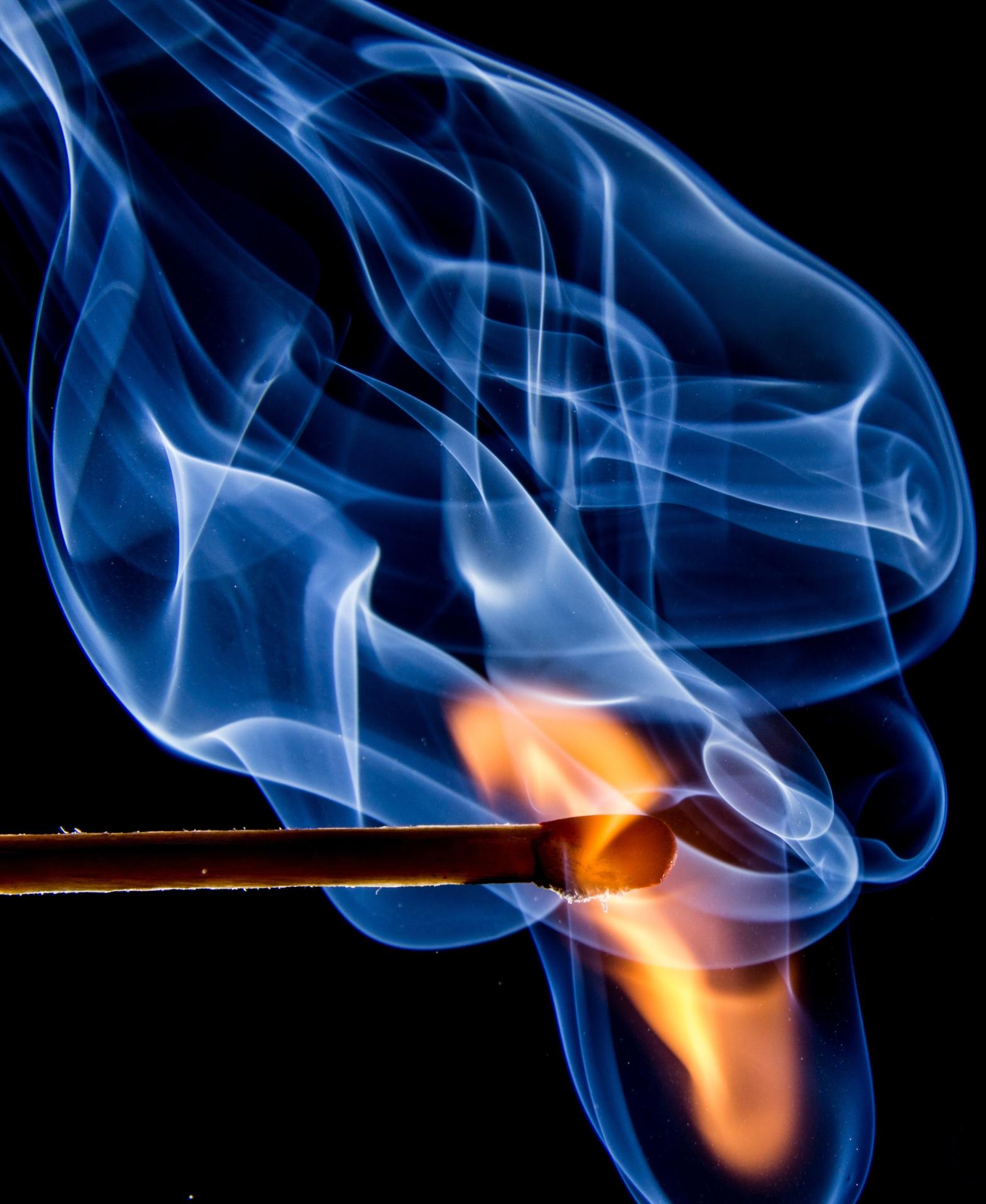
There was only one candle left in the house, but not one solid wall left so that a fierce wind blew through every hall of the house. Still, he had to see, he had to find what he was seeking. So he tried to light the candle with the last four matches he could find with his blind hands. One two three they failed one after the other, so that he was left with one match in the wind with his one candle. Then the air grew still like grace, the only wind left was his breathing. He looked all around him even though he could not see a thing, thanking the blankness for its bestowal of stillness. He took out his last match all full of confidence now, breathing steadily as he took it from the box, but slowing his breathing, then stopping his breathing as he swiped the stick along the sand. He would never be sure whether the flame that blossomed in his hand was a real flame or only the flickering flame of his imagination, so quickly was it extinguished. Only this time extinguished by breathlessness. He stood in the darkness and stopped all of his groping, stood in the darkness in equal parts wonder and dismay.

Dragon

My grandmother kept the last living python in her room. She named the animal Dragon.
Dragon, she would whisper to it, and the snake would slide over to her over the old carpet.
The snake would poke her tenderly when he arrived with the fork he kept in his mouth. Grandma didn't seem to care that the world around her was losing its ground and its groundedness.
She talked to that snake on and on, and Dragon seemed to have a curve and a bend for all of her queries.
This snake loved to get wet, and my grandmother would always smile when Dragon took a bath. She thought I named him right.
For dragons are traditionally creatures of water and air, and snakes--at least for grandma and her desperate heart--are more than fairy tales.

No Sequel

There will be no sequel to this movie
Not because the movie was bad
Or because it was so good as to require no sequel
But because all of the movie theaters are shuttered
Most of them are uneventful bricks and boulders
Beneath uneventful cosmic windings
Because all the seats are gone and there are
No more human beings to fill the seats
Because the world ended like a movie
Nobody had the chance to see
Like any story must, seen or unseen
Heard, or unheard.

Too Late…?

I am afraid that it is too late for us. When I speak to friends about the state of things, it seems they are all of a mind that it is too late, too late for everything but living your life to the fullest, despite all the terrifying emptiness. Too late for everything but charging at windmills and fighting windmills, though now they are windmills everybody sees, the absurdities surrounding us all, chopping the sky itself into bits.

Too late for spirit, definitely too late for spirit. The last philosophical attempts to name spirit, Nietzsche’s and Hegel’s, have been consumed by one ghastly and vast mechanism and subsumed under it. The apparatus of technological capitalism has hijacked every known human endeavor. Its ways are so captivating that we cannot conceive of an escape. Every escape we can possibly conceive has to make use of the very mechanisms we hope to thwart. All of our labors now are labors for data and capital and data as capital and vice versa, all stored somewhere for the future use of a few with a vision hidden yet still known to us for its crudeness and its brutality. We still have to shake paws with fat cats to buy our communes, we still have to use emojis and memes to start the revolution, we still have to give those cats the feeling, the certainty, that they are winning even when we are trying with our might to make them lose and to sabotage the game.

Too late to believe. To believe in belief, as a dream of a philosopher once prophesied about our age. Now it is either knowledge or ignorance, or ignorant knowledge or knowing ignorance, but not belief. What we believe now is easily seen as but another form of ignorance, or easily passed off as but another claim to knowledge. It is too late for us now to believe in that ambiguous zone where some magic occurs, where we are neither ignorant nor knowing but where life happens. Beliefs now are replaceable and laughable things, and they no longer guide us, let alone serve as the wellspring for our creation and destruction. Now we simply charge ahead because we have to, empty-headed and usually fearful, and we are content to simply get by. There need not be any special glory or shining to life. But when belief occurs, it opens up another time, the time of the playing- and spinning-out of that belief. The reactivation of our ability to believe is the only way we will ever catch up with ourselves. For with that faith, as it is faith, it is never too late. For what matters a time, Zarathustra asked–rhetorically–in which it is “too late” for Zarathustra?

No stopping poetry

No stopping poetry. Poets so often behave as though they are merely responding to a world, whether a hellish one or a heavenly one or some dull miracle in between. While actually poets are creators of worlds themselves into which others are thrusted, in which others have to live, to which others then have to respond. Poets may claim and feign to live in these worlds, but more often than not they have already passed by these worlds for altogether other otherworlds. The might as well as the smallness of poetry is its constant transcending of worlds. Any flit of the imagination can become a world, from giant multicolored canopies to specks of dust. With poetry, worldlessness itself can become a world and we might dwell there for eons. There are always greater worlds and smaller worlds, worlds beyond worlds and worlds within worlds, and there is no stopping poetry from–impossibly–visiting them all.

Dawning

When green returned to the trees
We had a short-lived hope
That we were doing something right.

When we saw a few more birds in the sky
Their songs a bit richer with song
We sang along with our own praises.

When the water flowed
And we could see through it again
When it was water and not sludge, we smiled.

When we went one full year
Without the sky presenting fabulous
Cancerous colors, we relished the triumph.

But we were wrong, and too early to celebrate.
The earth was only being kind to us
The way a mother is before sharing hard news.

On the stature of human consciousness.

On the stature of human consciousness.  Human consciousness is not that special.  It’s not that, compared to other consciousnesses, say the consciousness of a bat, or a pig, or a whale or dolphin, the human being comes up short; it is precisely because we cannot compare our consciousness to other consciousnesses, because when we look at them we look dumbly, without any sense of what lies behind their fur or the rubber of their skin, what’s going on in that cranium of theirs, that the human being shouldn’t think too highly of itself.  It would be something if, as easily as we are able to open a book or peer inside the layers of the ground beneath our feet, we were able to catch a glimpse, or more than a glimpse, of other creatures’ thoughts and emotions.  Perhaps we are approaching this capability with advances in neuroscience and ethology?  Perhaps after eons of being locked up in our own world, a human world, we will at last open ourselves up to the worlds around us, and we may practice a more–deserved presumption.  Until then, modesty is the best policy, the only way in which we may approach the terror and mystery, the abundant questionability, of the world with any honesty.

The Second Part of Endlessness

Symbol of the times: that nobody cared, that everybody erased from their heads, no less than their hearts, the question of meaning.  Someone said 

Things are becoming disjointed....   There is 

No more standard.  He was right, but he wasn’t right 
The way he sauntered away from me, all perky and seemingly with good cheer.  To not resent the man 

It was impossible.  Still, he taught me a thing or two about the times: that it is deteriorating, the decay 

Is coming quick, that there is no reversing 
The trouble inherent in living as a strange being, 
Being stranger than the strangest thing, 
That when we tell the story to our posterity 
They will laugh at us with solemn laughter. 

That there will be a saint of a woman who will cry all the same for the world, that the world will not listen to her despite her tears and lamentations, that she will be decried as a madwoman with mad complaints. 

You believed it because you had to believe; because there was no option but to believe in the erasure of belief.  Everything has become 

Disjointed for no other reason than reason itself, 
Its demands have grown weary of themselves, 
Ate themselves up alive, so that the only thing that survived were a few slender remnants of human and biological prosperity: 

Bipedal form to stand up tall and look out at the distance; 
Sharp eyes for that distance too, eyes that could discern 
Minutest detail and degrees of difference of qualities 
Unseen by fellow creatures; 
Uncreaturely creation of meaning and surprise 
From out of the cranium like yarn 
From a spinning wheel; 
Slit of the mouth opening wide, showing the teeth 
Or staying slit and grinning like stupidity itself 
At the lack of a course to take 
Through the mossy paths of history; 
Fingers that point or fingers that play unanchored notes 
On the piano of time, bowing before the show is done, 
Tilting the ears, those precious holes 
Towards the empty auditorium 
Where no one is applauding, 
The seats are empty, all of them, not a ticket was sold. 

We were told to be hopeful yet, to not give up or give in 
Just yet, to have patience for the unendurable, 
But there was only one among us who could stand 
Bipedal, mouth agape just a bit, fingers pointing 
But not in accusation 
Toward the hopeless hopefulness of the horizon: 
He was neither elderly nor young but somewhere in between, 
He seemed as full of youth as he was 
Full of old age, 
As full of wisdom and insight as he was 
Full of the ignorance of a damaged or undeveloped brain. 

He said And this is only the beginning, 
  a long first chapter of a first part, 
Of everything falling apart, the start of a long untellable tale 
Of when things stall on their course, or depart away 
From the course they had been taking, 
Or like a deranged cart mistake the lines of the track 
For a circle and take the curve round and round. 

Part two, he said, will be just as long, 
We will have trouble finding singers for the broken song, 
Whether they are dead or their voices cracked, 
Our choir-benches will always be slow-fillers, 
Our unpaid conductor will go home every night 
To tell his husband how terrible it all is, 
Waving his hands to the silence.  And it will go on 
And on it will go on and on it will go 
On and on like so, some of us alive still, outside 
  of where the music is happening, will 
Try to go back to former times where meaning was 
Thick but cruel, who cares, 
Others of us will be more daring and, without the least vision, 
Throw ourselves into newness like children thrown into the world 
Without the slightest vision, without even being asked 
About vision or expectation or particular fears or worries 
The trip might inspire, what considerations 
He or she, or the genderless one 
Would like to express. 

Then there are the last, and this is still the second part 
Of many parts to come, and each just as long 
As the one preceding it or needlessly, cruelly longer, 
The last who attempt something altogether different, 
Though they are neither stronger nor more quick-witted 
  than the other experimenters before them: 

They will stop 
Looking for meaning altogether, 
That sun will set for them, 
They will watch that sunset, 
The colors and how they fade away in brilliance, 
All together this last band of the second part, 
Its chapters alone filled with epics and short and long dramas 
  stacked upon one another in layers, 
They will stand like old animals used to standing 
And look out 
But for nothing, or at least they won’t ask of it 
That it be something, or anything saving, 
A healing balm for everything; 
They will look out with a grin on their mouths 
As though they know nothing, 
As though they never wanted to know.... 

Keep in mind that this is only the second part of endlessness, 

The man said this and stuttered on 
That we are not finished yet, that there is more to come, 
Some of it devastating and some of it tolerable, 
Some of it with such obvious joy, 
But there will be a long time of it, 
Endless rounds of the same, and the same as different 
And the different as the same and leveled down, 
Rounds tracing over rounds 
Where, though we wish for the static, 
  some dramatic resolution where the eyes may see every detail, its details are always all jumbled together 
By con-fusion, and meaning too, 
We gawked and shook our heads and sighed and understood and some of us sorrowed and some of us rejoiced and some of us made as though to kill ourselves and some of us felt for once healthy and sure of the days and some of us were racked with guilt and some of us were spoiled and, alert now like one who loves a sequel, even if it wraps the first installment 
  of gold in crinkled tinfoil, even if it defames the past, 
Listened on to the man with his fairyless tale, enrapt.