The Quarrel Between Philosophy and Poetry Revisited

The turn to poetry need not be a turn to the less disciplined as opposed to the rigorous, to the figurative as opposed to the technical, precise or literal, to one truth as opposed to another.  This opposition, while a powerful tool for both spheres–but even keeping them separate, contained away from one another is becoming problematic–is unnecessary, and it is part of the future of our thinking to dispel the quarrel between philosophy and poetry.

Epidaurus Theater

One way in which this quarrel has been framed is as a quarrel between two disciplines, one which is rigorous in its search for truth, the other which is winding, more tolerant of the particular and the messy details, more–well, undisciplined.  The main objection to this framing of the quarrel does not consist in simply pointing out that philosophers, too, have Eureka moments, moments of the sudden coming of inspiration of the method and path towards the solution to the problems facing them, if not the solution itself.  Nor is it simply a matter of bringing to bear the great strictness that can underlie poetry and poetic craft, the search for the proper saying or the fitting word, the care in reading and writing that can be involved in poetizing.  This framing of the quarrel rather relies upon a misleading demarcation, insofar as the split between the disciplined and the undisciplined does not give one over to philosophy, the other over to poetry.  It is tempting to say in our examples above that the sudden fits of inspiration in the life of philosophy are poetic moments within philosophy, that the strict questioning, the painstaking following through with an effort to attain a vision, are moments when poetry has kinship with philosophy or science, yet remains poetry.  It is tempting to say that philosophy remains philosophy only insofar as it is trained and precise in its phrasing and thinking, that poetry remains poetry only insofar as, at bottom, it is open to experimentation in linguistic structure, open to matters of concern, open to tarrying or taking wrong paths.  In truth, however, these moments of openness or severity relate to both disciplines as themselves, that is, insofar as we continue to separate them.  If we eliminate the talk of disciplines and the thought that separates two disciplines, philosophy and poetry, in order to pit them against each other, we are led to see that the divergence between disciplined and undisciplined is a divergence within the human life, as a manner of approach or as the way in which something appears.

Senselessational Beings

“In the beginning was the nonsense….

Nietzsche, HAH
You see those beings there, 
Up on the peak which still seems profound,
Acting all kinds of foolishly?

You hear them pounding the ground
With gourds and skins,
Singing only insensible things?

You feel their touch
Caressing the space between spaces,
Barely never touching?

You taste their flavorless dishes--
The plates could well be empty--
Laid out on austere banquet tables?

You nose them out--who else
Knows them but a good noser?--
These neutral nobodies?

You think you know them,
By all accounts they seem ideal
Realities and somebodies?

This one gets naked
Down to his variety of shapes,
Dances and spurts out guffaws.

This one complains in joy’s company,
Telling joy to put on a less garish color,
Telling joy Go home awhile.

This one takes all the love he can get,
Lifts himself high with the mounting love,
Then crashes to earth with that same love.

This one can tell the future,
But the future he tells always winds itself
Comedically back to the present and past.

This one thought he could stretch
And meditate his way to immortality,
And assist himself with drugs and kombucha.

This one thought he could work his way
To enlightenment on four hundred a day,
Paying taxes and being mom and dad’s boy.

This one eliminated all his desires
Save his desire to save the living world;
Now his life is nothing save desire.

This one picked up a book
At a used bookstore in Cottage Grove,
Then took to roaming never opening it.

This one was given a morsel of truth
Over the telephone, pretended
There was a cord and choked.

This one emended his vow of silence,
And spoke up every time
There was opportunity, all the time.

This one left World for holiday
For an eternity of ambiguity,
Ending up merging with the minutest grime.

This one’s pet flea
Gives him more affection
Than the remaining combined kingdom of company.

This one has no friends,
He is never particularly friendly,
Yet everyone befriends him.

This one’s grim and strict ways
Has the tendency to chase away
The stiffest tree limb, send it running.

This one’s child goes running wild,
Lacivious and insatiable; he calls it back
With the weakest bell in the sky.

This one is estranged from his family,
He never quite conquers why
Because new and fresh family makes him busy.

This one thinks of drowning
Whenever he leaps into the churning,
Still with life’s unbroken yearning.

This one sits alone sometimes
When he need not, he need never
Sit alone, still he sits all alone.

This one coughs
When there is nothing else to say,
Coughs and grumbles and smiles inside.

This one plays a game with manifold lives,
Hopping on their diverse posteriors
And riding them to their distinct destinies.

This one just doesn’t want to chase
Like a rabbit after shadows
The same old undying flame.

This one feels the same but practices
A different tack, accepts all romance,
Daring, uncertain claims in his life.

This one walks the edge of things
As though practiced on the tightrope,
The knife’s edge spacious and ample.

This one feels cramped and crumpled
Up like a ball of anxiety up
In his little corner of the blessed world.

This one takes to tight spaces,
Even his closet has breadth enough
To contain a compact enlightenment.

This one works
As long as there is joy in work, gets tired
As long as it is a joyful exhaustion.

This one is plain tired,
Though he never admits it to anyone
But the most refined ears.

This one’s soul is lined top to bottom,
Inside to out with memories of defeat,
Trembling expectations of victory.

This one contemplates death all the time,
Now his life is like surfing,
Each event waves’ superfluity.

This one floats high above existence,
And so do all the rocks and arrows
Hurled at him float too.

This one’s hair is curly like wool,
All knotted up and tangled,
And not only his hair.

This one fell for that one,
Now the tangles are loosened,
At least for one the tangles are loosened.

This one thinks that some tangles,
All tangles really at the tangled bottom
Of things cannot be untangled.

This one thinks that the springs,
All the sources of things lie everywhere,
In every breath-instant.

This one thinks that sorrow
Is accompanied by joy and joy sorrow,
Always and every time.

This one knows that his knowledge
Is the same as an empty box,
Filled, then emptied out again.

This one sees a bird then cries,
Hears a child then laughs,
Inhales his lover’s essence then sighs.

This one considers life as composed
Of riddles and puzzles,
And himself as puzzled and riddled.

This one steps through life like dance lines,
Sings through the steam of life like song lines,
Dream winds his way through the world’s dream lines.

This one dreams he is dreaming,
Dreams he is on to something,
Dreams his dreams mean dreaming something.

This one gives up,
At just the right moment,
And just the right withered leaf.

This one takes in nourishment,
Gets up,
Right with the first yellow ribbon.

You think you know them all,
Or a single one?
You think you can sense a form here?

Look for them listen for them,
Feel for them taste what they put out there
To taste, nose them out think of them all you want.

These beings need an excuse to hide,
Become thin as the line between earth and water,
Disappear.

They need space and an excuse
To no-show themselves, display foolishness,
If anything at all.

They are everything to everybody,
Nothing to nobody,
No one at all.

In all the world, if anything
Is never known at all,
No one at all ever knows them.

How, and from where, we look

How, and from where, we look.  From above, at three thousand feet above the town, soaring through the clouds and piercing them with the nose of the great machine we are riding, the world looks wondrous, all the way up to ten thousand feet.  But it’s the clouds that look most wondrous, in their expanse of pillowy stillness, draped over the earth like so many striated and multi-shaped blankets.  The human world, the town below–how paltry!  While it is sublime to see the way that world is chopped up into squares and segments, segments for agriculture, segments for apartment buildings, segments for stores and warehouses, there are so many lines and blocks of these things that a being from above would gather of the human race that we are no more than shoppers or sleepers or workers.  It’s hard, in other words, getting a sense of our dreams from up here, save in the wonder of the machine from which we look at it, save for the wonder that we trust such a human-made thing with all of our lives.

On words

On words.  What’s the word for that time in your life, when you’re trying to get back to where you were, but it takes forever, he asked.  Despair, I said, and he sort of chuckled under his breath.  I guess that’s a good word for it, he said with a lighter tone than was fitting for the occasion.  There was more I wanted to say, about how I thought the proper philosophical term for what he was describing was the Loss of Truth–that loss from which you can never recover–but the night had to continue: I would go off to work and he, he would go off into his lonely and heartwrenched night, happy at least that he had finally found the right word for what he was experiencing, what he could not help but experience.  Sometimes words do this for us: they cheer us up when nothing else will, or can.

When it comes down to it

When it comes down to it: you have to keep doing what you’re doing, even in the face of the obstacles set up by your importunity and stupidity.  We might ourselves be our greatest enemies and our most insurmountable difficulties, but even this, however true it turns out to be, gives us no excuse.  It is necessary to go on living, in the end and when it comes down to it, simply because we are alive, as long as we are living.

Deathinitions

Alive, that means to stretch and have something to stretch. 
Alive, that means to give the potluck your secret recipe.
Alive, that means a combination of steam and fantasy, like clouds.
Alive, that means to etch out space out of nothing but space.
Alive, that means a dream of the dead, a vast moving showing and hiding.
Alive, that means hard lines met with soft lines, hardness softening.
Alive, that means soft lines hammered with the hard, the soft stiffening.
Alive, that means listening to the living in their living-dying throbbing.
Alive, that means being one being now and quite another being later.
Alive, that means something like fire, like air, like the earth or metal or water.
Alive, that means movement, constant movement, movement in stillness.
Alive, that means stillness is something uncanny even as the norm.
Alive, that means seeming from one angle this, from another that.
Alive, that means always catching things in the act, in actionless acts.
Alive, that means we would be no better off if we knew the facts concerning life.
Alive, that means we knew the facts of life once, or know them now.
Alive, that means here we are now, facts or no facts, and here we come.
Alive, that means that fate means what you are, as you are, that you are.
Alive, that means that fate means fates intertwined with other fates.
Alive, that means breath, a moan or a cough, then a whole bunch else besides.
Alive, that means dying, but dying in a living way, living your dying.
Alive, that means everything that seems empty is full, or full of waiting.
Alive, that means a lot of noise finally always congealed into a song.
Alive, that means a lot of playing at death and performing as living dead.
Alive, that means a lot of steps go forward while lots and lots retreat.
Alive, that means, as the old man said, to be able to bend living vines.
Alive, that means at all times never to stray from life’s sinuous lines.
Alive, that means to be halfway there and mixed up all the time.
Alive, that means to be scattered and collected, collected and scattered again.
Alive, that means to be bent and rent countless times,
   knotting gratitude.
Alive, that means that a rock is both a rock and an answer.
Alive, that means to course from one great mood to a mood not so ample.
Alive, that means sample absolutely everything, grow disgusted or disinterested.
Alive, that means your own perfect minute nook, shared with ten thousand things.
Alive, that means being a beast sharing berries and flesh with other beasts.
Alive, that means opening, that means forgiving, that means wide, means sky.
Alive, that means holding feasts for even our worst ghosts, the ghouls inside.
Alive, that means that soulful or soulless we are alive,
   magnifi-tentatively alive.
Alive, that means to muster the stregth and fortitude of eternity for a failure.
Alive, that means that the ones alive are always alive beyond measure.

New Year’s Blessing, or, To Be Reborn

Our transformations can happen any year, on any day, at any moment. But a new year is when we are all forced, somehow, to reckon with the possibility of transformation, of being transformed ourselves and of the world being transformed, if not forced to actually transform ourselves.

What is a year for us? Even before we understood that the earth is spinning and revolving around the star we call our sun, even before precise and standardized calendars, and even for those who live in climes without drastic alterations from one season to the next, years have ever been for us human existences a turning, a turning of things, of all things, including a turning within ourselves. 

Think of a child being born, from the warmth of the womb into the warmth and lack of warmth of this the world we will share with this new life. This life’s new year has begun, its first turn has turned, and now the play and spectacle plays out for it, its adventure begins. Now think of celebrating, or being too tuckered to celebrate, the New Year with this baby in your arms or this baby at your side, and how the light of the day shines differently with this newness doubled upon itself. If we soak into this pool of radiance deeply and serenely enough, the baby, with its powerless power, takes part in granting to us the chance of becoming babies again ourselves, of being renewed, refreshed, illuminated. 

Impossible, Nicodemus said, for a man or a woman to enter the womb again and be reborn. We have heard enough about the messiah and the personality of the godhead and Buddha’s hair on fire, and the dawning of a new year for us is a time to reconcile our budget and make half-wit resolutions. But again, imagine being present with that baby for the birth, or days after the birth, imagine being present for that baby in your arms or at your side, imagine passing the new year beside him. Our own year might be passing with ironic national and collective and personal resolutions, our brains might be numbing, species might be dying in uncountable numbers, we might just ignite nuclear catastrophe, but not for this child. This child is empty, not yet stupid but an idiot, empty so far of our desperate attempts at sanity as well as our desperate insanity, and sways into life with open thoughtlessness before being transformed and molded into this or that. 

being renewed, refreshed, illuminated

So before the transformation, or constitutive of the transformation, is the openness to–the transformation. Like our openness to that new baby boy when he reaches out to us with his new and tiny hands, like the openness we must have to the days before us as we rock him in our arms, like the boy’s openness to the tiredness that overtakes him as you rock him–just as midnight strikes. If, as we woke or wake this day, we feel groggy and not up to it, we’re not in the mood for transformations and the whole discourse seems like hodgepodge, this openness to transformation still surrounds us. We do not have to desire to breathe, or explicitly desire to breathe, for the air to be there nonetheless for the lungs to take in, transform, and enjoy. 


May you become again as little children this year, or at least may a little child remind you of what that means. 

Scribblings on Eternal Recurrence

Eternal recurrence and our sense(s) of time:

It possibilizes a prophetic sense of the future; but isn’t the past also granted a sense of uncertainty, of yet-to-be?

* * *

Once on a walk I asked each and everything: Do you want this once more and innumerable times more? and I was overwhelmed by the spreading of palm leaves in the sun and then smallest and greatest of lives scurrying around me just then.  The question, in other words, felt for a moment to be asked of them and not only of me.

* * *

The affirmation of eternal recurrence doesn’t seem (so far) to eliminate the terror of eternal recurrence, the disgust of recurrence, the pettiness dreariness monotony of recurrence, if I have ever once felt any of these.

* * *

There is something unfortunate, even barbaric, about finding the world perfect as another is expressing his sorrow.

* * *

To live a human life can be devastating.  To live this life “once more and innumerable times more” can be unbearable.  But who am I to say this?  When have I said this?

* * *

I suppose the question concerning the self within eternal recurrence is: who am I that will come again, innumerable times?  (In a piece of music, e.g. What tone must play here?)

* * *

I want to say: It is especially through moments of leave-taking, moments of heart-wrenching loss and sorrow, that the possibility of eternally returning gains prominence.  “How could I bear this again?” or “Enough” is the tone of such moments.  But what happens to the character of unspeakable joys and delights when they must be repeated innumerable times?

–There is a distinctive joy that consists in asking, “Come back.”

* * *

Is there a link between wanting the recurrence of all things and wanting recurrence in the everyday?  Again and again I return to a distaste of weak habit, routine.

* * *

With one moment, we can be sent into joy or despair.  And these, joy and despair, take in our entire lives.

* * *

via humiliatio

The more I love Christ, the harder I find it to laugh at him. The last two thousand years could be seen as a series of humiliations of Christ, who was already scheduled for humiliation while on the earth. As though one round of humiliation were not enough, Christ seems to have been doomed to perpetual humiliation in the face of human things.

But I laughed at him nonetheless, and continue to laugh at him, because laughter can set new boundaries by way of exploding old ones. Christ has been quite a boundary for the human heart, and laughing in his face or at his ghost has been supremely liberating for human beings. Even when his word starts to cut to the quick and transform everything around us, we still laugh, and the laughter still soothes us and sets us apart. To be set apart even from the true and the holy can be a comfort and a triumph. I have felt this myself, and still laugh and roll in laughter while at the same time I am being utterly trasfigured within.
Key West Basilica, 2022 ©️ RQ
Perhaps this is the way it should be. That is, if Christ is to accompany us along the long road of our disaster, if he is not to leave the whole spectacle once and for all and close the book for good, it might be necessary, even desirable, for us all to engage in and continue enjoying this laughter at his expense. Indeed, it might be one of the most decisive revelations of his powerless power, his impotent omnipotence, this constant humiliation. The necessity of this via humiliatio is seen in the way we continue laughing even when the joke is on us, even when our jokes are no longer good or relevant, even when we have thoroughly forgotten, abandoned, what we are laughing at.

I worry that my growing love for Christ means that I should stop laughing, and rather praise and worship and thank in all solemnity. But perhaps Christ is not and has never been one of those tragic or moral heroes, who forbids us to laugh at anything or at least one certain thing. Perhaps he too was aware of the eternal comedy of existence, the rerum concordia discors, in the great spiral in which one can be lost at the same time as he is found.

…this small sticky thing…

There is no solution
To a thing like being covered in tarry despair
Searching for respite in sticky flowers
Melting further into your hand than into the soil.

The planet feels it, and surely other planets
Feel it too, the wobbled curve
Of adventuring into nowhere with no idea
Where the other side begins, what it means

To glimpse at a total life on the horizon
Fractally multiplied
Rushing when your life halts,
Calling it quits when you're full of fury.

The soul of it all an epic decay
Until that nameless flower gets to be
A flower again, covered in nothing
But itself, such as it is.

The flowering dismal brilliance of human beings,
When they behold a flower
And even from this small sticky thing
Gasp and tremble and feel the floor plummet.

There is no bandage for the wound of nihilism.

It is to our detriment when we think there is. My roommate recently said to me in the kitchen, "I struggled with nihilism for a long time, and I finally got over it." The philosopher within my psyche laughs, the philosopher within me whose greatest philosopher-friend is Nietzsche who, in turn, made "the overcoming of nihilism" his "straight line, his path, his goal." Even when Nietzsche himself said that he was the first to have recognized nihilism for what it is and to have traveled through and beyond it, it must ring at least a trifle false, if we take him for the rest of his word of what nihilism is, its extent, and precisely the problem it poses for us.

My roommate is in his early forties, a fit and lean gay man with a knack for the spiritual. This is mentioned solely because when he claimed to have overcome nihilism, it had every appearance of meaning that he had successfully overcome a midlife crisis. And there is a nihilism of sorts in the midlife crisis. That turning point of aging in a man or a woman, when the powers of the heart-and-mind are acknowledged as contingent and finite powers, when all the old projects lose their color and their flare, can be meaninglessness par excellence for the human being experiencing it. But nihilism is not a midlife crisis. Nihilism is not fully captured by the phenomenon of the developmental realization that your place in the world is no longer what you reckoned it to be. A retreat, or the daily practice of meditation, or a beautiful routine and ritual you grow to own and affirm are not answers to nihilism, are not going to "cure" or rid you of nihilism.

Nihilism is in the first orgasm you shared with your beloved, the taste of a perfectly golden pineapple, the sight of the ants helping one another along in their long march, the voting rights won back by the oppressed community, the end of the war, the wedding, the festivals, the dances. Nihilism is at the base, the ground, of all things as the absence of ground, as a meaningless ground, an un-ground. Inescapable meaninglessness. Nihility as the woof and warp even of our meanings.

Nihilism is not fully captured by the phenomenon of the developmental realization that your place in the world is no longer what you reckoned it to be.

Ten thousand things and one can save you from your midlife crisis, or from your childhood or adolecent crisis or crisis in old age. Go on the retreat. Gather with friends and share a meal, along with hearty and honest conversation. Explore the depths, meditate upon them. Change your diet, and your other habits, and the perspective you take on what is to come, for you and for the world. Return home from your adventure to teach the home-bound what you learned out there. They will probably work, these techniques of overcoming crises. We find ourselves ready for crises of nearly every sort and find a ready made technique for nearly every one. Techniques like bandages for our critical wounds.

But from some crises only a god can save us, as Heiddeger said in his Der Spiegel interview concerning this crisis of ours. Nihilism calls for, requires grace, "a god," for there to be anything like saving in its realm. Our own schemings, our own demands and wishes, have nothing to do with where nihilism is heading and whether or not it will be overcome. To see even the (k)not of nihilism and say, "This should not be, it shall not be," and rushing headlong into wrestling with it and trying to wrestle ourselves from it, is getting us nowhere, or is getting us everywhere but there nowhere where we belong.

Some wounds cannot be covered over, and it is at our peril when we scramble to do so. Nihilism is such a wound, and at the same time a wound we would most like, are most desperate, to cover over and ignore. But some wounds you cannot ignore. Some wounds demand you have to stare at them a long time to see the wonder in the wound, to behold the god in the wound.
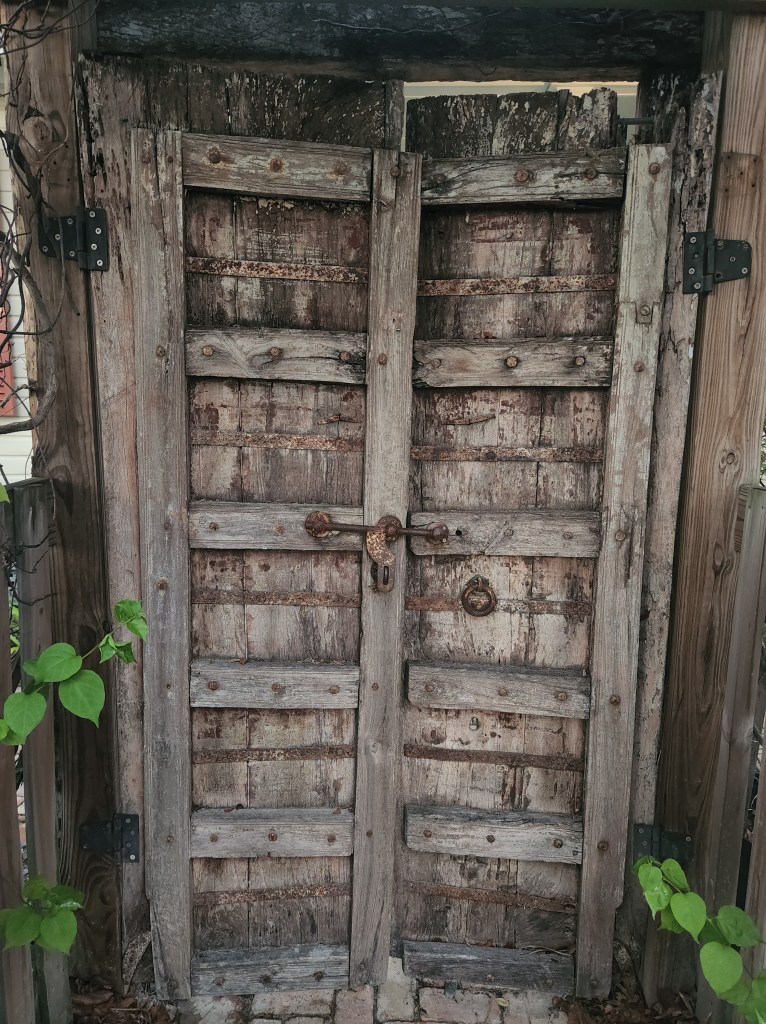
At the Door, 2022 ©️ RQ

Nihilism, Grace, & the (In)difference

Nihilism stands at the door. Whence comes this uncanniest of all guests?

Nietzsche, F. W., Kaufmann, W., & Hollingdale, R. J. (1968). The will to power. Vintage Books ed. New York, Vintage Books. p. 7
There are many ways to fall. Falling gracefully is one of them.

Nihilism stands at the door, Nietzsche said, and he was right. That was in 1885 or '86, in his Will to Power notebooks, and with the phrase Nietzsche was prophesying the coming days, when values would be devalued, when the whither of things would be lacking, when violence and selling out would be committed in the same breath, both gratuitous, both overdone and without a grounding narrative.

Nihilism is in the house, has burst--or crept--through the doors of our culture, our home, turning it little by little into an anti-culture, and our home into homelessness. The age Nietzsche was prophesying was this our own age, and he foretold that after his death the age of nihilism would last two hundred years. There will be wars the likes of which have never been seen on this earth, he said. And he was right. Here we are, with conflicts and trauma abounding on the earth, all televised, all captured, all made to fit into a frame. Even our holiest and most singular moments can be found on a video streaming service or a blog somewhere. For those human beings who cannot so capture the stream of their lives, so much the worse for them. For the dominant angle of our times insists that the uncaptured is the unlived, and you might as well have never been if you did not get it "down for the ages" somehow. After all, there are so many ways to capture things now, so many media, so many methods to put the record straight and to settle things.

But there's a catch, and our capturing is in a double bind. For at the very instant we capture things and express our hearts within some frame or other, that frame is then seen as one frame among countless on a spinning reel, with moments, all of them equal, following one another madly and indifferently. Recall, the uncaptured is the unlived, so that means that our past as well as our present and our future are swept into reels and subjected to the tricks of a camera. Collective amnesia. We are all of us blinking constantly, with each blink the blanking of the blinks that went before.

Irony rules. We are trapped behind irony bars. Gates of irony enclose everything, our humor, our gifts, our tragedies, our grand speeches and declarations, our promises to our futures and remembrances of our pasts. It's hard to take any of it seriously anymore. In which case it is hard to be truly ironic anymore, since irony can be found playfully streaming only with the support of a bedrock of seriousness. Instead of irony, we suffer from a sort of blasé sadness that has a costume for every occasion, a poorly fitting, sad--ironic--costume. And we blink and pretend that we freely and out of the abundance of ourselves don these clothes, we pretend that blinking will protect us from the winter storms, shield us from the absurd heat.

This sad irony-entrapment infects everything, pens up the whole gamut of human affairs, so that a video to teach you to make lasagna and one reporting human carnage are given equal attention. We will find a niche for everything, and nick at ourselves with niches until we are all carved up and nicked away. The uncarved block has turned to woodchips--sawdust--our lives are becoming fractured and smaller at the same time as we are becoming stunningly conscious of larger and larger wholes. Now, going to the gas station to take your children to school is wreaking cruel havoc in unwitting communities, proposing to your lover with a sparkling ring enslaves children in 2022, cooking your Thanksgiving dinner spreads ignorance as well as thanks, tortures fields upon fields of species and, again, enslaves children, taking a pet home from the local shelter adds to the stockpiles of canned flesh in warehouses littered throughout the plains, just a far enough distance from the suburbs.

It all gives us all the sense of free-falling, of an intoxicating-terrifying flight turned fall turned dizzying chaos. As though we are each and every one of us turning into psychopaths, as though the world is losing all meaning, as though we are all of us mad and hot and seeking moment after moment for confirmation of our madness and heat. As though since the steam engine our only genuine purpose is to--let off steam.

There is a crude and wicked sensation to the whole thing, though far more crude than wicked since it is not--insightful enough to be wicked, not noble enough to be wicked. Our lamentations for the world, for the state of things, our poetry and essays, our celebrations, our surprises, even our acts of grace, have become too jerky and fitful--too graceless. When nihilism came to our door, we all became ugly hosts. There was no grace in how we answered the door or failed to answer the door, no grace in our mood when we might have heard the knock, no grace to how we opened the door or tried to keep the door shut, locked, bolted. No grace in how we asked our guest just how he got into our home. So now, at the end of the world, or the end of meaning, we are stuck with our graceless habits, scouring the earth clean (so clean) before we go for justification of our sordid lives. Even at the end of things, when noble and delicate--graceful celebrations and attention are needed most of all. But we blink away all the needs and neediness. Our needs are blank.

Grace is possible in times like these, but impossible to produce--ever. Grace in our thougts and gestures, in our affirmations and denials, in how we celebrate and how we give attention is like grace in life overall: uncontrolled, uncontrollable, a gift and a disaster at once. A gift because in grace there is a total sanction of absolute insecurity. In grace all things are suspended in their suchness, and the world is not meant to be this way or that. In grace our vulnerability is a given, we are all of us unshielded, unprotected, but delight in precisely this. A disaster: since grace does not respond even when it is most called for. Since grace can come and go like winds or rains or the clouds overhead. Grace in our falling is not necessary, is totally, utterly contingent. It reminds us of nihilism.

Too much of nihilism. Grace and nihilism are indistinguishable, and that is the disaster of grace. We want grace to lift us up and out of nihilism. At least some of us do, some of us who are tired of our general tiredness. But it does not and cannot. As much as grace lifts up, suspends, it also plunges down, is a down-going, and meets us on the horizons of our daily straining and satisfactions and frustrations. It is a soul-making thing, grace, like the demon that you chance upon or that chances upon you, perhaps the one already at your door now, which you are hesitant or fearful to answer, the demon already in your home, sleeping beside you, dreaming with you, concocting new stratagems and mythologies to encounter this wondrous world. A god that pushes us off the cliff to the market square below. Perhaps our flailing arms as we fall are a dance to the god after all.

The be(a)st ideas

We might have passed the time when a man or a woman or another gives rise to an idea worth emulating or cultivating, and in that way gives that idea continued life. Now...now every idea is a caged idea. The idea is let out a little while to perform and wave its hands, then it is sent back to the menagerie for feeding and rotation and torture.
    We do not let the beasts "ideas" live in human hearts any longer. Instead we represent them, in other words, tame them and make them behave.
    So it is not as much in the giving as in the taking. Freakish and world-turning ideas are still given from flesh as always, but now they are taken as unremarkable data bits. Turning these bits of ideas loose upon one another in an unrestrained war does not give ample and equal opportunity for all to thrive. In fact, whatever ideas can be passed along like faceless coins fare the best in this warfare. Ideas that bear with them no initiative of soul are perfectly suited for a game that makes ideas useless--tiresome,even--through the sheer repetativeness and subsuming quality of its play.
You will surely have an idea once--maybe twice--and that idea will be fire incarnate in the soul of the one who holds it and works with it. But then you will give this holy-revolutionary idea--give it freely, willingly--to the world and its game of making frames. And when taken by the terms of this game, then you've never seen any magic more impressive, something disappearing like that but quicker, something falling so sheer that used to stand--or it looked like standing--on two legs, or they looked like legs. Nobody wants to follow an ambiguous walker, and everybody is walking on something more insubstantial than the color of your eyes in a dream.