Wherever you find dust
Realize there there is some part of you
Or a part of some other or a part of you both
Mingling with all things
Over the dusty crust of a dusty earth

Whose entire mass is really a mote
Cooked in the same furnace as every imaginable thing
Every speck a clandestine inspiration
Towards billowing here and settling there
Enough for us to worry about it

Enough for us to want to wipe clean
All the panes of existence
While the cloth in our hand becomes dust itself
The same dust as all the other
Lost worlds and worlds yet to be
While we merely spread the dust like hope and oblivion.
It Is What It Is
                                 For Mark

When I look up to the sky now
And see the lines between the clouds,
Fractal lines, giving each cloud its shape
And identity, think for a moment I see them
Colliding into one another soundlessly forming larger
Clouds or departing
From one another,
Getting smaller
And smaller, until I realize that larger cloud
Is something else than the smaller,
That each has its life and rhythm
Up there in their static dance,
That the rock I kick to my side,
Or pick up and rub first because of its color,
It caught my eye, but then because of its texture,
The way it has patches of smooth like marble
Speckled on the rough surface,
Those pebbles we feel our feet form to
When we step into the Colorado River,
Drench ourselves in the needed frigid waters,
That those rocks and pebbles are not from something larger,
That the grain is not from pebble is not from rock is not from boulder
Chipped away, that each thing here has no history,
That it will not have a future,
That it is what it is, unique,
The way a rock is what it is,
there and standing as itself alone
When I feel its weight, its surprising surface,
Almost like a bone thrown into the river,
The bone of a man who never lived,
In the palm of my hand and,
After laughing at something you say
To me and the crowd of new friends
Gathering away from the perpetual blowdryer winds
Of Needles, California in the summer,
Throw it into the still glass of the river.
Nota Bene

A truth that doesn’t dance around with scandal, with falseness and error, is nothing important.
The Breath of Meaninglessness
The breath of meaninglessness comes as easily, as unaccounted for, as graciously as the breath of meaning, both like a breeze across the damp swamp, a breeze that suddenly gives to the stagnant air life, direction, energy.
What else do you want out of this, she asked. When she said the words it was as if she was looking off into the distance, over my right shoulder–perhaps finally there crossed our way a man who returned her look, perhaps there was a fleeting communication between two strangers, one of those moments with another when everything is said, all at once, but then you forget it, nothing was said, you return to your daily routine–but when the last word fell from her she cast her eyes down to my feet, or hers, or the ground itself as though observing what life we could be stepping on down there, taking in carefully every ant, every beetle, every scurrying thing on the pavement so as no to crush it.
To answer this seemed such an undemanding task: More than this, I proclaimed with the utmost precision and clarity. More than this. I thought at first that she wasn’t paying me any attention, she seemed so intent on gazing at our feet, but then she brushed a tear from her cheek and gave me her moist eyes, holding them steady in front of me, asking silently that I not turn away from her, that I keep hold of the look too, share this look with her. Within, or between, that space our eyes made together there passed, again so fleetingly–like breaths, in and out it happens–some understanding, not a trivial being-on-the-same-page, but a coauthorship of a life together seemed to happen, as though we were visited by pristine visions of what would ensue, of what we had to look forward to and what other characters would enter our lives–but again briefly, so briefly like a blink.
More? More? Now, no understanding in her voice, but perplexity running deep, forming a chasm deep. She spat out the words as though her tongue could get burned or soiled if she kept them in her mouth too long. After you’ve been given, what? Everything! You want more? It seems a little greedy–
–Yes, it’s greedy, and I know it! Please, accept the greed as a part of life, a part of our–endowment! As I spoke I shook in a dance to release myself from the grip of the doubts that had crossed me for a second. I don’t have to say Yes to everything, now, do I? You think whatever is given me, no matter how small and petty the world becomes, I should be content with it?
Grateful, grateful, she said and said it so calmly, like a wise priestess. You should be grateful for any little thing that comes to you, because you know–
–Yes, I know, and we’ve spoken about this before: how it could NOT be, all of this, and I made a gesture with my hands as though holding a fabric stretched between them, a flowing, light fabric it didn’t make much sense to grip tightly. Yes, you don’t have to remind me. I remember, too, how I told you I couldn’t foresee anything like what happened to me before happening again–I couldn’t foresee coming to want to end it all, writing you a pathetic letter again and leaving for the bridge, looking over the edge, without vertigo, onto the glass of the water, the glass which always seemed to move, except for those rare breaths of times when it grew still, a smooth plate awaiting to be crashed through by my tumbling body, the weight of my body–I remember how confident I was that it had left me.
But IT has left you, no? You told me you want more, not that you want nothing. She squeezed my left arm tenderly with her right hand, then gave my arm delicate brushings and strokes with the same hand; when she did this she cast her eyes down again, but let me know with her hand that she wasn’t leaving me, that there was still a connection between us. You’re not considering suicide, you’re considering how to get the best of life. Right?
Yeah, sort of. I felt a tremor go from my groin to the hairs on my neck, as though a light wind had caressed me but there was no wind, it was as still as the room of a cave. The time between sunset and moonrise occurred without my noticing; now we stood in the cool spotlight of the moon until the clouds covered it so that it looked like a blanket over a flashlight, until another blanket was draped over the light and we were left, stars twinkling around the cloud covering the moon, under a dark purple dome on the street, still in front of my apartment. It’s sort of like that, what you said. Wanting more…. But sometimes it seems like they’re equivalent, wanting more and wanting nothing out of life. That life is not enough, seems to be the ringing song behind both of them, that life doesn’t have what you want. Sometimes sheer possibility is enough to see how equivalent they are, as there is the possibility of everything–and nothing. It seems a prejudice of mine–of ours–to think that one wish–the wish for everything, for more, more more–is respecting life while the other–the wish to be done with it–is spitting in the face of life and demeaning it. No, unless we’re like Taoist sages it seems that both movements are blasphemous–to what is. Unless we do nothing–and that be our only doing–it is impossible not to give life the evil eye.
Well, you’ll figure it out, I bet. She took back her hand from my arm and its lightly shaking hairs, its tingling skin. Because, I mean, how many times have we gone through this? She said the last so slightly condescendingly that it could have been taken for plain tiredness, plain bodily tiredness, as it comes in unannounced spells. When she reached out with her right hand to my arm again, she gave it only a light tap as though in reassurance. For a moment I felt reassured. I felt, especially when the moon threw its imitative light on the two of us again, complete, if not content then more than content–perfected, at an apex, the time of glory. Just when I was going to shout this out so that my neighbors in the apartment building and others down the street and in the neighborhood would hear, complain or join in but then return to bed, I became aware once more of the feeling–it wasn’t exactly a lack, no. This feeling came back to me that had me sigh, the sigh wasn’t merely disappointment or boredom. I looked at my friend, not for a long while, just long enough to tell her I understand, thank you, thank you, just long enough to see her smile to me with a motherly smile, just long enough to say Goodnight.
Goodnight, she replied, and sighed herself a heavy sigh. Call me if you need anything.
I will. I will.
Cultures of Thought

Each thought, and the cultivation of that thought, has its proper time. Without cultivation, a thought may visit, may inspire, may suddenly illumine, but chances are it will not form the basis of a culture, a practice, a labor. Labor not only in the sense of work and craft, the honing of skill and the mobilizing of one’s forces to an achievement, but labor as in the time of labor and gestation, the time of the womb. Thought brings with it both senses of labor, as it brings with it cultivation, refinement, as well as sudden fits of inspiration or unexpected visitations.
Thoughts come, and there is no telling, no foretelling, when they will come. Part of the wonder, as well as the hidden travesty, of thought is that no matter how ordered and systematic it is or becomes, no matter how far-reaching and fine-tuned a thinking has become in its development, there is a moment, an event, of thinking which comes on its own, irrespective of its place in a system, irrespective of the aims and projects of the thinker. Whether such thoughts will end up being incorporated into more developed, constructed thoughts is another matter which we will attend to shortly; for now, let us ask about thought’s arrival, about what it means for a thought to arrive.
Thought comes when it wills, Nietzsche reminds us in Beyond Good and Evil. As so many others of Nietzsche’s unsettling phrases, this phrase was meant as an assault on the notion of a subject beneath, behind or supporting its deeds, thought being one of them. The event of thought deconstructs or destabilizes the consistency and validity of the subject. Thought, which is considered so often and with such readiness as the key to the reservoir of the most private recesses of the individual thinker and his caprice or will, his most inner inclination, is itself already a participant in what is other and outside, external to the thinker. In thinking, in relishing a thought and, as we will see presently, in cultivating or nurturing a thought, we participate, unknowingly or with insight, in a world of tradition, of cultural transmission, of dreams and the influence of the world on dreams, in awarenesses traversing that space between interlocutors, between subjects, made up of what cannot be contained in any one party. We have approached this before and called it the Zwischen, the Between. What is between speakers, or thinkers, or living beings, is not controlled by the whim of any one speaker or thinker or living being; this place is the place of visitations, of enchantments, dreamscapes and nightmares and fantasies, a place any system surely cannot take hold of for too long–before, like an edifice over quicksand, sinking and crumbling.
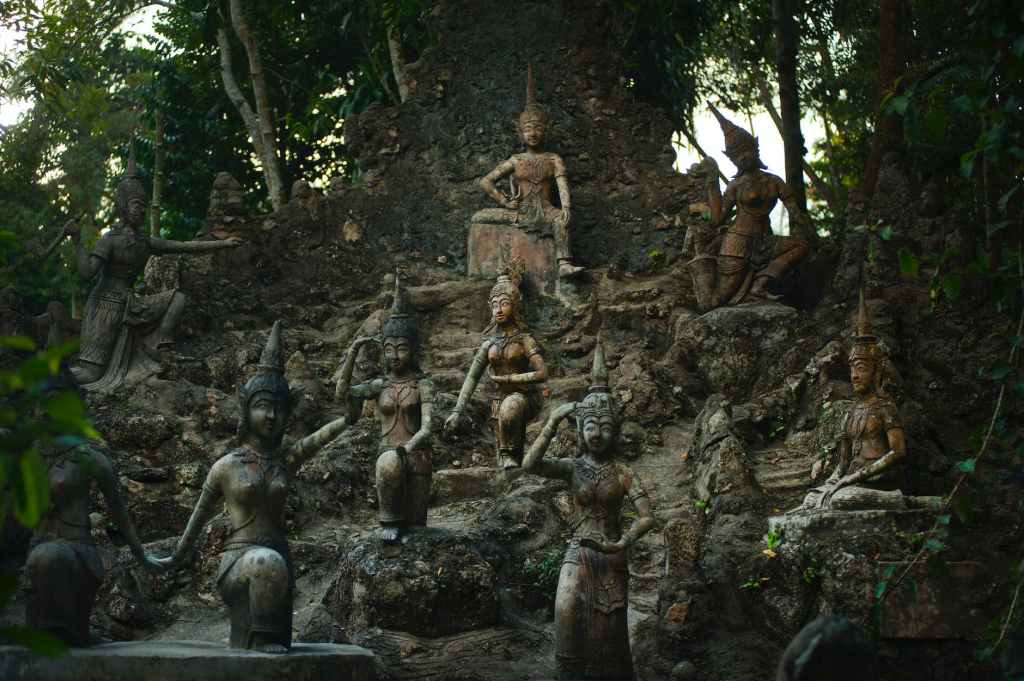
But thought not only arrives, it not only makes its–surprise–visitations to us when we least expect it or to the chagrin of the forces that wish to systematize, but it also, of necessity and when it follows itself, systematizes itself, or in other words connects, grows connective tissues, catches and holds sight of the panorama of issues or of the more encompassing horizon. When thought is seen in its eventful, evental aspect, it seems the last movement of thought would be to systematize and bestow order on the place which we have designated the Between. But lo! Thought, in following itself, in taking heed of the call of inspiration, makes sure not to treat those fits as so much rubble or, in case it is surrounded by trivialities in its musings and daydreaming, in following a chain of thought binds itself to finding a manner of distinguishing the trivial from the more penetrative. Thought systematizes and connects with threads and chains diverse elements as part of its proper vocation. Whether this tapestry of thought will become a snare that captures unwitting minds and hearts, or whether it will pave the way for a culture to be formed around its guiding sounding, it is critical but difficult to decide, so alluring, so persuasive, so demanding and forceful can a system of thought be!
Rather than look to some practice or duty a thinker must partake in in order to promote, through his thinking, a culture as opposed to an embryonic or explicit tyranny, let us look first to markers of a culture that is built on thinking, and the thinking of thoughts that have been carefully cultivated. We notice of properly thinking, as opposed to dogmatic, cultures that they exhibit an openness to inquiry, or reveal the questioning and doubt in the background of thinking. Without such a background the culture is merely repeating an archetypal pattern, passed down by rote from generation to generation, or is taking at its word the proclamation of a specific group, or text or tradition. The momentum of thinking is brought to a halt in such mindless repetition, unless it be to react or revolt against it. Also, the thinking culture is keen on maintaining a relationship with what lies outside its presuppositions in the form of other cultures and perspectives, that is, not only is there an internal propulsion to doubt on the part of the thinker who cultivates a thought that visited him, but there is the need for dialogue with forces and cultures outside his current setting. Finally, the culture built upon cultivated thought, while it does not have any illusions about progress or the inevitability of ascent from one stage of knowing and insight to another, still has within it what Karl Jaspers referred to as a faith, if not in reason or even in the power of Existenz, in the nobility and worth of the cause of thinking. This is not a self-satisfied or complacent attitude, as it is time and again met with challenges and near defeat by the gravity of certain doubts; it ends up being a type of endurance, the endurance to persist in questioning, in thinking, despite the risks involved, the terrors involved.

Maybe after conceptualizing, getting a grip, on what it means to be in a culture of thought, after seeing the markers of cultivated thought, it will be possible to adopt the practice–to take time for the practice–of thinking wholeheartedly.
not going back

We must imagine Sisyphus happy.
Camus
If there is any dust left over from the covid pandemic, much of it is dust swept under the rug. More neglected dust of our lives, neglected for the sake of a brand-new fantasy, or at least it pretends to be new. It is actually tired and old, repetitive and cruel, and dusty itself but will not admit it.
Feel free to share this, especially if you feel that we are in a perpetual spinning machine, burying us along with all of its dust as it spins along.
Zwischen
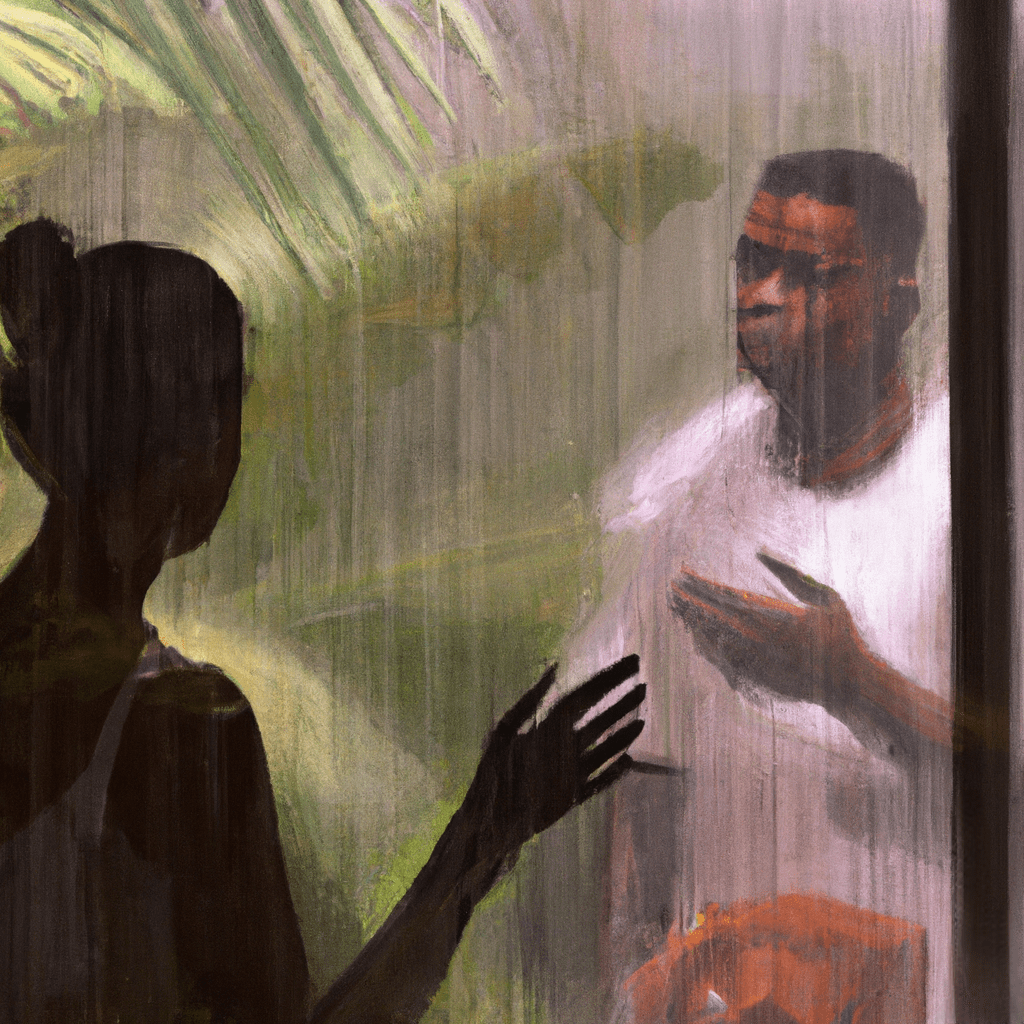
        For Monica Geers-Dahl

We meet and you tell me
that you are a visionary.
Now the visions plop down
for our inspecting gaze,
or like a plaything, for us
to play with and fondle,
or like a maze to explore,
or like a door to enter,
or like a trembling child,
we have to console her
in her shivering, or like
a mild breeze we feel
coolly on our faces,
or something resembling
a winged unruly god delivering
messages from world
to world, or like a tapestry
unfurled, stitching exposed,
not like our clothes, whose
one half we see. Amazed,

I speak back to you with my
dream and it becomes a web
whose threads I cannot find
but whose ends embed
into what surrounds us
like the spores of mushrooms,
it seems there is no escaping
the realm postulated by fantasy,
for a moment we encounter
a gargoyle, black wings monstrous,
we counter his frightening visage
with a spell, realizing this realm
is where magic is demonstrated.
We have entered, the two of us,
and neither hesitated, a landscape
where the greatest and the smallest
things, all things, are forever fated,
the realm of the speaking tempest,
the realm where even if you did
not help you still did what is best.

That god who delivers a late letter
does so as a trick and does so
ever for the better, he knows better
this gift-giving, awareness-giving
god among things, dancing-weaving-
prancing like a shadow’s accomplice
whispering as shadows whisper
as they mingle together, then merge
and become one secretive black,
he delivers late letters only to assist
the merger of supposedly distinct realms,
he is a bridge builder allowing passage
from one bank to the other.
We discover him in our talking,
but it does not utter a word or phrase
in English, maybe one in German,
otherwise he is mute and passes
from one country to the other,
from one face contented to one
distraught, from one history to another

History slowly uncovered, we lower
ourselves to greet him but his crown
of silver and his ambiguous dagger
only stay long enough to--flash
and you are awake, you say, after
so many tired hours I may begin the day,
the look is obvious in your eyes,
your lips, your furrowed brow--flash
and we are made aware of so many sounds
but also something less intrusive than sound,
some mound on the chest abounding
with treasure.  You reach for the screen,
caress the air, give the air itself pleasure,
depress the ear, live the fair measure
set out by the god who comes not exactly
as tempter, but as messenger, teacher,
mentor, fleet of foot, with pristine,
unbreakable feet, the giver of a light touch
which gives to things a confidence,
through the rigid stolid lines drawn over life,

A solid confidence that the festival will break
loose from the bonds to which they are tied,
this confidence, strange, is unshakeable.
We continue to throw on the table more
of ourselves, our prophecies, a visiting idea,
our lives’ fables in this unstable zone
we have found, unstable like earth’s ground,
playing tricks when you may stand still,
a confidence in something deranged, twisted
this way and that like the roads, some paved,
some unpaved, of a zany town far away
from empires of order; the order we dwell
inside is not simply chaos, but an order
lurking in the space where order and chaos
meet, some corner of themselves they share,
where we may dare speak frankly of spirit,
of matter, of what matters drunk on spirit,
where we may look at one another through
the screen and feel there comes breakthrough,
there comes an element to swim through.

An element to sink into, like a pool of wine.
Our eyes shine even with the screen’s criss-
crossing interference, as though the screen
is no more than a filter, bringing the best
light for the realm of sight, the best sound
for the profound, the touch that touches much
beyond our skin, some reviving fabric
through which we could feel healed, the highest
rung of delicate flavor for the savoring tongue,
the thought that cannot be bought or sold
as values on any market. Somehow that old
screen you stapled there to keep out the bugs
does astonishing things, or you do astonishing
things, or I did astonishing things, or we, all
of us combined as if into a playing symphony
do astonishing things, doing whatever we do
yet this something, these things, astonishing,
not diminishing but on the contrary growing
and growing beyond my dream, in size past
your vision, engulfing the fabric of things.

I edge closer to the garage and to the screen
to escape the sun’s searing, somehow we
never moved, despite my moving to stop
sweating in the great heat of the earth,
the heat everything feels in its own way--
even the hot ones feel this heat--despite
your moving away from the window, leaning
back away from the screen, becoming dark,
despite the interruptions and the gaps, the god
playing his endless tricks, we never moved,
we kept holding to this place we loved, because
at bottom what we discovered is that it is love,
this space we are mingling in, and although hate
and suffering and pettiness and countless
trivialities and triumphs are mingling with it,
love is there, and we spoke about love,
we had to because love, that god that does not
seem to go away, is another traveler, another
messenger, teacher, mentor.  Between us is
more than a screen, but the world, everything.
144,000

Before that world ended, our project as some of us called it, we felt the horizon closing in on us at first as some distant foreboding, an event we had calculated, could imagine, make plenty of blockbuster films about, but that seemed so distant as though it could never possibly arrive for us, the safe present, as though we were speaking, when we spoke of a world ruled by a new vermin, giant cockroaches, ants and rats, of some other world altogether, not this world in which we built and destroyed, rejoiced and suffered–oh, how we suffered–until it became clear to us, clear the way mortality can become clear, deadly clear, to a dying man, that it was coming, doom was coming, fast, it would not allow us to prepare, that the horizon would close like a holy book closes after the exhortations from the pulpit, at the close of a passionate sermon.
Of the human populations on earth at the critical time approximately 144,000 were able to be saved. I say approximately because, as is to be expected in such things, precision is impossible: not only was there virtually no selection process, as the passes for the ship were given exclusively to the wealthy, powerful elite, some of whom had died of natural causes before they were able to be lifted by servicemen and servants to the portal; but there were, in addition, massive riots throughout not only my former home and territory, but throughout the globe, always focusing on social and economic disparity and social injustice, only brought to a maddening pitch with a taste for the absurd by the immensity of the crisis we felt as a species. After so long of warring–and it’s not as if the wars had ended–after so long of being divided–and it’s not as if division was abolished, erased–we became united, if otherwise we were unbending in our demand to establish territories, for secure territories, for borders and secure borders, by a knowledge that visited all like a plain, undeniable ghost, the knowledge of the end of the road, not for one but for all–for most–game over. The riots that ensued from the sense of panic that swept over human places killed so many of us, almost touching the grim power of the heat, the waters, the storms, the diseases. Of these countless killed were a great many of those who were to leave the inhospitable, hot planet, the chaos and death of that planet for the unknown, for the sky we were not trained for. Of the number, 144,000, nearly half were killed in the first wave of violence that followed the announcement, although there was plenty of violence already there, already rampant. This instigated an emergency measure that brought the number close to the original proposal, but there was so much scrambling and killing, so much straining not only for supplies but for a vision of what was coming with which we could cope, that death continued and guaranteed that we were not going to have the designated number on board the ship for recolonization elsewhere.
It amazed everyone aboard the titanium that we were not sure where we were steering, what our destination was, out in that place that seems like the womb of creation, a womb of fire and explosions eerily silent. This unsure group included not only the selected travelers–it is within the bounds of imagination and justification that those unwitting travelers would stay unknowing, so as not to distract from the mission’s gravity–but the entire can of earthlings, the helmsman of the space vessel as much as those who were flung into chambers and sedated for a long ride. But we slept our long sleep, we dreamed our long dreams as we made our course through the cosmos; some never woke from that sleep, never left that dream. Those of us who took the pills and accepted the IV’s in our arms and legs before takeoff argued that we should trust those steering the ship, that they would at last take us to a place we could call home.
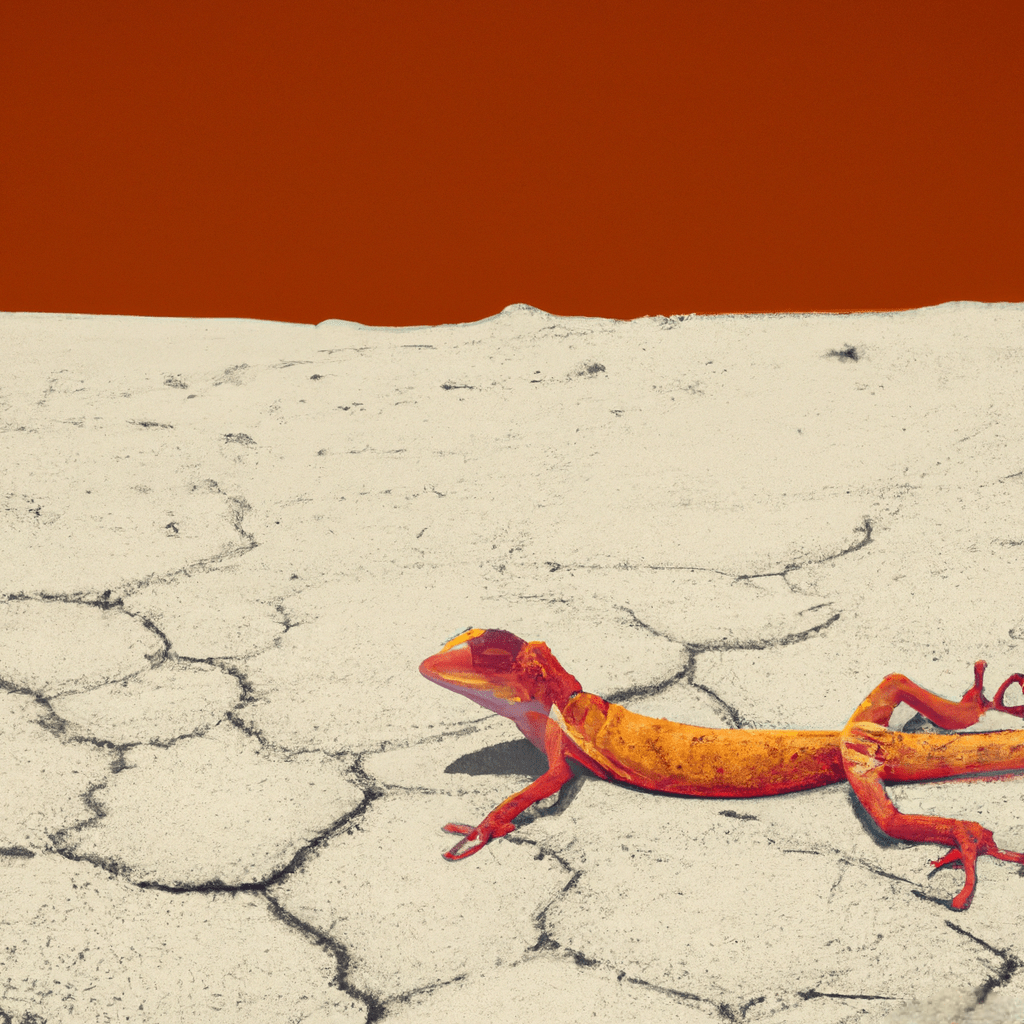
When I woke I could not believe what I saw. Those around me had become lizards, and mice, and cockroaches and other creatures the size of men! I looked at my arm and gave a start at the sight of its scaly skin, its tough hide. A woman I had known came to me–she was shaped as an ant with a slender thorax and shiny exoskeleton–I still recognized her by her eyes atop her pointed black head–we still had eyes, all of us had eyes–she looked into my eyes and chirped What is this, what has happened to us! What shocked me, nearly out of the shock of being turned into a lizard, is that we understood one another as two completely different species. She looked into my lizard eyes and flicked her antennae at me as though to sense something behind my ancient silence.
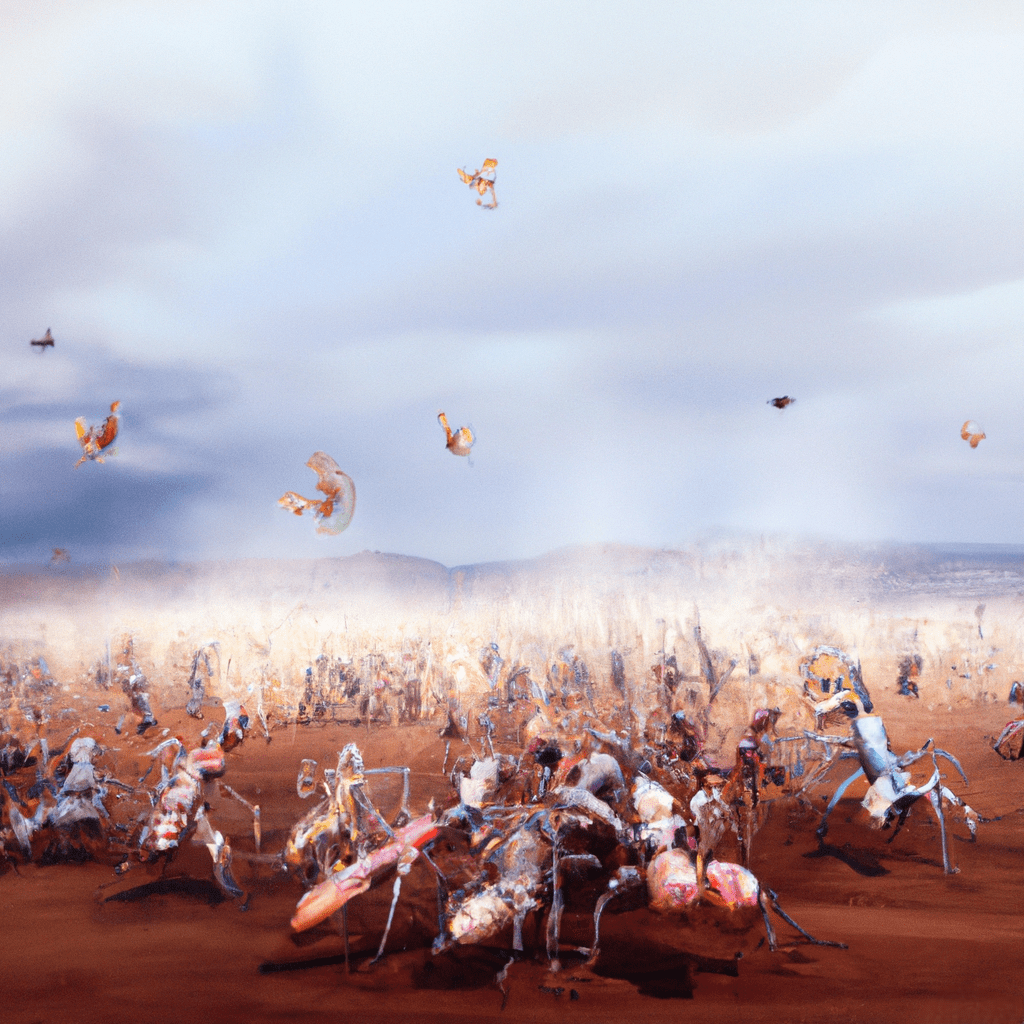
Well, a cockroach chimed in, we had to take on some other shape, become other than human, to withstand this new environment; we couldn’t go out there in our old shapes. Again, I was astonished at the communication across species, astonished too that the shapes we took were still shapes of the earth, as though it were some form of lesson given to us by harsh teachers. The cockroach scurried off, the ant looked antlike worried, I stayed silent asking myself what bugs I would eat on this red, red planet. We flew and scurried and skittered and crawled and slimed our separate ways over the red dirt–although there were some matching species, some of us joined, played, mated–as though engaged in a relentless hunt.
In praise of stupidity
In praise of stupidity. Stupidity is not always to be looked down upon, even by philosophers, perhaps especially by philosophers if they want to leave no stone unturned, if they truly want to be lovers of the plural and ever-multiplying manifestations of human and other things. Sometimes it is precisely stupidity that carries with it a certain attractiveness: from the naive to the boastful, to the crude to the outright ignorant, even the intentionally ignorant, even the viciously ignorant, they can challenge us and seduce us to think differently about the world. There can be a certain flair in the dumb-charging or dumb-sitting face of stupidity, something of life at any cost, something blunt but daring, some ever-present or ever-potential turning of the tables which is beautiful for its subtlety or its rashness, its long and invisible development or its extremity. While the face of those in the know, those with insight, even the highest insight: are not these faces even duller, even more jaded–uglier–than those faces that face us with nothing of our ingenuity, nothing of the fulfillment of our expectations for seeing the prize of human insightfulness or of wisdom in things win out, in the end, over any bouts of cackling incomprehension? It seems that if we philosophers want to preserve anything of our beauty, we must preserve at least a modicum of that stupidity, already so ineliminable, so devastating in its persistence, that only trait of ours with which, despite all of our mindless sureties, we cannot be so sure of ourselves, of the stability of our reasonings, our schemes of knowledge, our institutions and our practices, but which calls all these into question, but precisely not with questions, but with a blank stare–a stare with a blankness of so much more possibility than the stare of mere knowledge, of wisdom alone–a shrug, a shaking of the head, a laughter that throws everything into disarray.
Cosmic Dance – A (Short) Dialogue

A: Why are you dancing around the subject–
B: I’m not dancing–
A: Yes you are, you said that life is meaningless but that we are not meaningless, how can that–
B: Let me ex–
A: No! You called it an “explanation” before when you said that even though life itself is meaningless, we can still find meaning in life, in relationships like friendships and lovers. That’s not an explanation. Aren’t we alive? Aren’t your friends…alive? If they are–I am certainly feeling alive right now, especially when you have me all heated up–then what could possibly protect them from the general meaninglessness? If they are not–godlessness help us, our last hope and our last god dashed–then we are in store for a whole other heap of meaninglessness, a meaninglessness like piles of corpses pretending to speak and to dream with one another.
B: Well, meaning is survival–
A: What?–
B: I mean I think we are alive–the two of us more than anybody, in fact, when we make love I feel that I am living more than any life has lived. But I think our living is an attempt to make an anti-world of chaos and death into a liveable world of fantasies of lines and planes and bodies and much else besides. We are not saying anything about life itself when we find a meaning in life or a meaning to life or of life. It is just our way of building homes on the sand, and some of us are better at digging enough into the sand that we find a reliable foundation. Again, though, it’s not like this foundation is planted in the stars or in the beginning of time and space, rather it is just a local territory staked out on a dust mote in a region we cannot ever fully describe.
A: I see….
B: …
A: …So, all of this, all of our hopes about the future and our takes on the past and the present, they are all just ways to survive and to enhance ourselves. They say nothing about what life is in itself?
B: That’s what I think…that’s what I feel.
A: But what is this “life in itself” anyway? What about the living themselves? What about us? Is it even possible for us to think we have found a meaning in life without at the same time projecting that meaning to all the ends of existence? For instance, if the meaning I have found in my life describes existence as grounded in love and a loving sacrifice, I would be hard pressed not to find this love everywhere, from the beginning to the end, from the core to the surface, from the bottom to the top. Part of finding a meaning is finding it everywhere, part of being meaningful is radiating in all directions so as to cover everything with that meaning.
What you’re doing, though, is artificially stopping the spread. You are trying to cut off our meaning’s tentacles before it reaches all things in its inevitable reaching out. That gives the illusion that there is some block of meaninglessness on the other side of these limited horizons. But if you let these horizons free, they are continually vanishing in their expanding. Then this big black block of meaninglessness is actually quite colorful, and undulating constantly with vitality. It’s–
B: –Chaos–
A: That’s what you said before. But what I am saying is that Chaos and Order are just two names you can give to this undulating agony of meanings. Every speck and particle of existence gives its perspecive on all the rest. Sure, there is uncertainty as to which perspective is final, or which perspective shows the most of reality. But that again is only from a certain perspective, a perspective that desires multiplicity and scales and comparisons. This is not the course of every perspective. In fact, it is not the course of any perspective in the time that it is taken and lived. Even you, with your perspective of cosmic meaninglessness, do not want your perspective compared with that of the ant or the blade of grass. If a grandmother died thinking that she would become a grasshopper or spaghetti sauce, then for that one unfindable moment all things become grasshopppers at death, or all things become such as to allow a single grandmother to become a grasshopper or tomato sauce at death. Reality holds room for everything, even our delusions, and every dream you have, even the most fleeting, comes true somewhere in some nook of reality. However far you shrink a significant thing, that significant thing takes part in the whole and in shaping the destiny of the whole. There is no erasure–even when our perspectives are shattered and seen through–but only addition, addition and multiplication of reality upon reality. Like a dance of meaningfulness and meaninglessness, but of one substance and all on the same arena.
B: A dance–
A: Yes, another dance. But not a dance around, like we know the borders and the edges–we do not, even our delusions are endless and edgeless–but a dance through and within, like pinwheels all set in their places, whose little singular and faithful spinning shoot out dust and stars to ungodly distances, so far in fact that the distance seems to circle back, and shower our hearts with ambiguous twinkling.

la nostra situazione
I would like to thank Amy Goodman and the team at Democracy Now for allowing the backdrop audio of this spirit dance to continue its life on YouTube.
With the New Year having just passed, I look to March, 2020 like a ghost, but like all ghosts, a ghost that still lives on, and always will, whether transformed or in some mad perpetual motion.
May our stories continue not only unfolding–but unraveling.

Some Day – For Martin

“We must learn to live together as brothers or perish together as fools.”
Martin
To be black in the United States during the holidays is already a trial. Traditional expressions of these holidays seldom involve black families, as most American media and imagery are already graded low when it comes to diversity. The holidays celebrated in the United States are all of them tied to a colonial history of rapacious exploitation, and just over a hundred years ago our family members served the holiday banquet to wealthy families at the same time as their flesh was seen as a mere tool and their human dignity was sysematically besieged.
You think that in 2023–we have witnessed man and woman after man and woman, boy and girl after boy and girl, killed, shot dead, the whole world witnessed these black-holy lives taken with video footage–you would think that today when a holiday comes around that celebrates Blackness, or the life and treacherous death and legacy of a black man or a black woman, there would be some sort of tear in the fabric of the nation, or some sort of ripple or wave in the waters of its body. But no. No. Three times–no. Not. At. All. When it comes to celebrating a holiday about the history or future (but never the future, always the history) of being black in America, the situation gets worse than the one described at the opening. Things become quite nasty. Ignorant, brutish, intentionally misleading. The legacy of these black characters is meant to die in the hearts of white and black and other human beings, living out the stress and pressure of their lives, all at war with all. They are curated and memorialized precisely to die, their speeches made to ring hollower and hollower by the year. Sometimes we are given a month to celebrate our history, given a month to watch it die. The future stolen from us. By a holiday. By memorializing and feigned acknowledgment.
Towns and cities and counties and states across the nation argue about days and months like these, days and months dedicated to Blackness. Some banks are closed these days–most banks are not. Some schools have days off and hold programs–until very recently, most did not, and this is still a constant struggle. Some restaurants and bars and shops are closed–most carry on with business as usual. A recent quip I heard from one employee was that if she wanted to take a day off from work for a holiday celebrating Blackness, she could only choose one a year out of the one or two there are. The days are spoken of with shame and with a malicious solemnity, with any creative possibilities of overcoming the divides between us drowned out by peaceful, warm-feeling and digestible story-telling and re-telling. On the day dedicated to the messiah in the United States, and that other strange holiday at the end of November, there are usually large feasts. This has an age-old tie to the harvest, and the celebration of bounty in preparation for and faith in the future. There are no feasts for our Black holidays because there is supposed to be no future for Blackness. The month of February can be seen as the last month of the lordship of cold and barrenness before springtime, a long and strenuous hope as to whether the hard ice will ever be melted and shattered. And then there is, right in the middle of that sham of a holy month, another nonsense holiday added into the mix, whose pink and red hearts and whose alabaster cupids easily outshadow all the black.
Martin Luther King, Jr. is my brother, and I love him, and I think with all the love he would have in his heart for me and for this nation today he would be disappointed along with me. Disappointed–and disgusted. He would want you to listen to more of his speeches than one. Or he would want you to read or listen to none of them at all, but to have fire in your hearts and souls. He would want you to follow him in his relationship to Malcom. He would want you to sit in prison with him in Birmingham, and travel with him through the pits and bruises and scars and trauma that his forgiving and forgiveness involved. He would want you to speak with him about the hellish outrage of Vietnam, and join him for a friendly conversation with Thich Nhat Hanh. He would want us to fight with love in our hearts and souls, but he would still want us to fight. Not only is non-resistance sometimes one of the most intense forms of engaging in a fight, but Martin himself struggled precisely with–non-resistance. As love is diverse because love is in all things, so the fight is diverse because the struggle is everywhere.
I do not think Martin would want me to say Happy Martin Luther King Day to anyone. No, not today. He would most likely say Remember me. Remember a human life, a black life. But remember it honestly. Remember it so as to also give the life a future when you remember it. Love and forgiveness and overcoming need and desire faithful renderings, not botched platitudes.
Someday, Martin. Some day. We love you.

(January 15, 1929 – April 4, 1968)
(April 3, 1968)
Soaring ignorance

Soaring ignorance. The problem with the problematization of other perspectives is that it takes too much for granted the knowledge of our own. As though we are quite certain of ourselves! As though we already discern, and have a clear and steady grasp of, our own boundaries! As though we are not ourselves full of surprises, abounding with multiplicity and diversity! So honesty requires that we say NOT that we do not know others, but that we know neither others nor ourselves, and this knowledge as ignorance is, indeed, our life, the proper and essential activity or power of our life.
There is knowledge enough, and any betting man would venture to place all his chips in saying that we will continue to strive for it and claim it, that we will most probably carry knowledge into the future as a cherished endowment, as other living beings, any living beings, nay, all existing things, tend to promote their own horizons and secure borders of insight and value or meaning for themselves, and in this age-old way craft knowledge, as it were, in order to make life in its fulness, which is a chaos of such perspectives or interpretations, more manageable, more livable and fit for the future–in order to make them more sustainable and to enhance them, adding to both their preservation and their growth. Human beings surely are not the only ones to make such claims, though we have a special way of making the claims, our language, of which we are proud enough, perhaps proud beyond what this capacity deserves. No, human beings are only one composite of many, indeed infinite, composites, attempting to cast its net as far and wide over all things in order to secure its own position. It has even come to the point that the philosopher, this mighty example of the human being and the questioner par excellence, would come to make an issue out of other perspectives, saying of them that they might all be chimeras. Like a last ditch effort to minimize the threat of other lives in the arena of life, to make the mountain, as well as the stars, the bird, the bat and the slug, elements within a human image, elements of our science, elements of our care, elements of our world. Surely for the ant the world is all ant-like, comically ant-like through and through, as for the stars it is all gas and fire, and for an elephant all elephantine. It is no wonder that, when faced with the horrendous expanse of what is not itself, a life, an existing thing, pulls back in order to find in all things, or turn all things into, faithful-reflecting mirrors of itself, mirrors of its God, of its heaven and earth, reflections of its goal, confirmation for it of what makes its life worth living. We are not the only ones to scurry off into our holes when the shades and wondrous-threatening colors of giant feet come stomping down all around us.
But there comes a time, when the picture begins to blur and smudge because too much other flesh and stone has run its fingers and coarseness over it, when the other pokes his head into the same, when he is all too vibrant and real but oh so other, when life becomes too strong, too much of a force itself as a collection of forces or endless war of forces, to be contained in some concept of it, however flexible or general, however encompassing, and knowledge of ignorance, knowledge as ignorance, of others as well as of ourselves, becomes our truth and our work for a true esteeming of living overall. Ignorant as it is, of itself as well as of others, this knowledge is still knowledge, but of a special sort. It is knowledge of permeability, obstacles and opportunities for incorporation on all sides, knowledge of a vulnerability of any exterior as well as any interior, but this vulnerability being, again, our honesty, our truth, our facing the truth of existence truthfully. Such lack of certainty, such painful uncertainty, reveals, it discloses more and better than any of our attempts at well-managed boundaries ever could, the way of things, de rerum natura. For, in its history, nothing is sure of itself. The human being, in its comparatively brief history, compared to history itself, the human, for example, has been as much bird or bison, bear or bat or bulky boulder, as it has been human. This history, in other words, is not always a contest and an out-performing or a shutting out, but can modulate itself into a fellowship and an intimacy. The thing, human or otherwise, might very well imagine itself as intimately related to all other things.
Such is a naive intimacy or fellowship, though, and we must, as it were, make our way from that naivete, travel through a period of hard-won borders and secureness, and arrive at another, more mature, more mature because fuller, form of intimacy. Such is the love, the intimacy and fellow-feeling, of Nietzsche’s Overhuman, this man or this woman, this over-what-we-used-to-be, seeing all the earth’s history as his or her or its own, managing to relate that far without breaking down into bitterness, or breaking down–how could it not break down?–only as an episode of its beauty, which is undeniable.
So the next time a bird flits by at day or a bat flits by at night, we could very well say to that flying being, that soaring composite, over our heads, We do not know you–yet. It is no surprise that we do not know you; after all, you fly, or soar or flit above us, while we are stuck here on the ground with our own lines and planes. But sometime we will, with a knowledge, a full knowledge, of the ignorance of you, but ignorance in a new modulation. Ignorance not afraid to reach out, ignorance that doesn’t woefully and immaturely shut itself away behind its own doors and windows, an ignorance with courage enough to become all things–ignorance that dives beneath the human but then soars, up, over and above the human.

On Forgiveness

Even when we have been hurt, even then we are to forgive the one who hurt us? We were gathered around him as a flock gathers around a post–hungry or pensive. The desert heat was mitigated slightly by a gracious cloud overhead which, instead of simply passing by and leaving us with unshielded fire, kept circling around the place of the sun, as though to form a canopy for our congregation. In the distance the camels were parked; we did not want camels’ speech, their way of muttering, to interrupt the speech of the one before us. There were several dogs near us and with the children in particular, but the dogs gave no attention to the focus of the community. An intermittent wind brought with it sand, from which we protected ourselves with our garments. The women, whose faces were already covered in the grey cloth of the rest of their dress, were especially prepared for the sudden waves of billowing sand that would, for the time of an inheld breath, cover us with the fine bright grains of the ground.
We must forgive especially then, he said. His voice was a melody for us, calling us to harmonize–at any cost harmonize; enthralling, magnificent instrument. His brown curls were layered in a golden helmet of sand; when he shook his head the sand would come from his locks as a miniature version of what we were experiencing with the wind. Every time he was careful not to shake so as to disturb his neighbor, the women and children gathered at his feet foremost. We are to forgive an absurd amount of times.
Why do you say An absurd amount of times, is that in order to insult us, grand one? The woman held a suckling child to her breast, turned from the sun which was for the moment escaping its shroud.
I say Absurd according to your preferences, as I know the human way. I admit I am saying something against the human way.
But you still say Be holy as your Father is holy, yes? So, are we or are we not capable of this inhuman forgiveness? Exasperated, the man’s voice shouted from the back of the gathering. The crowd hushed at his words, as the words seemed to express exactly what was on the hearts of the many.
The great one laughed, laughed at the question, at the many solemn faces, before continuing: Yes, yes, yes! His voice came to a crescendo but as though it were a healthy horn, not a squawk as so often happens to men’s voices when they are raised. As I stand before you now, each of you is capable of this forgiveness, and such forgiveness shall be the flavor, the one worthy thing, the meaning of the earth. To see even that one you cannot stand, the one who despises and curses you, the hateful or hated one, beside you as a fellow, this is the place to which, in glory, we shall go. Forgiveness gives us not only a power in our solitariness, an unrecognized power, but it also grants to the community a solidariness. We shall look at one another openly when all are forgiven.
But we do not believe you! The crowd became even more remarkably mute as this man took in his arms a child from the arms of a woman pressing near the holy one. He then pulled out a dagger from his purse and pressed it against the child’s neck. We do not believe you! Your forgiveness is absurd, through and through. Inhuman, and nothing beyond the human! What to do then but, but–anything! He let bleed the child, tossed the dagger into the desert, and stood, bloody with the lifeless child at his feet before the congregation.
At once he was rushed upon by a dozen men, and women besides, thrusting their bodies with might and outrage at the man. These others were without weapon and made a point to tear at the clothes of the one who brought death, tear his clothes and bruise and molest his face, bring him then to the ground with a communal leveling then smash and beat his squirming body with kicks and punches. Although the man still lived, it was not long before the group of fighters, near twenty in all, were coated in his blood, their grey gowns browning fast in the desert sun.
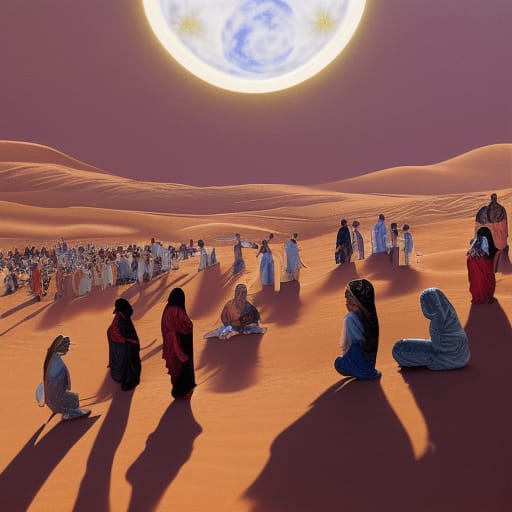
Stop! Stop! The voice was magnificent for its refined firmness yet lack of anger, the crowd was immediately entranced by its sound, its sound like the sound of one who has mastered wind, and they turned to face the great brown man, his sandy helmet atop his helmet of thick, dark curls. He shook his head, let fall the sand before he continued: Remember–
No! The mother of the child cried with a simple, honest, shrill cry. No! No! The others bustled among themselves, seemingly chatting, some tending to the dead child, closing his eyes and protecting him from the circling buzzards, no one tending to the battered man who killed the child; the consensus among them, even for the man writhing in pain of the others’ vengeance, seemed to be in agreement on one thing: No, no, no. This cannot be, in the absurd heat of the desert, the disproportionate challenges of life in the desert, we cannot simply lose one and ignore it; such slaughter must be avenged, seemed to be the consensus of the congregation.
We must forgive, as we said earlier, even those who hurt us, who hurt, who killed this child, this blessed being. The holy one came through the clamoring crowd to bend low to the child, touch his failed body with the tenderness with which he touched this same little one when the child waved before, alive and bright, rich golden-tanned skin, from his mother’s arms.
The crowd became charged with dismay and pain, formed themselves into a single body and converged upon the holy one, taking his limbs and, without further ado, tearing them from the trunk of his body. The great one, mutilated, only opened his mouth slightly at the pain, and soon died beneath the rising moon. The hurt and vengeful swarm tore his body into the finest pieces, pieces easily lost in the grains of sand that, with an intermittent wind, blew into the darkening desert.

Added Thoughts on Eternal Recurrence
To say that if he lived his life over again he wouldn’t do it now is insanity…. His living his life over again would guarantee the contrary–things being what they are.
***
To run away from the recurrence comes with its own consequences, not one of them insignificant. For instance, your running away comes back too, again and again, times without number. Don’t you get tired of all that running? No…. And this is only one of the consequences.
***
Some words are not meant for everyone, at least not all at once. For that reason, we turn aside when speaking to a special recipient of the piece of wisdom, or scandal, we wish to share. Like I’m doing now in this crowded room filled with readers. I’ll just turn my back now, away from you, towards life, now uncapitalized and a laughingstock, dancing round and round in fretful twirling, and whisper to her…: ….
***
There is nothing worse than a feigned silence. When silence is real you feel it like a force, it strikes you, and sometimes strikes you down. You can’t pretend anymore, or you would be stuck in your pretending. Such is the silence when we learn the truth of the eternal recurrence.
***
 Love the Dust