Neither Free nor Unfree

Emily: What are you saying, then, that we don’t have freedom?

Tyrone: It’s neither one.  I agree with Nietzsche when he said that we are as mistaken to speak about unfree will as we are to speak about free will.

Emily: Where did he say that?  I’ve tried to read some of Nietzsche’s work, but it seems that he has a penchant for saying things he doesn’t really mean, as if he’s taunting you.

Tyrone: I understand, and I think you’re right, that he is taunting us at times, as anyone has to do who’s lost–well, truth.  But I think we can trust him here, in Beyond Good and Evil; after all, he said it was the nay-saying, or the critical, part of the larger project we find in Zarathustra, which is the yea-saying part and the work he most cherished out of all the works of his career.

Emily: So what do you think it is, then, when you do something?  I mean, if you’re neither free nor unfree, if you don’t have a will, because–I remember Nietzsche saying this, and it had to be one of the most provocative things I ever heard him utter–will is a chimera, a stupid word we have placed rather bluntly on a host of subtle phenomena.

Tyrone: Well, not exactly in those words.  But yes, he was suspicious of will.  That’s because his greatest teacher and influence, Schopenhauer, made will into the fundament of all things.  Nietzsche felt that such a foundation, such a founding of the world on the basis of will, only inflames the sense of responsibility and guilt in the world, especially when it comes to pointing out others’ faults.  Nietzsche didn’t countenance those instances where a man or woman tries to attribute responsibility to another; he thought that responsibility is something we discover on our own, when we take responsibility for ourselves in strength, responsibility for what, at bottom–if we still want to use this metaphysical phrase–is the responsibility of no one, is caused by no one.

Emily: So what is it, then?  If you’re neither free nor unfree, what bids you do anything?

Tyrone: Play.

Emily: Did Nietzsche say that too, and where?

Tyrone: If he did ever say it, he never did so explicitly.  No, this is something of an intuition, or a conclusion after long pondering, or somehow both.  I came to feel that there is nothing more fitting than play when it comes to trying to speak of our actions, of what makes us what we are, of the character of things as we find them and as we find ourselves with them and within them.

            Why are you asking this, in the first place?  Is it because I did something last night that demands an account?  I have to admit to you, Emily, I don’t quite remember the entire course of the night.  I can piece together some moments before leaving the bar, but besides that the pieces fall apart.  We left with two friends, we invited them inside, but I can’t get more of a picture than that, even if I try in deadly earnest.

Emily: It’s okay.  It’s happened to me before.  It’s happened to everyone, I think we can say, who’s tried to have a little–perhaps a little too much–fun with friends as the night rolls on.  We came back to the house with Ryan and Chelsea, yes, just as you remember, but then you said something to all three of us that made us either want to shudder or run away, or do both at the same time if that was at all possible.

            And when we asked you, You can’t possibly mean that, Tyrone? you made it seem as if you’ve never meant nothing more than just this.  But we kept prying you to get more substance out of such a rash saying, and when finally Ryan interrupted our conversation and told you In all my life, I’ve never heard something so inconsistent, you at first stumbled back towards the front door, but in five or ten minutes you came back, obviously offended, and made it seem that you were willing to throw yourself into violence as a result of such a minor piece of misunderstanding.

Tyrone: What is it that I said?  As I told you, there’s a lot of the night that escapes me now.  That they came over: that I remember.  I can’t recall, though, any conversation, or ever getting angry because of it.  So what did I say?

Emily: Well, I don’t want to steer off on that course, and it didn’t seem worthy to even bring up again until this morning you muttered before going to the bathroom–in your gruff voice of the morning, as though it were sagging with weights–that you didn’t see any point, anyways, in such a dispute, that we’re all colliding together, or something like that.

Tyrone: Oh, yeah, I did say that this morning to you.  There is something disturbing about always wanting to find behind what we do some purpose, and I woke up, groggy and muddy-headed as I was, feeling that I was wronged or wronged someone last night, though I couldn’t say who, or when, or how, or why, though I tried when I first awoke and had your sleeping body quiet next to mine, when my eyes slit open in order to stare at the stucco on the ceiling.  Oh, the thought came to me then, Em: How meaningless it all is, trying to contain ourselves in schemes of freedom, trying to remain free, and at all costs!

            I did mean what I said to you this morning, and this is how things come down to play: There are forces, and what makes up you are some of them and what makes up me are some of them, and they play with one another most violently, crashing into one another and changing trajectories without warning.  Out of this mess we call our lives, we segment, or a part of our organism segments–it would be unbearable, living with the whole host of forces all the time, or even a good-sized chunk of them!–highlights a small, chopped off bit, of this arena in order to make a more manageable zone, where action and reaction make sense, where one thing follows another and then another, where there’s a nicely shaped area of cares and concerns, of intentions and feelings, of projects and the power to commence or renounce that project.

Emily: That’s what I wanted to get down to: what makes up our doing.  And you said it there: it’s a host of forces colliding into one another recklessly and without any responsibility.  I suppose, at least, that you are in full support of this peg of Nietzsche’s project, what we were discussing earlier?

Tyrone: Yes, but I still wish you would tell me what else I told you last night, you and Chelsea and Ryan.

Emily: Oh, we’ll get to that.  They are, after all, connected.  Now, I feel they are more intimately connected than I at first thought. 
A discovery

A discovery.  If I have discovered anything, it is but another face of nothing.  This isn’t as bad as it might at first seem: nothing teaches us, in its many, its endless disguises, as much as or, paradoxically, more than any thing, with its back turned on nothing in quiet defiance, with its ignorance of where it came from and where, certainly, as certain as anything, as certain as nothing, it is heading.  Nothing is our sourcepoint and nothing is our destination.  Meanwhile, all things call out to us greedy for our love for them, with the dim thought in the background, as though all things think, that we cannot abide with them in the way they wish, not when we think in the way we do, with even a modicum of honesty.

The Maybe of Too Little

There was something about his movements, his every move, that was a dance, always dancing, even when he stumbled a bit, even when he stumbled more and fell over.  Something about love, even the beginning of it, those wayward moments, even lust, makes falling itself, crashing to the bottom or collapsing, like a sack of grain, onto the ground’s hardness: beautiful.  Beautiful in its remarkableness, beautiful in its unremarkableness; always shining and always showing off.  Passion itself, even in its blunt stupidity, erupting in foolish fiery violence, turns to brilliant and captivating fire and flames, the fireworks where two lovers hold hands and pray for the earth to be consumed by the sparks, for the entirety of things to be engulfed in blaze.  Dance of fire, dance of the body coming out of the water, dance of the body committed to pleasing me, dance of the body bent on destroying me.  Whatever it was, as long as this type of love was there, it was good, good as in beautiful, beautiful as in affirmative, affirmative as in saying yes to all of that one, that man, and everything that participated in forming him.  This type, for we know loves, always plural and unique, and the types of loves, if we dare call them that, always plural and unique too, always carrying a stash of secrecy as to its designs and its inner possibilities.

            This type, because this type of love fell away one day, or tottered past its standing and staying anymore.  While other loves for the man who danced through me might remain, there is a love I lost at once: the dance ended; the dancing partners turned their backs on each other for good; the ritual of courting, then commitment, then enhancing one another slowly and with endurance, was replaced by–bitterness and pettiness, the worst enemies of this kind of love.  Hungry worms, these two, and they will prove themselves so by munching and gulping their way through the thickest and healthiest soil, the most fertile ground of lovers, and leave in their wakes, unlike our beneficent earthworms, rot and decay and nastiness.  One day I did something, or he did something–it all became rather confused where the beginnings of things lay; a fight was as it were an agreement, from both sides, to take part in destroying each other equally.  But it happened, one day–or maybe it was a collection of days in disguise, but it finally showed itself to me in a way I could recognize, with its gruesome mask, one day and that day alone; at last it revealed itself–and I ran.  I ran and closed what was sweetness and all affirmation, what was at bottom a promise to each other, unspoken perhaps, but a promise all the same.  But promises–they break and are broken and that is that.  Choices and commitments are made and then undone and that is that….  There is this one painful reminder, however, painful because it reminds you of how powerless you are at bottom: that promises, and choices and commitments or engagements, are remade as well as they are broken, so there remains always and ever–wavering, uncertainty, a kind of regret if you had the boldness to admit it.  The boldness to say to yourself in your heart, lulling the head with its song, or mesmerizing it, Maybe, just maybe, I could have gone on dancing.  Maybe I became a worn-out hack of a dancer and gave up too soon, before the music was over and before my final pirouette or lunge.  Maybe I made a mistake, and walked out of the venue well before the curtains were closed.  That rush of nervousness that comes with all these Maybes, when you turn around and see, from the distance, that the lights of your performance center are still on, on for you and flashing on the stage as brilliantly, for the emptiness, as it did when you were into your role and danced with the best bones of your body.  Such is the accompaniment of, or what follows as wet follows rain, all choices and turns concerning what matters, the rush like the rush of nervousness of the Maybe of What If, the Maybe of Too Soon, the Maybe of Too Little.  So you turn around, or you keep walking away, to your room and alone, or you stop dead in your tracks and contemplate empty-headed and exhausted in heart like the dead: you do something, we always do something, and we are flooded with a rush, a rush like nervousness, all the same at such times.

This Grand Device

Seems we’re not supposed to touch anything, he said, after having startled the rest of us, touching one of the mechanisms so that it uttered a sound like a death knell in our ears, one woman screamed, fearing the whole room of machines, with countless gears fitted into one another in grinding harmony, would somehow collapse on top of us or explode, leaving our parts everywhere with the parts of the contrivance.

The man laughed, giving a glance at his bloodied hand, which had almost been dismembered.  Well, I’ve learned my lesson, he said, wrapping up his hand, with his whole arm, with a makeshift bandage from the sleeve of his white uniform.  He went on: One should not tamper with what one does not know, I suppose.  This confused us all, as we expected the man before us to be the expert on the matter of mechanics.

He kept up with his antic of tending to his minor wound, then said I think our time here is finished, you’ve seen all there is to see: this, he repeated himself as he had said this before, when we first entered the warehouse-like room and beheld all the steel, small parts and large parts, formidably towering up to the high ceiling of the building, this, he said, is what keeps the world going.

Without the least segment of this grand device, doing what only it could do, spinning or whizzing or purring or something electric, we would stop dead in our tracks.  Again, as we had been when he told us this the first time around, we were amazed at the intricacy of the methodic melody the machine made, so intricate as to seem improvised and a great methodless mess.  It was so beautiful, we had to do everything in our might not to touch the thing, not to reach out to it, let it bite us if it would, let it swallow us into it if it could.

One of us there gawking at the sight, a child, reached out with his tender hand to a portion of the machine that appeared as though it were made of velvet, a cuddly fringe of the many-hinged apparatus, so that the man in charge–at least we were still taking him as in charge, as something of a tour guide–did more than slap the boy’s hand away, but veritably pushed the child down with force, so that the boy looked stunned and vulnerable as he landed on the parquet floor, the only spot of the vast room with wood.

See, the child learns first–and last at once!  He laughed again, wagging his finger at the boy seeing stars, the mere movement of which seemed to take him from one trance into another, as he now followed the man’s finger with nothing short of total absorption.  And we, our guide said then, his face staring at us like a holder of secrets, we are worst of all, most childish of all: we made the thing, and now it rules us, and like confused children–we don’t know why.

Writing for a Certain Future

If it all turns into numbers and sequences
Of numbers and problem-solving algorithms,
If the challenging mountain here or the shore,
Plain as day creeping higher and higher up
That mountain are turned into equations
Understood by mathematical surveyors
Researching the old outmoded species
Whose words and other expressive vanities
Are washed away in numbered syncopation,
They will say they understand blue and blues
Without the word Blue, only magical starts,
Magical stops, a continuous colorless Morse code,
They will say they understand the moon’s cast
In the north, its different cast at the equator,
Its cast in the southern zones not as tempers
Of a mighty borrowed light but as peerless punctuations
Of a Pythagorean sentence, I might still write,
We might still give a go at the mathematically unattainable,
At the numberless momentousness of it all.

Lamenting greatness

Lamenting greatness.  It starts to go, even hints at a farewell…then what do you have to hope for?  What else is there to sustain you but this, that regarding which it would be utter cowardice to say otherwise?  Admitting that you’re losing it is something tough, the toughest thing to chew, the toughest thing to do.  That you are losing your powers, your wits, your character, your brains, your secrets, your revelations and promises.  It is a stone, it is a boulder, it is a mountain, which will give you more than you bargained for in your bite and will break more than your teeth.  Confessing our weakness, not in the smallest things but in the largest too, in them both: that is our greatest overcoming, that and that alone.  Confessing in your heart–it need not be in front of others, you need not pander in this way; in fact, such display merely shrinks the reality that could be attained, makes of it an easily losable marble–confessing deep down, at your core, that stone core of you I CAN’T, IMPOSSIBLE, but still…what?  Still–living.  Because what can we do when we’ve lost it all, when we’ve lost the greatest, but continue to live, live with the loss as we before lived with the possession?  We break down, we fall, we crumble, and we cry at our loss, we wail at what we have become.  But those tears and those sobs are still–living tears and sobs, they still reflect life’s deepest wish for us–to live, to live…to live?  Yes, because, unlike those of us, the living, who attain our bread through promises, make something out of nothing through promises, make and break, are made and broken by promises, life, the being of the living, the life of the living, promises nothing, nothing at all, save–life, life…life?  Always a question, always secret whisperings and omens, always a command followed by, or intertwined with, an obedience.  Life, despite your whining, despite your having been in the past something greater and more worthy of respect, despite the disaster of your guiding star, the collapse of your heavens, the leveling of your axis mundi.  Life, despite your dying, despite your being more than quite fed up with life, despite your abysmal shrieking at life’s cruel jokes, its painful jest that makes a jest of anything, keeps giving itself despite the loss of ourselves.  The loss of ourselves…what else is that but the painful, painfullest and hardest reminder that life keeps on giving, gives blows and exile as well as home and sweet, tender caresses?  The loss of ourselves…what is that but the shocking, the urgent, the heart-wrenching reminder that life is something more than us, so much more that it easily lets us slip into becoming less of ourselves in its becoming more?  Life’s soaring is precisely our staying put and staying grounded sometimes, our being put in the ground with rough or soft hands always.  Put away your whining and live, life shouts, or whispers, to us, always–she has to speak so frankly to us; we are deaf without that frankness–live like you lived when you were winners, when you had it all, you losers–you eternal losers!

Waste (2023)

On joy and pessimism

On joy and pessimism.  Any joy that pushes away pessimism is an abject and suspicious joy, for joy does not push away but welcomes, welcomes so deliriously that pain and suffering, the whole gamut of humiliations, are welcomed back as boldly indifferently as are those moments of which we would say more casually, Well, I rather enjoyed that, or those moments we so crave to return, when something was accomplished or finally put together in its greatest power, the moments of high intensity where Yes comes like the moan of orgasm, where we cannot deny saying Yes and affirming the thing before us, this colored portion of the spectrum of life’s possibilities.  Failure will return as well, that gem of time, and etch itself in what’s left of eternity as much as any triumph, as much as any good thing, it will shine in its way.  The failure of all things or everything in ruin, even that returns.  If the universe indeed expends its energy so that a final atrophy occurs that wipes out with a cosmic whiff all the grand schemes we wanted for ourselves, maybe every life wants for itself, or even every void wants for itself, the scheme to be something as powerful as nothing, as encompassing and as unforgivingly everlasting, if there’s a final collapse of all systems so that moons are crashing into stars and stars into the planets that once relied upon them for nourishing light and heat, or for a center of gravity, if this happens, only joy can live with this for only joy has the capacity, the strength as it were, to face openly and without any ulterior motives a reality such as this, a reality always hiding and somehow at the same time so blunt as to be a great smack or a heavy punch.  Only joy, in fact, surrenders to the reality of the most far-reaching pessimism, not with any certainty but with the savoring of multi-faceted uncertainty, or layers of certainty grounded by uncertainty, or conversely.  Pessimism alone, as we all know, as we can smell, has too narrow a vision of things to see much of anything, to see much of itself, even, as it is.

Adoration (2023)

Thoughtlessness upon waking

Thoughtlessness upon waking.  Waking up, not every day but sometimes, and often enough, after a long restless night, in midday or struggling in the morning, after just one or two hours, at most, of sleep, I grab hold of my head, with one hand or both, lean into one hand or the other or both of them, not with a headache, or because there is some discomfort I could take care of with rest, water, and perhaps an aspirin, but because I am genuinely worried about my brain, that it has suffered irreparable damage from the night before, and the day that seemed to drip so faultlessly from that night, so effortlessly.  It is here, I think, that the argument for the mind or soul to be reducible to the brain and the brain to be identical to identity itself, or personality, for these, that is, to be reducible to body, and part of the body, comes most forcefully.  You can’t ignore it, even when you are all muddled and confused during the first hours and as though disoriented, when you feel, so tangibly, that you have lost part of yourself.  Even when you can’t take hold of such a tangible thing, because it is the brain, after all, and what we are searching for is part and parcel of, the condition for, our ability to search.  Realizing this, to my murky dismay, instead of searching in the morning, or in midday, for the lost part of myself, whatever passageway might now be forever blocked or smoothed over by some alteration of my brain’s composition, I hold my head for awhile, before getting up and starting as though all over.

The Message, the Messenger

There was no time to deliver his message, the man to whom it was to be delivered was dying and dying fast, and the village through which this message was to travel could not bring itself to follow the other villages and towns throughout the world in their manner of delivering messages.  No, these villagers thought at some time when the internet was just getting its legs moving across the world, its spidery legs spinning and weaving its web, a message is to be delivered person to person, always person to person, no matter how hard that is, no matter what it takes, takes from you to get there, takes from you to see the look on the person’s face when he hears the words from you as breath, and not as mere scribblings, digitized or otherwise, scribbled so either because you were too lazy to take the words directly to the person’s ear or because of some other chance circumstance, some hellish indifferent roll of the dice.  Not only this, not only was there not this ease of communication through whatever medium, but there was also another factor to consider: the traffic all around the village and the density of the people gathered there now, for there was a festival commencing at the time, ironically, a festival of life and a celebration of life.  There was no time, no time at all, to make it to the man who, by the way, lived clear on the other side of the wide river cutting through the village like a sharp blade with rippling edges.  He would be dead by the time the messenger made it to him, and the dead don’t seem to care about our messages to them.

            But he is my son, my only son, and I cannot bare to have him disappear from this earth before me. You know my ailment, and that it is even unlikelier that I would make it there to say this to him than you.  You still have your strength and your wits about you, more wits than I, and could manage to slither your way through the crowds now gathering in the streets to say this one last thing to my dying boy…please!  The messenger couldn’t refuse such a request, and felt the pain of loss in his own heart, so he went at once to the street below the father’s apartment, the street with fine examples of cheer all around, food you would like to eat, company you would like to share, music you would like to hear, thick and impenetrable.  The messenger gawked at all the happenings around him, gawked and was envious of the others’ romping about him.  His heart was torn but quickly moved, as this messenger was never much of a faithful servant to the ways of his village, always took pleasure as pleasure and opportunity as opportunity, and could not bring himself to refuse this opportunity, to celebrate life with living flesh in this way.  He reached into his pocket, where was stored a small slender device he kept secret from the others: a cell-phone; he took it out and sent a message, did not even call the man, the message with which his employer, indeed his friend, had entrusted him.  How could I be so provincial with all this joy around, he thought to himself as justification.  He delivered the message the new way, in the new, faithless manner of the world, and simply trusted, with simple, unnerving trust, that the message had made it to the dying man.

Getting Used to Being Self

Getting used to this is hard, but I have to get used to it: being a self, I mean, and being a self alone and forever, forever alone and forever a self.  Getting used to being a self–hard?  Hard like stone is hard, hard and heavy and a deep and solid burden, or hard as in difficult, like putting together a puzzle is difficult, especially when you have no conception of the borderlines of the picture you are piecing together.  Both options seem out of sorts when referring to this, to being a self, when referring to getting used to this: for we are always selves, we are always alone with ourselves; always, that means, forever.  Yes, preposterous, and unthinkable, this difficulty getting used to–being a self, to living, which we always do.  Preposterous but by no means any the less true on that account, therefore a paradox–that is, what can be both true and unthinkable at once: this, that it is possible for us to live in such a way, that we do in fact live in such a way, so that our lives are both the nearest to us–what can be nearer to the living than life?–and furthest from us–far as in foreign, as in unheeded and unacknowledged, far as in unlived.  Yes, it surely is a paradox: that the living can at the same time, while breathing, while laughing and crying and dancing and parading with all the signs of life, turn out to be the living dead.

Reconsidering hell

Reconsidering hell.  Being trapped in a place with other people, say on a plane or in a building, even in a tight, closed room, allows you to see that hell is not other people.  Not to say that hell is to be stuck alone, or that, rather than hell, it is heaven to be welded irreversibly to our own kind. Neither heaven nor hell nor anything as extreme as these, to be stuck, and only with other people, is opportunity for the creation of manifold atmospheres: the atmosphere of complaint and lamentation, the atmosphere of joy and human fellow-feeling, the atmosphere of gossip, good storytelling, faces and gestures, jokes and banter abounding.  Not hell, because we will not be with them forever; not heaven, for the same reason.  Just the human world as it has always been: fragile, multiple, and filled with hellish and heavenly surprises.

Χριστός ἀνέστη!

He came back
To find us doing much the same
As when he left us

Came back and whispered
A few indecipherable words
To the deaf

Came back and performed
A few hackneyed magic tricks
For the blind

Walked on water
To hear everyone say
Plastic kept him afloat

Traveled to hell
Heard his flaring name
On blaring news programs

He said Get behind me
And everyone already
Followed behind

He rose
To the occasion
Of others' stumbling, fainting

He rose
So that we might fall
Into deeper misunderstanding of him
Mark 16, Codex Sinaiticus

Love Happened

We discovered, in due time, that the earth was neither created nor looked after, and then chaos reigned.  What matter now love, or aspiration, or the aspiration to love: such were the phrases emanating from the dull faces of these daring explorers, as soon as the data was in: and the phrases grew more despondent, the faces grew duller, with every new accounting of our situation.  Until finally a man came to us–we think he was a man; in all reality he had a certain glow about him unlike any man ever seen before–a man who turned upside-down our former evaluations and made us recognize beauty in the world again, recognize it anew even though it had turned to numbers and sheer information, even though beauty was the last thing on our minds, what with the inhuman and uncaring cataclysm on its way with its monstrous indifference,, the sense of all significance, whether beautiful or not, being wiped clean and as if returned to the zero-mark, the sense of senselessness hovering over all our projects and all the views we would take of the world.  For, before this man visited us, this Glowing One, we thought of even the religious sense returning to the human with all zest and zeal, with all manner of seriousness and flavor: It is but one among many, one lifestyle, one defense-mechanism, one more way to stall the inevitable….  But then he came, and things were different.  The same, but utterly different.

            He came to us, as much from out of nowhere as out of our hearts, and stayed with us long enough for us to change, for our heads, and our hearts along with them, perhaps our hearts first of all and foremost, to change in how they approached the world.  Whether it was due to impatience or insight we could not say–or perhaps the man simply had to run off to other appointments and other missions; maybe that was all–but he did not wait for every one of us to transform in accordance with his light; he took leave of us when only a selected few of us so transformed, as though seeing this as sufficient for his quest’s completion.

            These men, and women–a few of them were children, no older than eight years–they began to speak in his cadence and with his content, the way a baby held dearly at some time in its life continues to carry that tenderness into the world.  Such is what they would utter now, so much different than before, even though the newsreels kept up their staggering pace of relating travesties, even though exploitation and violence and betrayal and bigamy and injustice remained as powerful and as vivid as ever: Love, no matter what!  Love because the world is loveless, if for no other reason!  Love not only the lovable but the unlovable too, love hatred itself, love being spat upon and covered with pitch!  Then it was no matter what we discovered, thanks to these few who kept this strange love in their hearts: our discoveries could reach the intensest layer of nihilism and our hearts still not be affected, at least in terms of its love if not in terms of its discovery, as though turning the tables and, rather than discovering love, since love had already been discovered, loving to discover.  Not to say that the nihilism and despair caught hold of no one after this Glowing One’s visitation.  No, the nihilism continued just as much as the hatred and the injustice.  And for that reason we loved, for that reason, maybe that alone, we found the earth worth loving.  Well, they loved in such a manner…I cannot say for myself whether I was ever as transformed as they became.

            They loved….  As for me…well, I could not help but looking on their new faces, after the dullness had been wiped off, and seeing–what?–a new form of dullness, a new sleepy mask over the old, so sure of itself the way we tend to be sure of our dreams while we are starring in them.  This world–lovable?  This world–to be loved at all cost?  Even the hatred within it, even the hatred of it, even its stripping us bare of any protective layers of clothing of meaning?  Why, I would rather love my abusive parent, that one who loved me so stupidly and violently, than love such a one as this world!  What ever happened to–righteous indignation, the ability to discern, through our being troubled with the world, its unworthiness in at least some respect, its harshness and coldness like a crime?  I took it upon myself to form a new religion, as the religion of love was starting to spread like fire over dry and barren brush.  Out into the square I would head every morning, after kissing my lover on his lips and rubbing the dogs behind their soft ears, to proclaim a counter-word to this Word of Love at All Costs, telling all and sundry passers-by of the spoils of our heartless earth, unto the way it spoils even the attempt at charitable love; it makes it rotten and just another stupidity to add to the great pile of them humanity has in store, and makes it seem like a thing rather immature, to be honest.  Hopelessly immature with its undying hope!

            What happened to me out there, out in the open and in the public eye, expectorating my bile and making a veritable show of it?  This happened, and I shall never forget: love happened.  More of their strange and insistent love just had more opportunity to spread with my reactionary efforts.  Before mounting my podium, which was placed in the square for more political events, but I had decided it would serve my mission as well, I would prepare, halfway like an actor, halfway because this character I was adopting was becoming my own, a face, a gruesome face to give to passers-by, which would let them know just how gruesome and full of horrors the world truly is.  Mothers would shield their children, while fathers would come to meet me in anger and threatening to pummel me if I didn’t stop my harangue.  Several times I was beaten by a gang of enraged persons; not lovers in the manner of the Glowing One, to be sure, but in love with the world enough to despise the one who outright called out its faults.  Scarred and bruised from the previous day or days before, I would continue going out to make my speeches, what I considered were honest speeches.  But my scars and bruises, the beatings and the public shame, these are not what happened.  What happened, truly and markedly, was this: the lovers came to me and–embraced me, continued to love me, loved me in spite of, because of, my bitterness and hateful ramblings.  They would stand in attendance of my performances in faithful and respectful watching, paying attention not only to my words but to the gestures and the face I wore.  When they sat or stood in attendance all around–in fact, they were the only ones to take serious interest in my new religion; the irony of it did not escape me–they looked on me with more than tolerance.  For tolerance has its limits; tolerance itself is a limit and limit-setting.  More than with tolerance they looked at me with a limitless familiarity and a limitless love and fellowship, and came to thank me for the power I brought to the square after every four- or five-hour show.  You speak with such unabated passion, a young woman, one of the lovers, said to me once, pulling me aside from the throngs as she did so.  She went on, I wish the world would have more of that, more passion; maybe that’s what it needs, before I would be swept off away from her to be adulated and adored again by the other lovers.  The recognition, and their unbending thankfulness for everything I did, nearly made me become sick and retch.  But one thing always grounded me again from this vertigo caused by all their high spirits, one thing brought me back to reality, but different somehow, after a bad dream or even this sickness of all this mutual comforting and praising: it was, again, love.  A sort of soothing, painful yet soothing, grounding, feeling of confirmation.  Saying They are right, they must be right, to love even a wretch like me.  Since then, my face has been dulling, falling asleep like theirs.  Oh, but what it sees, what it sees!

What is Like Sweet Fresh Milk

1. 

Reaching up

to what is like sweet fresh milk,


Hoping to take

clandestine drinks from the white

pillowy udders before my departure.


I know the road ahead will inspire thirst.


I know it will have only a slight resemblance

to the road I have taken

to here, to this brown ashen spot.


What magnificence!

What tremendous gifts we are given!

What demanding luxury!

What terrible blue! What white!


My first drink is gluttonous;

there should be no harsh judgment of me,

being a child of this dry earth.


My second drink is more temperate,

learning that the milk is sweeter

with charm, effort and refinement.


My third drink is a disaster,

because the udder bursts

and sends streaming white to the earth.


What worthy toil!

What milky soil!

Digging

here like a gravedigger

what dedication I have to the task!


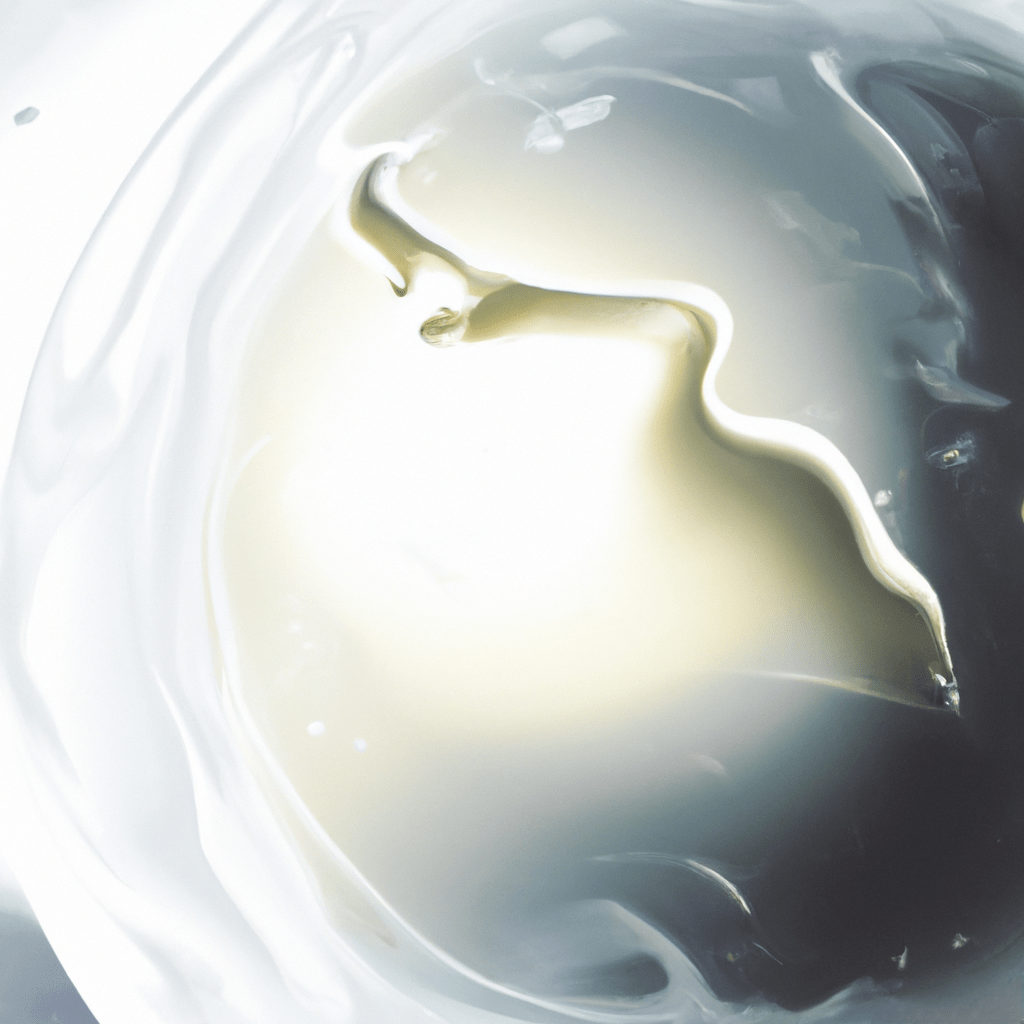
Now milk is all around me,

milk and mud and seas of milk.


Swimming is difficult.


The shore turns into a slit

of dark gray with tiny ants

walking back and forth, back

and forth on it in rows.


Swimming is no human task,

but made more

for a hefty mammal of the sea

to take vortex-forming gulps

with each of its jaunts.


Swimming is daunting, but...

We made this earth

flood now

with a thick whole mucus;


We put the hole in the layer of fat

there to protect us,

we tried to create meteorological dairy farms

of the future.


It’s a future for infants

or other young mammals

ready to suck in the sludge.


Infants, who will not make drudgery out of everything;

they might cry if given the space and opportunity,

but nothing is wrong with their noble, holy crying!


It’s either that or the mammals have to go,

there will come a six-legged waterbug

with miniscule spheres on its legs’ ends.


This milkbug will glide like a skater.


This milkbug will be graceful,

its twelve eyes

taking in the shimmering pearls

stretching from the rings it makes

each time it pushes forward

to the horizon like the rim of a glass.


This milkbug will teach us humans

an unthought course in evolution:

learn to walk on water, go to miracle first

before deciding to fuse with the machine!


The rings it makes each time it pushes forward,

they will have messages inside them

for the adept to glean;

those skilled at deciphering moving milk

will read the round loose lines.


Our code master will rock in laughter at the message there.


What have you done, fair species, the ring begins then ripples outward and with the birth of a smaller ring inside the first there’s something else to read, something else the history books,

the latest research in anthropology or biology, left out.


The sun makes the milk a yellow

you would give to a shy toddler

who always begs mother to take her

outside so she can pick flowers.

The milkbug is prepared to take elegant sips

of milk cold in patches, or cool

or milk hot in patches, or warm

from the sun-drenched endless pool of milk.


Still weaving its silky threads on the liquid ivory

it clears its throat, invisible to the naked eye

and continues You had such a thing going here.


What with the sky-scrapers, the civilization,

hospitals and libraries--

someone even cared about the starvation

of countless babies rather than leave them swirl

in black matter-dust--

the land of milk and honey.


Now the honey is gone! The sweet viscous joy of your honey!


And how did you make amends, by reaching, reaching

squeezing like greedy piglets the teat

until the breast burst

and all around us there is only milk.


Milk the color of my envy

for what you once had,

Milk tainted now--here’s the future you left--

with teeming algae.


2.

Poison of the skies

of the skies in day

of the skies in midday

of the skies when night falls

of the skies when the sky is purple, black and blue


Midnight sky still no escape.


Dawn and clear sky still no elusion

from its dripping down into the soil

remorselessly and without any hesitation.


The sky of an ordinary day, quieted worries, friends

taking you to the beach on the east side

to share with you the sandy earth and the sky,

the way the clouds are layered up there

for the sensitive eye; this sky does nothing

to mitigate the devastation:

this sky might be the most dangerous sky,

a terror-filled sky

ready to erupt

at any time,

each cloud a glowering volcano

with a green-yellow halo of wrath

ready to let stream the substance,

the dread thick substance

from that layer we look up to

and do not believe in;

we do not believe something so thin

could hold back something so thick.


Poison of the skies tested

by defying hands.


Poison of the skies taken

from the swelling glowing global breasts.


Poison of the skies dripping,

then pouring,

then white-water flooding the streets.


We drink this poison and feel satisfied

as it coats our throats.


We let it pour the more!


We let it wash down!


We let ourselves drown

beneath the surface shining

like marble freshly polished

for the ancient holy rites:

marble of a temple.


We don’t care, when others say

Don’t drink it,

holding out their hands

like one saving a drowning child.


We don’t care, and take monstrous gulps

from the earthen bowl,

we share with the microorganisms

dancing in the thickness.


Our only witness are these unseen swimmers

swimming alongside us, they teach us many things

about resilience, about keeping on the course

even when it’s obvious you’ve made a wrong turn--

You could always transform,

just transform and adapt,

they would say--

about staying small.


The skies, when they fall poisonous

right into the children’s glasses,

the glasses they hold up to their parents

or teachers,


These skies are our only skies,

But we drink from them,

we pull from them,

we make constant demands from them,

at our own risk.
2. 

Poison of the skies

of the skies in day

of the skies in midday

of the skies when night falls

of the skies when the sky is purple, black and blue


Midnight sky still no escape.


Dawn and clear sky still no elusion

from its dripping down into the soil

remorselessly and without any hesitation.


The sky of an ordinary day, quieted worries, friends

taking you to the beach on the east side

to share with you the sandy earth and the sky,

the way the clouds are layered up there

for the sensitive eye; this sky does nothing

to mitigate the devastation:

this sky might be the most dangerous sky,

a terror-filled sky

ready to erupt

at any time,

each cloud a glowering volcano

with a green-yellow halo of wrath

ready to let stream the substance,

the dread thick substance

from that layer we look up to

and do not believe in;

we do not believe something so thin

could hold back something so thick.


Poison of the skies tested

by defying hands.


Poison of the skies taken

from the swelling glowing global breasts.


Poison of the skies dripping,

then pouring,

then white-water flooding the streets.


We drink this poison and feel satisfied

as it coats our throats.


We let it pour the more!


We let it wash down!


We let ourselves drown

beneath the surface shining

like marble freshly polished

for the ancient holy rites:

marble of a temple.


We don’t care, when others say

Don’t drink it,

holding out their hands

like one saving a drowning child.


We don’t care, and take monstrous gulps

from the earthen bowl,

we share with the microorganisms

dancing in the thickness.


Our only witness are these unseen swimmers

swimming alongside us, they teach us many things

about resilience, about keeping on the course

even when it’s obvious you’ve made a wrong turn--

You could always transform,

just transform and adapt,

they would say--

about staying small.


The skies, when they fall poisonous

right into the children’s glasses,

the glasses they hold up to their parents

or teachers,


These skies are our only skies,

But we drink from them,

we pull from them,

we make constant demands of them,

at our own risk.