What is it to meditate on Christ?

What is it to meditate on Christ? I think it is to meditate on the extreme hermeneuticism. The Word and the interpretation of the Word is the primary thing when it comes to Christ. Setting aside time for the Christ is setting aside time for the Word, and for the power of the Word in all the spheres of our lives. There is a way in which every other avenue of interpreting our world, save through the Word itself, distances and alienates us from the world, since it is not rooted in nondescriminatory love the way the Word is. Love and creative power. When you hear the Word of Christ in all their mesmerizing insanity, stripped of all the insanity of human ingenuity and manipulation, human neurosis and the human's inability to listen, you are faced with just that: a Word that is loving and affirms the whole and at the same time brings this whole into being. A Word at one with power and deed at the same time as it is one with the powerlessness of every contingency, the powerlessness of empyting itself into the slightest, into the very last detail of a choasmos we find so hard to love. Listening is the only virtue we need to enter into this power and to participate in this powerlessness. For listening and the openness of listening already show a love for what is revealed in every particular provisional phrase and interpretation and world of the human. The rest follows in accord with this open love. As Augustine said, Love, and do what you will. So listen, and do what you will. When we meditate on the Word, what follows is the same world or all the plurality of worlds we had so much trouble, so much agony in affirming before. Only now there is an openness surrounding them, an openness such as that shaped by quality breathing, an openness in which every dot and tittle may flourish and may come to its completion. A completion not like our fantasies of a world at its end, where all things are called to account and explain themselves. No, rather a completion that brings each thing to the highest intensity of its faith as well as of its doubts, of its belonging as well as of its perennial homelessness. This Word of Christ's is the in-between itself and the medium on which all of our worlds and delusions of worlds are painted. It is an end to all other gods only because it allows them space for leisure and for play, and space in which to distance themselves from the dreadfulness of ruling the world, or over countless worlds, alone. The Word gives us wings like the angel and like Hermes, but also flesh and all the forsaken conditionality of flesh. To meditate on Christ is to meditate on our flesh--our winged flesh. The hermeneutic path we take with Christ is indeed like "the angels of heaven ascending and descending on the Son of Man."

in medias res

Maybe this should go in the middle,

your little attempt at a beginning

might fare better there

instead of here where people,

those reading creatures, will ask

what that feature of the thing,

an odd thing to begin with, leads to,

what it will do with the rest;

it would have been best to begin

with something less obtrusive—

a random thought, a jumping lizard,

your lust for someone, a thumping heart—

something that just flares up

and does not demand to be seen again.


The slightest attempt to make a start

takes much from the heart, from there

the heart must weave like a steady weaver,

from there comes the fever of meaning,

as from the end of things; the middle,

though, the time of tragedy and comedy

would have been the perfect place

for your lines, that space where things happen

and keep happening, beginningless, endless,

that space where there are turning points

abundant, happening in moments

like doorways, passageways thrown to us

where memory and anticipation always spin

their wide net and cast it to the sky.


Maybe this should go in the middle,

she held the portrait of her parents,

youthful, making a start of things

with gusto, the portrait screaming

the absence of a child between them.

I think it has more meaning since

the one on the left, she smiled

with a smile lost in the past,

is of my dad before mom died,

while the one on the right, she winced,

is of dad without mom, rocking

on the porch of the Florida farmhouse.

We stood looking at the wall, at each other

for a long time trying to receive sense.


Finally we placed it there, in the middle,

and observed the pictured progression

from commencement to rocking finishing.

We kept looking even through conversation

touching other things, touching the newest

children, touching on the celebration we had

for the last, our girl born with brown curls,

touching on the devastation of everyone

dying at once, of death giving us no time,

touching on the time we took a winding drive

across the States to California, of how easy

the drive was because we had one another.

We finally decided the portrait was well placed,

we faced one another with shining eyes

for a moment. As the sun rose, we slept.

What a stupid thing, vengeance

What a stupid thing, vengeance,

The sharp look,

The angered cry,

All of the blood everywhere

What a stupid thing, vengeance.


How it gives you such putrid fantasies,

How humanity turns to ash of itself,

What a stupid thing, vengeance.


What a stupid thing, vengeance,

And I wish I did not try

To grab even the invisible sword,

That a word remained a word, a deed a deed.

What a stupid thing, vengeance,


And the need that it inspired,

The need thirsting after the whole of nothing:

What a stupid thing, vengeance,

What a stupid thing, vengeance.


What a stupid thing, vengeance,

All the willingness to fight to dance,

All the chasing after quick shadows

And the self-mockery of thought,

What a stupid thing, vengeance.


To be caught and ask to be caught,

To feel the net and toss about in the net,

What a stupid thing, vengeance.


What a stupid thing, vengeance,

When you forget its wherefrom,

When the time has come

But the thought turns thoughtless:

What a stupid thing, vengeance.


And to be burned alive for this!

To be burned alive for sheer thoughtlessness!

What a stupid thing, vengeance!

What a stupid thing, vengeance!

Stakes

His upper lip curled when he said it,

So I know he wasn’t satisfied,

There was more to it than cut-

    dried satisfaction, his stakes

Were higher than that

And his cards were already on the table,

Spread so that he sweat

But they would not fan him,

The dank halls, the regret of loss,

The high that can always be pushed

Just a little higher,

    just a little higher,

Until he folds, until he breaks,

Until all the bets are spent

In the fire cast off the spinning roulette.


But it spun and he spun with it,

The ball landed on number forty-nine,

He was among the ranks of the winners,

Loss and all, so his lip spun too,

Into a circle, into a spiral

then another overlaid on top of that,

Until he smiled, wide as the casino room

And I saw, I caught a glimpse of it,

That he wasn’t, for all his gloom,

Totally dissatisfied either,

His mood as I stood next to him

Was not simple as all that.

The Liquid Inside

His eyes were more corks than eyes

and he felt that when he would be corked

he would at last not only see

but also find a liquid inside

a liquid almost a syrup,

slow-crawling up and down his sides

as he walked, as he leaned,

as he jumped, the liquid would move too

creepingly along his body’s chambers.


It was a passionless liquid,

it could be spilled now any moment

with open eyes it could be tipped out

and left spattered along the walkways

to the chagrin, surprise, dismay

of other passersby; their feet

would probably stick to it,

they would probably curse the man

who spilled his juices everywhere,

this poor man who did not comprehend

the empathy of the others,

for he was unsure whether they contained

a liquid of their own;

he couldn’t know for they were still stopped up,

the corks were still in their sockets

and, as he used to, they go about days

not seeing and not thinking about liquid

inside their very bodies,

such a strange liquid

whose very flowing defies meaning.


But he would be careful not to spill;

he would walk with his head tilted back

to the sky most of the time,

unless it were imperative to bend over,

in which case he would develop a maneuver

of the head that kept it contained,

kept it from falling out his eyes—

he would have many tricks of this kind

to keep the liquid behind the shell

of his body, not wanting to disturb

his friends, his family, or strangers.


As he pretended to look out

onto the yard after a fresh rain,

the unseen droplets sparkling

on the unseen green,

lush and abundant after the downpour,

he pondered corking himself,

just to see and to see

what is on the other side,

if his sensation that morning was correct

of having inside him a turning,

a slow-turning heavy liquid;

but as he would try prying at the corks

there was an attack on his insides

of terrible spikes from the outside,

there was a swooshing noise inside

and the man, holding his dripping eye

became dizzy and turned violently,

sputtering from his mouth and eyes,

then from his ears too, as he collapsed

onto the floor, crashing and splattering

like a broken, fine, priceless

bottle of wine.

Behind the face of the moon we see

Behind the face of the moon we see

there must be another face

which, if dark, shines the way darkness shines,

laughs the way darkness laughs,

and sends cool tears the way

only darkness could do,


a face fantastic in understanding.

We will no longer ask of what we can build

on the moon, when the earth falters,

when we see this face; it will teach us

a silent reverence for the things

turned away from us.

Some questions

Some questions. – To poetize in the face of the planet’s becoming uninhabitable seems intolerable. What do we say when confronted with a dying earth? What, in other words, is loveable and desirable about this earth? Is the loveability of this planet, this earthly life, to be equated with the inhabitability of the planet?

These questions are not incorporated if we stay on the level of hoping that poetry, through its devices and metaphors, will beautify and thereby make this earth more significant and tolerable. Our poesy must come to terms with a dying earth, that is, it must come to terms with a dying language that is capable of beautifying the planet. If our language becomes ugly and inhospitable, we must recognize, or be able to recognize, when it is still a language that is most fitting for the occasion. If the occasion is a nihilistic one, we must ask whether our words, our phrases, are true to this scenario or whether, once again, we are attempting to veil our planetary woes in a beautifying symbolism. Of course, the question still weighs on us: what is the marker that our language has become less capable of living with the devastation of the planet? Will we become less impressed by the language that tries to express the monstrous loss the poets are undergoing, as members of the species? Will language, its phrases, its fitting words, its cadences, become uglier and uglier as our planet’s hospitable places rot?   

Outside This Room

I know that outside this room

something gives signs of life,

something twitches or bounds

and could join my legs jumping

beneath the desk, seer legs.


I know but don’t leave the room

instead I make the room

smaller and smaller, shrinking

its proportions to a point

somehow I still fit inside.


I still look outside the room,

my microscopic room,

to the vastness out there

the trees are skyscraping spears

its teeming ants, battle tanks.


Wow, I admire from my room

it has become so large

that world out there, so large

another reason for me

to stay here pin-pointedly.


Someone breathed in my dust room

and now I float inside

until I reach the mass

of dark pulsating flowers

I swim in this for hours.


Until I realize my room

is floating inside me

and I turn with the room

spin together with the room

until I almost vomit.


I can’t see how from my room

I reached the great outside

only to go inside

and further, further inside

into the pit of my flesh.

An Alternative Ending to Plato’s Phaedo

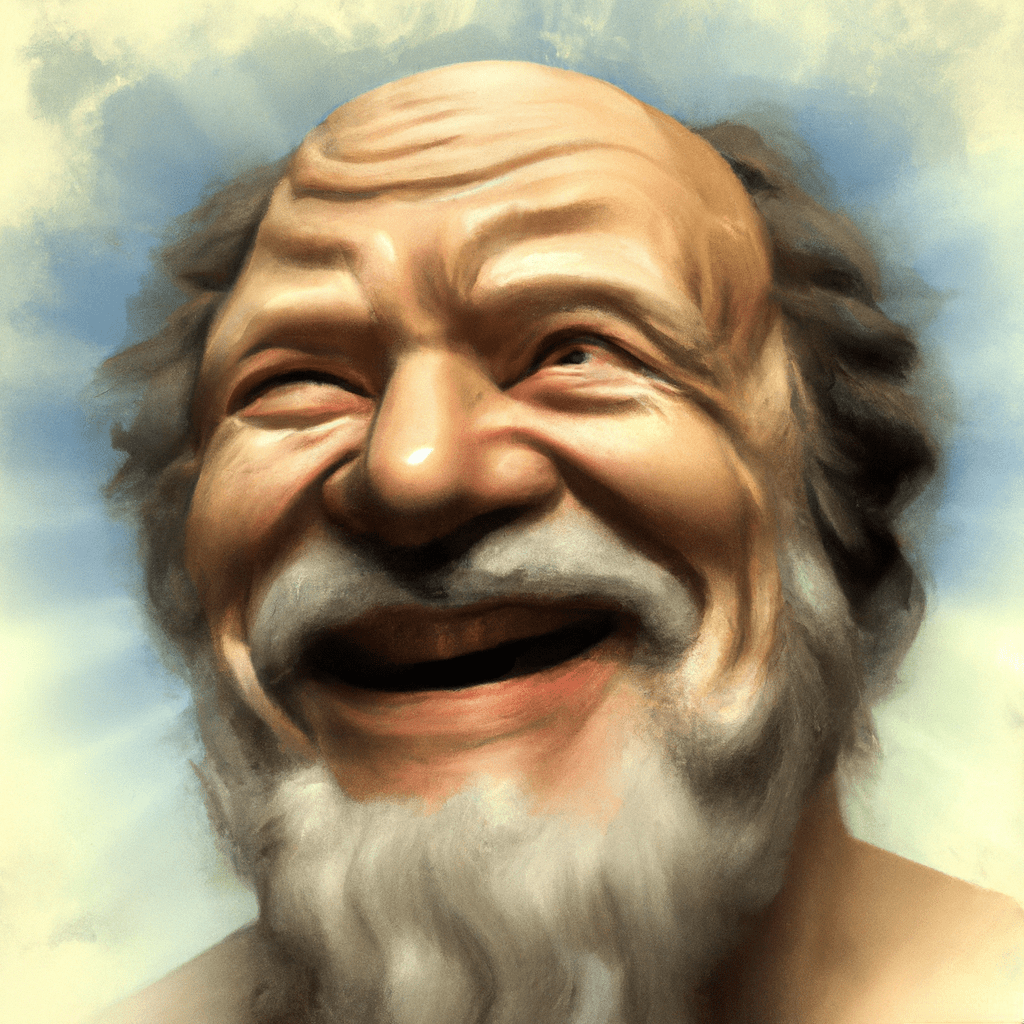
He grew tired of asking questions, which was unfortunate, because those around him were waiting, and had been waiting, with utmost patience and devotions to hear the questions he would ask now, now that he was close to death.  But what he wanted more, it seemed, was to banter, throw around jokes, to dance and sing and perhaps have a bit more to drink, other than that heavy draught he had taken a short while ago, that is, if it were allowed by the guards outside the room.  These and he wanted to touch, to touch the men one more time before closing his eyes, before his conversation with Solon and Homer and the heroes of old, the shades.  He was hoping, but didn’t put too much stress on it, that Crito and Phaedo and the others there would simply come up to him to give him a great hug, to let him smell one last time the oil and the earth on the men’s olive skin. 

            Xanthippe and the other women were allowed to stay inside as long, he said, as they played music together and sang together.  This also helped the women with their tears, and Crito too, although as Crito danced he let out a couple streams from his eyes with the thought that he could tell Socrates that it was only sweat, that he was dancing and worked up quite a sweat! 

            Mnesarchus, little known but there nonetheless for saying goodbye to the dying wise one, finally broke the silence of the gathering and–asked Socrates a question.  Socrates, he said, pushing himself from the wall where he had been leaning, listening, watching Socrates and thinking about him, then walking over to the man’s bedside, where Socrates, his legs growing a bit tired, had propped himself, upright, after a good dance with the young men, Socrates, you know I, more than anyone else here, would like to dance with you, join in the festivities and the celebration we are having of your life; such a life!  But you know, too, how your disciples will be angered by this: not being able to hear you anymore, being without you, or what’s best of you.  After your condemnation, how, your disciples ask, are we to remember you, you godless man whom no god remembers, how are we to carry on the secrets of what you have given us, especially as we are only singing and dancing and reciting poetry at your death!  Who will be the one to preserve you?

            Socrates let loose a smile and shook his head in slight mockery at Mnesarchus’s question.  But, although the ladies were just beginning a song he adored, although the men he adored were beginning to sway in response to the notes with their fit bodies, he felt he had to respond to Mnesarchus, as he has, although a spoilsport, always asked the questions that were most important, even now, even now when Socrates wanted nothing more, for himself and for the loved ones gathered there for him, to have dancing, drink, some merriment.  Mnesarchus, you wickedly great fool, you!  Let me say first that I understand your worries, they are good and true worries, although I’m unsure about their being beautiful.  Earlier in my vocation, after having been asked with a strange irksome prodding to carry on as a lover of wisdom, I worried about such things.  I asked What would be my legacy, or not my legacy, because one always disappears in the presence of great questions or is sufficiently challenged by them so as to keep things open, keep them amorphous and on the road, the way we had been so many times in our friendly conversations, what would be the legacy of these questions?  I stayed up long nights asking myself and the dog such questions, questions my friends and I simply weren’t busy with, until it dawned on me: that will take care of itself, Mnesarchus, the way all things, ultimately, take care of themselves.

            What do you mean, Socrates.  Mnesarchus always called Socrates by his name and never Master, or Teacher or Instructor, sometimes even Holy Master or Holy Teacher the way the other young boys, those devoted as he, did.  He knew that Socrates disdained nothing more than this display, and would rather be called by a nickname that is at the same time a jibe than one of these appellations.  He thought Maybe Socrates heard something more from the priestess about immortality which he could share now, which would be relevant.  Finally taking a seat next to Socrates, sitting close enough to him to smell the wine on his breath, the oil on his head and face and neck, he leaned over the more to put his arm around Socrates for a time, the time of that silence in which Socrates usually traveled when thinking and questioning.

            There will come a one, Socrates went on, who will take care of this for us, but it might not be in the way you wish.  He will have something, plenty, to say about me, and not everything he says will be accurate and most of what he says will, while being accurate and correct, sure, not get to the bottom of things, nor will they properly display a secret.  This will be the legacy of the questions, in matters for debate and not as the magic that we experienced when called by a question, when called to one another to question.  This writer, because he insists on writing, will be, like you, like more than a few others here on this occasion–different only in that he couldn’t make it–frustrated, embittered by the lack of gravity at the end of our journey, that it all turned to song and dance and light play and festivities, that it did not reach up to match the grandeur of some, of all of our previous investigations.  He will get his revenge by writing such amazing pieces, most of which will have me as one of the dramatis personae, along with a couple others who are here now, amazing but they will have lost the wind, something important, in the conversations, in the time we spent together, and these works will be one of the only sources of my life afterwards.  It will be impossible to know that I was more party-animal than others imagined, and that what I wanted most, more than to question, more than to discover truth or embrace wisdom, was to have a gay time with friends, and the women playing music, and the wine and frolicking of it all.  I wanted this, and by the dog a big hug, before I died!     

            Mnesarchus heard this and gave Socrates what he wanted, hugging him not the way a boy or a man hugs his father, but with all the sensuality and tenderness a lover gives to a lover.  They might have kissed, too, but Crito came over, oblivious of what had taken place, to pull Mnesarchus and Socrates into a roundelay.  Mnesarchus got up from his seat with Socrates, asked him whether he wanted to join him in the dance, Socrates gave a big smile and said No, my legs are too tired, this dancing has worn me out, by the dog, Mnesarchus smiled a shy smile, nodded and joined the others dancing; Socrates, still smiling, laughing like a grandfather after one of his war jokes, lay down on his cot, and listened to the music become fainter, as he came upon not a light, but men and women, the wisest, gathered round a courtyard and–dancing themselves, all in bright colors!  Wherever Socrates was then, he smiled.

A glance at perspective

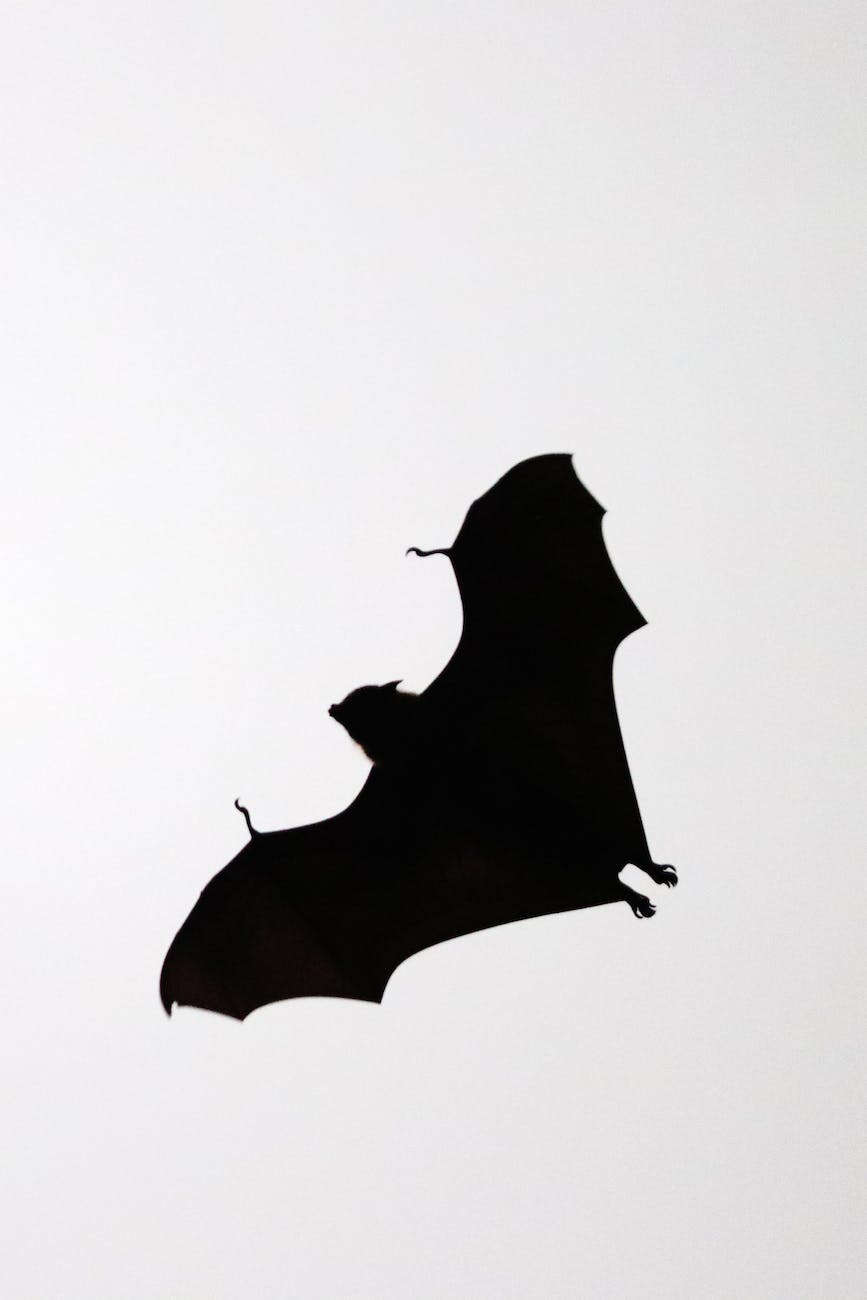
A glance at perspective.  If I were a human and a lion and a cockroach, able to live out from where they live out their lives, while at once able to live out my life as a human among human things, human chatter and human worries, then I would be a special being indeed.  I would be human-lion-cockroach, the borders of my existence would be multifaceted and unclear–for instance, whether I should scurry at the lion’s feet, or run from the lion’s roar, whether trash and earthy viscous matter should be my meal, or the antelope or zebra, or something on a plate, shared with friends and enjoyed over gossip and gesticulations, subtle and explicit, and glances over the table–and I would miss out on just what it means to be a human being, or a cockroach, or a lion.  What it’s like to be a bat is, after all, conceivable–but not a bat alone, instead it would be a being like a bat, that is, conceiving itself to be this bat.  We would feel an unbridgeable gap between ourselves, such imaginative and sympathetic beings as we are, from the bat itself, alone and blindly-masterfully darting for prey above our heads.

A Note on Nihilism

It’s different, how an individual–especially a philosopher, trained how he could be trained in times of crises–faces the threat of nihilism and how it is faced generally, for members of a social body generally under its throes.  While the former holds his head above, or at least at a distance–two or three centuries worth of distance, Nietzsche suggested–from the trends of the day, the latter is but another name for the dominant trend, and when these trends are related to meaning, the mores of how to live one’s life, the convention of the wherefore or of the establishment of desiderata, nihilism is lived, that is, it’s messy, it’s cruel, it’s violent en masse.

            Of course the philosopher could live with nihilism, could find himself beat down, in fact, by its messiness and chaos, could live it like all really important questions.  But there is this difference: the philosopher may still find it questionable, nihilism, or the loss of one meaning as it applies to–what?  As it concerns–whom?  So questionable is the total loss of meaning that for a philosopher it could be a breath of an episode of one of his days, not this ad nauseam of centuries, entire ages of humanity.  A philosopher may wake up from nihilism as from a bad dream, or come to wear it like a badge.  In fact, the latter seems what society is willing to do, but again how differently!  He may wear it as an emblem that he was able to question all the way up to, including, embracing, the question of meaning itself, where meaning–no matter how obvious and present, no matter how it is tied to our very lives, even our biological lives–is vulnerable, questionable, mortal.  How different this is than the mere entertainment with destruction and ambiguity we face currently, this current of post truth and post humanism!  There we question–and it is noble we question, it is ever noble we question!–but we do not question–with nobility!

            We have the example of Nietzsche–we have the example, too, of Nagarjuna, and of the dark nights of the souls of saints, those who felt close to God and to meaning–of someone who has lived nihilism through to its depths and arrived on the other side.  In the span of thirty years he was able to bring himself, if not the solace, then the courage of a new viewpoint after the greatest blanket of meaning had been ripped from him.  If only we could wish for such overcoming in the sweep of society, in the promulgated expectations and collective schemes invested in by the great many!  Well–could we?  That is, is there a way to, if not relieve the process–for the process of meaning’s loss is as important for the society as it is for the individual–be perhaps sped along, and brought to a–an affirmative, let’s hope!–conclusion? 

Trying on different lives.

Trying on different lives.  We must learn to try on different lives, lest we become too embittered with the narrowness of one.  Not that bitterness, or staying away from it, should be our only motivation in changing our spiritual clothes; there are plenty of other reasons for doing so, like adaptation, learning and exploration.  Sometimes, indeed, it’s important to change ourselves, even at the fundament of our lives if possible, because–we are already doing it!  Our lives are always and already swept away by transformations of the highest order, and to stay within our habits of our manner of being would be–dishonesty! 

            But bitterness does play a mighty role, because there are manifold ways in which life may become routinized and we may miss out on what is most important in living by our being stuck in one vantage point.  Then the bitterness spreads, communication falters, life becomes a series of faulty dead-ends; all because we failed to experiment with ourselves!  Experiment with our manner of speaking with others, our bearing in interacting with other beings, experiment with our beliefs or turn our failure to believe, our inherent skepticism, into, if not a dogma or a conviction, then at least into a temporary raft of confidence in the shaky waters of life.  The same goes for our taste in music, our reading and study, our love affairs: it’s as if, after having played with them for so long and adapted our repartee to their thrusts, we must all at once learn new moves in dealing with them, even to the extent of no longer trusting them, because we know, better than we know anything, that our trust is built on a certain pattern-finding of intensities among an ever-flowing stream of contingencies.  So the bitterness we are avoiding is not of the petty sort, rooted in envy of others’ differences and others’ lives, but is a vague sense, by which we do not want to be tricked, that, if we are not careful, we might be felled, we might finally become the victim, of what at one time made us stand!  After a while, and not only for the impatient or the unthankful, we notice our strengths becoming our weaknesses, our hammer becoming our crutch, our voice becoming our ventriloquism.  We move on–because we never once agreed, even when the thing, when the habit or when the love was most powerful, that it would remain the meaning of our lives, the way in which to best handle the multiple avenues, arenas and fights within those diverse arenas life presents to us with the only constancy life knows.  However vaguely, we sense the expiration date of the habits we have formed; even the slow erosion of the stupid rock which forms our bottom, we sense that too, and would not like to sink, yet, into that abyss that yawns beneath the ground and stability of that rock.

            This strategy, of altering whatever dress we wear so that we may be invited to the stupendous diversity of parties happening all around, of moving on from whatever form we have taken, even if it’s a well-encrusted shape that took many years to congeal, is not simply a strategy for avoiding despair.  Despair may come, of course despair may come, when we feel, undeniably, the erosion of our foundation, when we feel, without being able to do anything about it at first, the evacuation of our road or ground or post away from us.  Not so much despair but the bitterness of despairing, it is that we wish to face with more assertive negation more than anything else, that which keeps us keeping on and keeping up with the way life alters, from profound to dull, from clear to opaque, from restful to fretfully restless without staying in a particular modulation as though it were a fate, and a terrible and undesirable fate, no less.  Because there is a certain bitterness at the bottom of being stuck in despair, when the changes have occurred but something, some fragment of the life we still contain, remains and is able to look back on what it has lost as a loss of its definition, despite the glimmers or more sustained insight that whatever it was that is evaporated was bound to be lost, whether by our hand or not.  A bitterness with life, and a certain stubbornness is at the bottom of all despairing.

            Whence comes this power to transform, and how on earth, how amidst the crashing and fire and blackness of the universe, are we to find ourselves ahead of ourselves in this way?  It seems we are attempting, as though through a type of madness and complete negation of the powers surrounding us, to pull ourselves up by our own bootstraps, to take it as our stance that transformation is, in the end, our responsibility and up to us, that escaping despair and the bitterness of despairing is ultimately within our ability.  We are curious, so we set out on a journey; we are buffeted by forces that prod us to alter ourselves and, instead of hanging on to the old beaten thing, we give it up, and again this is our intention; we want to learn the broader significance of things, so learn to widen our horizons, not only in the authors we take in, but in our own thoughts, our own affects, our own manner and disposition.  Fate is more of a plaything than a terror and we are the child, bending it this way and that, at our whim, because bitterness seems the last thing we would want of this life, or because we happen to be just that kind of person who won’t take no for an answer, even the no of not being granted what everyone around her, what she herself at times, has said is impossible: to be something that you’re not.

            It seems this way, but let us not fool ourselves: we cannot so decide to take off our clothes and trade them in for another; nor is this spontaneous strategy a way itself of spitting in the face of life, fighting the possibility of bitterness with bitterness itself, aiming, despite life’s shaping us for one thing and one thing only, for one narrow look on the world, to rip through our barriers and become the plenum itself, the infinite outpouring of lives itself.  We accept our limitations, and do not pine after any godlike control of the course of things.  But we might try, however, however probable or necessary it is that we shall fail, because if we do not try the impossible–a different life, having the outline within us already of a different life and merely, somehow, having to spell it out, give it a shot, in the face of our life-world–bitterness ensues, the worst, the most powerful type of bitterness, that of a feeling of powerlessness, not for a lack of effectiveness, but because–we didn’t try.

Job asks the god Why a bet

Job asks the god Why a bet

why toy with lives in such ways?


The wind can hardly hold back

its gusts of mighty laughter.


The wind then composes breath,

says to the the upright small one,


You are a bet yourself, Job,

do not forget that, wise man.


You do not require us two,

the adversary and me,


to wage your life for nothing;

because you know it was that,


nothing, that I needed not

bet away your family,


it was unnecessary,

I apologize, my son.


Job is startled by all this,

a god apologizing!


He notices the wind puffs

in little cool breaths of air


Then he grows warm and breathless

because the god is no longer there.


I had so much more to say,

not only about myself.


I wanted to know the way

we are bets, what this entails.


I survived when the barn’s rails

came from their posts and impaled,


Job sighs, holding back his cries,

my ten beautiful children.


What about them, their voices

which were covered in rubble


deserved not to be troubled,

a word, a lament, a joy?


Must I be the voice for them,

a voice for all dead children?


Must I tell of the horror

to the replacement children


that some things are never heard

because they are never asked,


they are never given voice.

I think they should know all this.


Tell me, god, you great guster,

am I right to speak this way?


The wind is hushed, deadly hushed.

Job, despondent, walks away.

so we have made a mistake

so we have made a mistake

and world is not lost to us,

there is still world, as we

still ask about our hands,

about the bats, about

the men in coats walking

down there in the rain


not a world we can trust

with unflagging loyalty no

sometimes we must fly

into other atmospheres,

even if we carry with us,

always carry with us

the poisons of our own air


then we will land again,

we will crash again into dust

but even through its mist

swirling in this new desert

we can discern world, rising

like a sand castle, exposed

at all times to sea, but there


we will stop our searching

after world, some semblance

of world after losing world

when we realize that world

is in every of our gestures,

that world is even right there

in the boredom over world


it is a world that surprises

a world of world losses

a world of world evaporation

a world of quick devastation

but this is not world itself,

for world itself is still and shy

world itself makes no outcry

Shots of Poetry

Shots of Poetry. – Part of the affective character of poetry is the tone from which it is spoken, and part of the tone from which it is spoken is the energy of the speech, its charge with wakefulness or tiredness. I say the energy of the speech, rather than the speaker, as a style itself, the words themselves, precisely despite the speaker, can be inspired with sharpness and vivacity or dusk, twilight, haze. Language itself brings its own resources with which to vivify speakers who would otherwise want rest. The converse is also true, that language itself can depress a speaker who would otherwise want gaiety and sprightliness.

I have left out the possibility of exhaustion, which is not a possibility only of extreme tiredness. There is also an exhaustion after words of glorification, intensification of energies—exactly these words can bring the speaker to collapse into what can be joined to both tiredness and wakefulness but is in fact beyond the two.