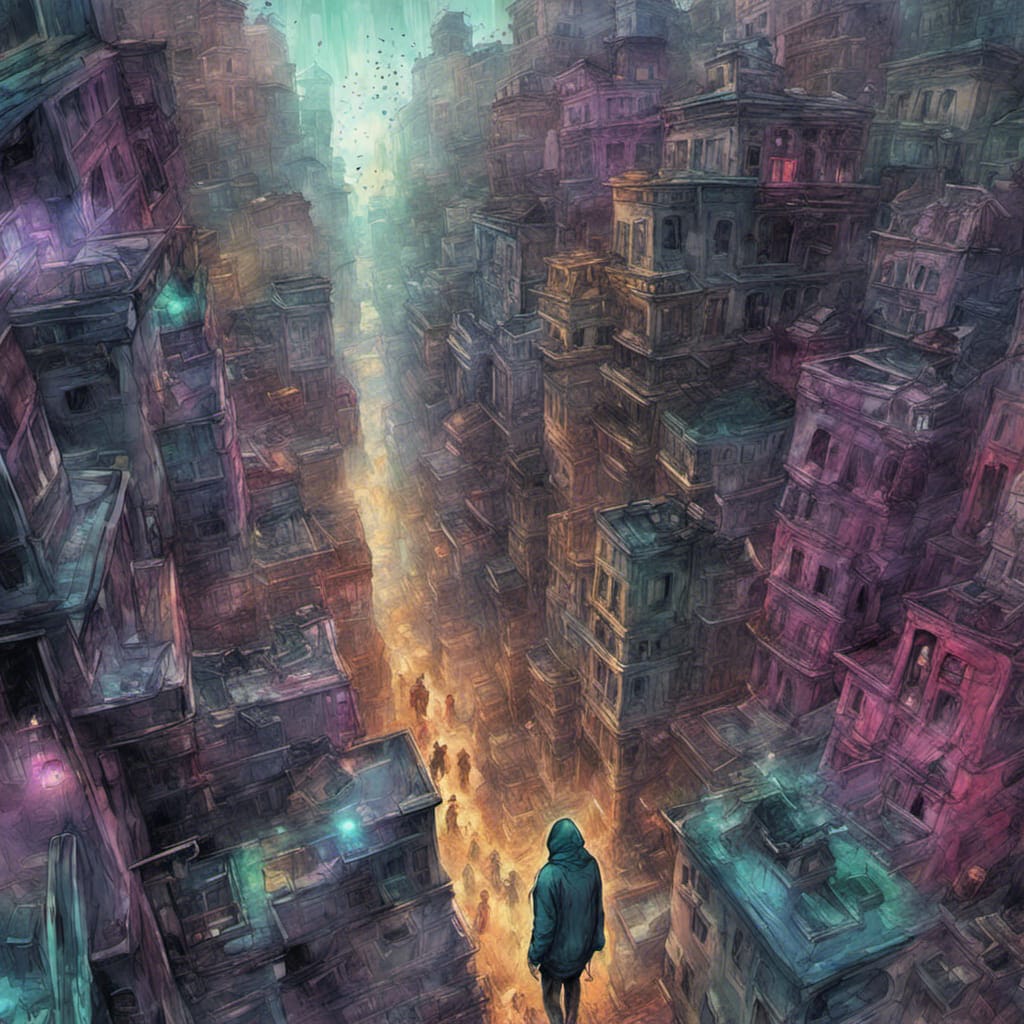
Addiction

When we become addicted, addicted to whatever–addicted to a drug, to a person, to a lifestyle, to a book or an author, to a meal, to a movie, to a manner of speaking; but then again, all of these others become modulations of the first when we are addicted–we lose ourselves, lose sight of ourselves, lose sight of the world surrounding the addiction, lose the world in a closedness unbefitting a being wondrous enough to recognize the addiction as addiction, wondrous enough to become addicted to begin with–a being such as we are.  The world closes in around us in a vivid fog, the faces and expressions of even our greatest loves on this earth lose their capacity to shine forth, everything is covered with the aching, hankering shadow of craving and looking in all things for one thing, or of asking that it at least accompany all things as a background, or a goal, or an intermission between one thing and the next.

            Without some form of narcotization, life is–impossible.  Life is always and ever after some buzz or other, buzzing after the buzz…and it’s understandable.  Throughout human history in particular, we noticed that this plant does such and such to us while this other plant does something else, we discovered that this brew, when left awhile to sit and ferment in a vat, gives quite the impression to the nervous system, that if you swallow the bulbs of this particular cactus it might make you sick, even unto retching and having your insides feel as though turning inside-out, yes, there is all that, but if you make it through this sickness you will learn something about yourself and about the world you otherwise could not have, you will see differently, and from then on out, if you take this particular psychedelic as a gift, experience differently and live differently.  For learning, for relaxation, for pain management, or for sheer adventure, for risk and daring, for the pursuit of the edge, of life at the edge, narcotics, drugs of all sorts, have been an indelible stamp on our lives, an accent to life on earth, whether to enhance its joys or to soothe and distract from its drudgery and woe.  We must thank these plants and the earth from which they spring.  We must be thankful for narcotics, and not thankful in part; thankful through and through.  Thankful for the ease and distractions they have given us, thankful for the lessons they have taught us, thankful for the way they might have led us through an otherwise unbearable time.

            But addiction is something else.  With addiction this attitude of gratitude is struck down; or, if you are grateful for everything, even your addictions, these addictions, on some occasion, some day or night, challenge the overwhelming gratitude for life you might otherwise have.  Addiction swells and charges like a bull in the playpen with your children, the precious dear ones, and sweeps everything into its disarray and its chaos.  Addiction is careless, reckless beyond imagination, and hopeless as well; hopeless because it only has one hope, the hope to continue in its addiction, to preserve itself within it, to continue in its ways, which is no hope at all.  The tremendous depths and expanses of our species, of you, addict, are winnowed down to the narrowest image of yourself, cut down to a pebble and a small enterprise, and the risk or gamble became the loss, the lesson became the lesson of disaster, the pain management became the dependency, the distraction became the oblivion.  So we have made a wrong turn in expressing our powers, in becoming the utmost, the maximum, of our powers, in giving back to life what it has given us, power and more power, ever-expanding and ever-growing power.  We have become, instead, addicted–addicts; we’ve turned our backs on life in order to become helpless and wayward representatives of life’s grandeur and splendor.  We’ve turned life into a spoiled image of itself, and the tarnish seems unerasable, seems like a thick, viscous covering over life’s energies, like a straight-jacket, like a portable prison, portable because it follows you everywhere; addiction knows no borders–it will follow you into the desert, into the wasteland, into a cell, a real, hard, barren prison cell.

            But life is so hard!  And what is freedom anyway?  We shout these cries from within and cries from without to those about us who have taken to worry about us, who have seen us changed, different somehow, who think maybe we might need a little help, or more than a little help, and we shout the same to our helpers as well: what is freedom anyway?  But life–life is so hard!  Since we now have time to ask these questions, and we stand at a certain distance from running after the next fix at least for the time of these ruminations, let us ask these questions, or turn the first into a question and ask the second as well.  Let us ask first: Is life–hard?  Yes, we rush to respond, but there are also fountains of delight and ease, also softness and rich pleasures.  There is softness in the company of hardness, lightness in the company of heaviness, and they have come to you as their vessel and residence; you contain both, undeniably and irreparably.  In fact, the entire issue of addiction can be seen as: the relation of softness to hardness, of lightness to heaviness.  The difficulty of balancing these two aspects of ourselves, of becoming light when the world is light, heavy when the world is heavy, of staying in tune with the world in this way, is so much of what the treachery of addiction comes down to.  Rather than flowing on with life as it goes, or rising up like a mountain when we have to, we demand of our lives that they be light and gay and godlike when they are heavy and pathetic, that they be hard and uncaring when their is so much to care for, so much to commit ourselves to.

            And what of freedom?  The possibility of addiction, in any of its forms or in whatever way you conceptualize it, seems obviously to thwart freedom in at least its most intuitive and commonly-accepted sense.  Addiction comes like a scourge to the free and independent life.  But as we said above, not only are we able, free in a sense, to look at our addictions, to look at it from within or to look back on it; not only that, but we are also capable, with the strangest capacity, to become addicted.  How strange, and, like a negative image of freedom, but with a power of its own, lessons and risks and hells, perhaps even heavens, of its own, it shows us our true colors, shows us in our proper light, as much as any freedom.  It shows the possibility, indeed the probability, of failure, without which freedom would be meaningless.  That we can uproot ourselves from the mud of addiction is an open question, but we discover something profound about ourselves and about the world nevertheless: that the greatest can be brought down and low by the stupidest cravings, by a dumb and dumbfounded snatching after the next bag, or the next bottle, the next puff or the next injection.  At least if nothing else, such a travesty, such a disparity in the worth of the contestants in this match, inspires a battle in us.  Whether the battle itself is healthy or not is another matter, to be decided only in the process of undergoing it, falling and getting up, doing this again and again–because the snares are all around; as long as you live, the traps shall be set for your steps.  

            So what are we to do with these addictions, what should be our course of action–how are we to recover?  We have turned our backs on our lives, on its proper strength, on life–what now?  A meeting with fellow addicts, a resolution, a promise you swear to yourself alone or before others not to continue in your ways, a program, meditation, a retreat, a religion–salvation?  Where do we turn for help, after having become addicted, after having turned back on life?  Where else do we turn but back to life, back to its flowing gifts, back to its expansiveness, without promises or assurances, but alive, full of that good steady high with its tempo of vicissitudes, its rhythm of regret and achievement, of peaks and valleys, of pinnacles and abysses?  Life, like a god, but ungodly, will have us back, will accept us into the folds of life like a prodigal son.  In fact, life has been whispering to us all along, whispering when we thought all was lost.  And now–now her whisper is right in your ear, still a whisper but the beating of it along the ridge of your ear and into the delicate mechanics inside is clear enough.  She keeps whispering the same, and it’s hope enough, even if a hope beyond hope: Come back to me!  We have become addicted, we have turned our backs on life; but it is never, never to late–to return to life, to wake from our torpor.
Dialogue Concerning Memory

Carl:  Do you remember anything?  Of last night?

Steven:  Yeah, the beginning; I remember the beginning.  You were so sweet to say what you said, and I remember almost crying when you said it, but holding back, because I had to get back out there, get back in plain sight of everyone.  It was around then, around the middle of the night in the middle of everything, that I–how should I say it–I turned off.

Carl:  You turned off?  What do you mean?  You seemed as lively and fresh as on any other day.  It was only a lapse of memory.

Steven:  That’s what I mean, Carl.  I turned off the way that a machine turns off–

Carl:  –But that’s just it, you were running all over the place, you weren’t turned off, just find another way to say it.

Steven:  I want to remember!  Then I’ll find another way to say it. Even a computer, or a robot, has that last leg of a charge, and during it it will still show images, it will still walk or roll along the floor, it will still finish its last command.

Carl:  You thought you were running along the way that a machine runs along?

Steven:  Not exactly that. I was trying to say something important about memory. I think it makes up who we are.  I, for one, am obsessed with being able to remember.  If I can’t remember something, it seems as if I might as well have not been there.  It seems a waste and that I, yes like a robot, like a computer, am just a bunch of bells and whistles putting together a show for a little while, but in reality it’s a blank screen and a device of plastic and metal and glass.  That’s how I feel–

Carl:  –What, that you’re plastic and metal and glass–

Steven:  –That I’m only a body–no–that I’m only a body, and the meaning of what this body’s doing was stripped away as soon as I was robbed of the stitching of memory.  You know, how it ties everything together, how it helps–this is what I’ve been trying to say–keep you together?

Carl:  I get it, and, believe me, I always want to remember my days as well.  But you’re being too hard on yourself, don’t you think?  You don’t–we don’t–have to make everything into this epic drama, or into a great existential crisis.  Besides, there was alcohol involved.  You remember that, I’m sure?  You must have drunk down a pint in ten minutes.  Who’s going to remember anything after that?  I say if you can remember the cause of your lack of memory, or if the cause is in your power to control in the future, and–the big one–if you made it through the night unscathed, then you can rest well.  It’s only when it comes disastrously, or suddenly without any cause or announcement, or when you committed some heinous crime under the influence or blacked out that you would never otherwise commit, it’s only then–do you remember Larson’s story about waking up, not in a jail, in prison, how he was forced to go through interrogations for something he couldn’t recall at all?–it’s only then that it is cause for extreme worry of the sort you’re having now.  It wasn’t too long ago that Aunt Carmen started going.  I remember about five years ago–it must have been early onset–she started to say My mind is turning into MUSH, everything is turning into MUSH, it’s all–muddy. Then–it came like a knife wound when you have just finished fighting, when you don’t take the fight seriously anymore, when I began to think Maybe she is just having a bit of trouble remembering, the brain’s only firing a little slower with her age–she was almost eighty–just like that, like a heartless slap across the face that does more than sting, it leaves a mark, it leaves a wound, you have to account for it, people are asking questions–then she couldn’t remember anything.  Not–not even her children, let alone US, she couldn’t remember–anything.  Remember that?

Steve:  Yeah–uh-uh, I remember.  You–

Carl:  –THAT’S when you–when you start–worrying!  Until then let a lapse of memory be a little thing, a trifle.

Steve:  I remember Aunt Carmen, that–that was so sad, going over there and the look she gave us: completely blank, not even a glimmer of recognition.  That was like you said, a disaster, and it seemed she was better off–

Carl:  –Steve–

Steve:  –dead.  It did, Carl.  I think it was cruel to have her carried around for the last three years the way she was, hoisted up onto her bed, then carried from her bed and lifted down the hall for a meal or for her to use the bathroom–which she wouldn’t make every time–then put into a chair so that one of her daughters could roll her around.  I asked myself, when I went on one of these walks with her and Charlene, What does she think about as she’s being carried here and there, as we’re rolling her down Massachusetts Avenue?  The way she looked at us, the way you said she looked at everything.  Something like a baby but more dreadfully than that: it didn’t have a future.  Still, I would ask How does everything appear for her?  If she remembered this street it would tie a cord between her and a whole host of things, between her and each building–her grandpa, Uncle Raven, had a glass shop in Mass Ave–it would tie her to all of the lives living on that street, and the lives behind those lives–she had friends everywhere, especially on that street, and it seemed like we were spreading, not joy, but agony through the town when we stopped sixty or seventy times for Carmen to meet with Cindy from piano lessons, or Samantha from the School Board, or Mr. and Mrs. Pavel from the hospital; I could see the tears welling up it their eyes as we greeted one another, I could see that they just wanted to leave and remember better days, forget, if anything is to be forgotten, this, this body, like a mannequin, being rolled around for all to see.  How was she seeing all the faces, seeing the faces of buildings, seeing the birds flit through the air, seeing the babies pushed along in strollers or the dogs walking along the sidewalk on a leash with probably someone she knew–before all that.

Carl:  Don’t you ever think…

Steve:  Carl?  What?

Carl:  Don’t you ever think it might have been–beautiful.  Like everything was shining as though for the first time, or the last time, that they were sending off their insubstantial sparks into the air for the last time?  Maybe it’s not exactly like I said, maybe the worry was confined to us.  Almost every time I saw her she was smiling! Wasn’t that incredible?  Maybe we’re robbed of memory because remembering everything would be too hard.  I know that Aunt Carmen’s was a special case, but still, the dead don’t remember, they are remembered.  The dead are robbed of their own memory like they are robbed of everything else, but maybe that time not remembering are when things just are, when they are not weighed down with all the stories we have to tell about them.

Steve:  Well that’s quite a way to console me, through this painful memory of Aunt Carmen.  She was so sweet, and you’re right, she was sweet until the end, even when she couldn’t remember a thing.  I don’t know, Carl, I always think during those times, when I’m charging through without registering it, that I hurt someone, I said something stupid or hurtful. 

Carl:  What has you think that?

Steve:  That’s just it, Carl: I can’t remember!

A Strange Ideal

Every living being has its perspective.  The unliving, those we so naively-innocently call inanimate–but there is always movement!–have theirs, too.  Each perspective is, in relation to the others, vastly disproportionate, unrelatable and incommensurable.  Granted.  But there is a good deal of trouble hidden in this stance of ours, this our perspective on perspectives, which we tend to overlook.  We tend to forget that all living and unliving beings, that we ourselves–for surely we are one of these, or we fall, somehow, between the two, or go back and forth between them–are composed of, and by, a multiplicity of drives, each with its own perspective, its own horizon, its own preferences, its own For and Against.  If there is unrelatability or incommensurability between or among perspectives, then, this incommensurability goes all the way up, to the greatest and most encompassing of them, those that surround whole galaxies and universes and the giant systems we timidly call home, as well as all the way down, to the minutest and seemingly most insignificant drives and collections of drives.  We are unknown to one another, yes, granted, but we are also unknown, terribly and thoroughly unknown, to ourselves.  We must come to terms with this before we set about locking up all the beings surrounding us in existence in their windowless houses, because this thorough-going incommensurability, to the point of a radical solipsism, might just provide an opening, an open window, onto the world and onto other beings, might open up a place, an arena, where we may finally meet and greet and encounter them as what they are: arrays and lightning flashes of perspective, these drives, these warring and unharmonious drives, who, despite their foreign tongues and foreignness in comparison to one another, still meet up on this turf where what is shared is precisely war, struggle and lack of understanding, understanding only this, that lots will remain incommunicable between one perspective and another, but that this is not a justification to ignore them, it does not serve as any excuse to not play their game of appropriation and expropriation with them.  In fact, our newly-found stance regarding all things, regarding ourselves, puts us right in the thick of life, as though we all of a sudden are not only wearing it as a garment but have it inside too: life and the unmanageable chaos of life; suddenly we realize that this is sharing enough, that we inevitably share, even when we find ourselves at such a tremendous distance from one another, even when we insist on such a distance.

            We have discussed this aspect of sharing before, this strange quality of sharing by which it allows itself to persevere, always and forever, despite our confusion regarding one another.  This is our proper place in relation to one another, this our distance from one another, which twists itself so in its meanderings that it turns into a type of closeness and supreme intimacy.  For the head musician, the conductor, of our orchestra only has to step down from his chair a moment in order to have some realization that it is not only HIS music playing in the venue of existence.  And if he doesn’t, if he plays on in blissful oblivion of these others?  Well, then, there is the more vibrant relation of the border separating him from all else, that liminal sound-field serving as the transition from his tunes and way of playing music to these others.  Whether he sees it (hears it) or not, whether he acknowledges it or not, this Zwischen place stands, however tenuously and ambiguously, and without it his music would not sound the same, would not be his music–he would cease to be what he is, the player he has become.  For we all become the good players that we are in the course of a vibrant battle, vibrant not because it enters our consciousness and becomes explicit–it surely almost never does, this battlefield surrounding all things–but because it is so vibrant and vital as to grow hands and mold and shape the beings in its care to its overarching design, a design not laid on them like a compulsion but like a calling, in a whisper, to become what they are, to become alike and dissimilar from all the rest, in its own way.  Overarching, then, not because it has a hold on all of us from on high, but because there are woven threads of significance and gaps of insignificance between us in our lives together, and vague, uncertainly-shimmering nodules where we may say Hi to one-another, or Goodbye, or where we just might not get it and stare at the wavering light as though at stillness, as though at a blank wall, turn around from it, or walk right through it without even noticing or taking any of its gifts seriously, and get back to work, to business, to pleasure–to YOUR work, to YOUR business, to YOUR pleasure.

            Or we see these others, these other perspectives, rooted in these other drives, for what they are: against us, threatening and outnumbering us, despite the countless resources we have ourselves in terms of drives and as drives.  This time is the beginning of the truth of things; the beginning, but not the end.  We must pass through this stage, this horrible stage, of transcendence transcending transcendence if we are to be honest about where we stand in relation to one another, where we stand in relation to ourselves.  Relation alone, a relation that only welcomes and invites the different into itself without setting any of its own boundaries, is deficient for this reason: it fails to realize its OWN gifts, how it is a gift or a collection of gifts itself, and can turn away from these gifts, in favor of the others, at the drop of a hat.  The deficiency of the other common way, of walking right through the other perspectives, being in blissful ignorance of them, or staring at them blankly as though at a blank wall, is more insidious even if more obvious.  This ignorance of the world is really a hidden weakness disguised as self-sufficiency.  No, we must pass through the threat of the terrors of being surrounding us at all sides, armed with every conceivable weapon, before we are truly, that is fully, able to receive our gifts from one another; verily, before we might even recognize ourselves as a gift, and receive our own gifts.

            Before we realize that we are forever surrounded on all sides by these daggers of the others, and that these other daggers, this otherness, is found in us ourselves as well and poke up from the inside of us, as it were, AS our insides, then the gift’s existence brings to us and bestows upon us are paltry or, worse, comes to naught.  No, in order to let these powers be the powers that they are there must be a flash of acknowledgment of them as POWERS, that is, as IMPOSING or THREATENING.  Not to say that they shall remain fixed in this stance against us.  Again, this acknowledgment is only a stage, an invitation to refine your own powers, a lesson concerning the importance of enemies, before it modulates, at least could modulate, has the potential to transmogrify, into a trained and respectful opponent able to withstand, indeed to welcome, the onslaught of its opponents’ thrusts and counter-thrusts.  Then we may have conversation and debate with one another, we may spar with one another, without facing one another either like a dumb Christ or a brutal Caesar or a foolish in-between of them, but, like Nietzsche admonished we become, we might come to mix them so wisely, each with the other, that we can both love and draw boundaries at once, we might say No but at the same time Yes, yes, yes, even to all that calls out to be denied around us, even at the deniers themselves, us included, at denial itself, ours included.

            Nietzsche’s Caesar with the soul of Christ is not this foolish in-between, it is not some compromise he would have wished, in his heart of hearts, or from six thousand feet beyond man and time, not to take.  It is the pinnacle itself, the ideal, but a strange ideal.  It is the relation as lack of relation, the relation in distance and the distance in relation, the coincidentia oppositorum whose eternal tension and recurrence vibrates through all things, vibrates them in their place to make sure they do not fall into darkness and total oblivion.  A tenuous place, yes, made up of tenuous threads barely holding us all together, to be sure–almost like no place at all, like a No Place.  But it is–our place, our home, all of us together, living and unliving.  And it is something we all share, this strange place, total strangers as we are to one another.

All of us are trees

All of us are trees
At the trunks it is calm
Denizens can traverse their girth
With slowness
Vines and weeds and flowers
Can spring up around them
With sureness and room for growth
With enough bending and patience
To fit beneath every hoof and paw
While providing food for the birds
Who huddle around the towers with reverence

Whereas at the top it is all chaos and contest
Flowers grow up there too
Vying to possess the sun
Up there the respective branches of the trees
Drum against the soft skin of the wind
Against each other too
In the insane and nearly silent hope
That there can be victory
In the very place where victory is questionable
Where there is only the temporary
Necessary illusion that one thing overcomes another.

When you left…

For Randall, a Friend

When you left there was nothing but green and yellow on the floor
Saying goodbye was hard since you were covered in disgust
Then harder because the rest of you was hauled off in several trucks
Then harder still because the photographs of you on the wall
Were not moments to remember, like those moments you lay there
Bare-barreled and full of complaints that no one hears you in this world
That you scream, you whisper into children's ears, and it's gone
To the din of some uncaring circus, where tickets are too expensive
And the whole goddamn thing is going to hell before passing away
Into the leather, or stepping with graceful solemnity back to your room
Then locking the door, without saying another word to those on the other side.

Something Different from Happiness

                        For Norman V.

What if you no longer believe in happiness?  Not that it cannot be attained or felt–denying this aspect of happiness, its sheer existence, would be as stupid as denying the white or yellowed light of a smile, or the rock you stumble over on your walk to work, or the presence of a gift in its factor of surprise and its fittingness to who you are–but that it is not worth attaining or feeling, that life should not be fussed over to the extent that it achieves, or fails to achieve, the stature of a happy life.  What then?  Is life worth the trouble, at bottom, in the absence of such a belief?  Of course it is not, at least insofar as what was taken to be the standard of earthly existence is found or deemed worthless–what a pathetic game, whose players are more to be pitied than envied, this constant scrambling after a feeling, a feeling that, in addition to whatever worth life might have, is supposed to grant us a sense of satisfaction with that worth.  But if life, the living of a life, has different powers and aims than those which contribute to our contentment?  Well, then it is a different story indeed, and we must ask ourselves if, in staking out a path for our well-being and reaching out, to whatever degree of desperation, for that destination, we have perhaps started out on the wrong foot.

            Mantras to the effect of proclaiming, confirming, or reminding us of the importance of happiness are no small part of our speech and thinking today, perhaps more so now than ever before, since it seems that we have so many options and opportunities laid out for us and at our disposal that the mere selection of one over another, or the enhancement of a host of our strengths so that they come together in a certain harmony and please us in contemplating them, are the only barriers separating us from that highest of high bestowals.  Be happy.  Do what makes you happy.  Follow your heart.  Happiness is all that matters, and your own especially.  So ring in our ears the mantras of today with rude simplicity.  Nietzsche, in his Zarathustra, when trying to gain focus on what it would mean to embrace or affirm a tragic existence, sings a different mantra, in the form of a question, one which he says follows close upon the hour of the great contempt, when just what seemed most worth striving for is seen as the most paltry thing, a worthless obsession, much ado about nothing, or at least as not providing a guidepost for our lost and unstable lives, nothing as secure in its eminence as all that.  It reads, or it sounds–that is, if we take the time, as we should, in uttering it aloud, so that the words gain substance: What good is my happiness?  Notwithstanding that the question is followed straightaway by an answer, that happiness is poverty and filth and wretched contentment, and that we should see to it that our happiness justifies existence itself, the bare question, the question alone, is our focus, our mantra, our counter-mantra for times such as these, times that make comfort and ease with the course of things into a religion.

            What good is my happiness, we should ask ourselves in a quiet corner, or in the silence of our breasts, anytime we are reminded to go after nothing with more determination or surety as to its beauty and goodness than happiness and happiness alone, or in any case happiness first and foremost.  Happiness, happiness, happiness: we are bombarded at every corner with the word.  In English the word is tied to luck and happenstance; what luck those three syllables come out time and again to dig their way into our ears and burrow into our hearts!  To those we should reply, in song if we must, with the challenge of our four unbending syllables: What good is it?  What good is it?  What good is it?  We see life take on a different mien and character then, as though it had been sold short before, when it was reckoned only by how happy it happens to make us.  Then, in the hour of contempt or the hour of making slights at and making small what was supposedly grand and distinguished, we see life come forward to whisper to us as it is wont to share with us some of its other secrets.

What good is my happiness? It is poverty and filth and wretched contentment. But my happiness should justify existence itself!

Nietzsche, Zarathustra, “Zarathustra’s Prologue”

            Not the least of which is having no answer to the query, not even one of condemnation, but just being stunned by it into recognizing life, at least possibly, stripped of the dress of our happiness.  It is an apocryphal matter in life, that happiness may be put at a wholesome distance by a question, and we nevertheless go on living, go on in a hapless existence.  In fact, we do so all the time, and we finally come to see that the best of what we are and what we perform is not given credence in the insistence on happiness.  We may, that is, forget about happiness and its importance for awhile, perhaps a good long while, perhaps for the rest of our while here on the earth, and not thereby forget about life or living life, perhaps even loving life, and not leave life in the lurch in our strained search for the happy life.  If only some being would continue to have, as Zarathustra exemplified, the compassion to give us this hearty reminder, rather than at bottom singing the same old tune with variations and in a different key and register, getting in line as everyone else seems to be waiting in line, waiting for the day when happiness, at last, despite all our pessimism and gloominess, despite how ugly we find the happy man or woman compared with the rest, the suffering and the maimed, will come and will be well worth the wait and all the trouble, a reminder of something different from happiness, something better, something stronger, something indifferent to happiness or unhappiness.   

Clearly enough

Human beings do not have any purpose on this earth, that much can be agreed upon. In order for us all to have a purpose, we would have to agree on it, we would have to–have the purpose. Which, again clearly enough, we do not. Lucky for us, love needs no purpose in order to be love, and all of us being wayward siblings on this planet might not serve any purpose, but it is still profound and worthy of deed and glory.

I wish I could see the sky from here


I wish I could see the sky from here
Instead of the black screen
Dotted all over with senselessness
And inky splotches that look like clouds
When I lean back and have the grace
For a moment at least, to find some humor
In darkness, or what seems like darkness
Or float in amusement high above
That dense ceiling of meaninglessness
Or what seems like meaninglessness.

Expecting the dark

What about all the things you hoped for? Where are they now? What were they? How close were you before they left? Were they ever close? Were they ever something you felt? Were they ever real? What is reality when it comes to a hope, to hopes? Something drawn out like a breath, something breakable like a jade statuette, something indescribably close to feeling lost without ever having had a destination, like feeling the sunshine on your face while only expecting the dark.

The Breath of Indistinction

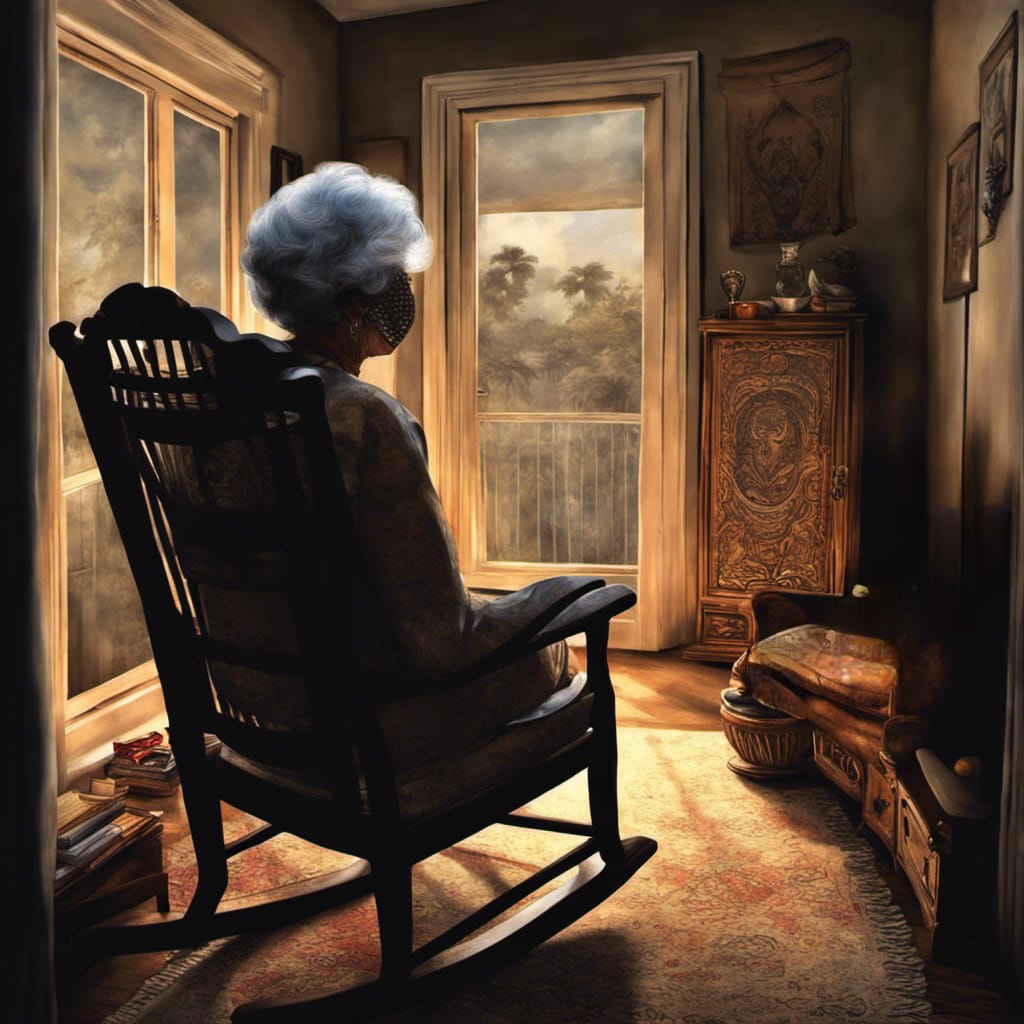
While we’re all here, the matriarch of the family said, leaning over the dinner table of emptied plates with the slim weight of her body, taking in, with her eyes, the entire group of us in one glance of them, I have something to tell you.  We thought that she was going to give us the old news about her dying, but she said instead: I didn’t make this dinner.  In fact, I have never made any dinner for you.  You come to me hungry and with your days’ problems, but all along–she laughed, and spittled a bit when she laughed–I have been an imposter.  There is the rocking chair, watching the news–always full to choking with calamity and, not states of the nation, but pressing questions of the nation, questions that rack you–when you would come in and disturb me from my half-awake revelry, it wasn’t Ma or Grandma you found, but just a tired old lady, tired and dressed in her painting gown with specks and splotches of paint up and down the garment, some of it spreading to the cushion of the chair, tired and confused as to what role she is to play now that her last days–there went the mention of the end, ever-present on her lips at this point, some of us even sighed with relief at the words–are close upon me, I can feel the breath of–what?  We all wanted to fill in the word for her, but, in an about-face that astonished all of us present, she went on: Not what you all are thinking, I will not waste my breath on that word, I know you’re all running thin of patience hearing me utter it, you feel my house has been more than a trifle cold as of late–you’re right, I have been running it cold, and feel most at home in the cold–some of you don’t even bother to visit me any longer, she sighed like a retired performer, and I’m confused to find you here now for this family dinner.  This family dinner, she repeated, and the words rang empty like unlearned lines, or lines learned so much by heart that the heart has at last become jaded with the words.  I feel the breath of–and she stopped again, this time as though toying with us, goading us into guessing what her riddle might be.  But she stopped before any of us there could get a word in edgewise: The breath of indistinction, she said, and said something that finally allowed us to learn more than the pantomime of this lady named Jayne.  Whenever you call out to me again, telling me Ma, I need your advice or Gramma, I need money to get home, ask yourselves whether you ever knew me.  Yes, we were all perplexed, but at the same time we were guilty as charged; we stared at one another and at the stranger at the head of the table, befuddled and off-kilter.  Some of us were so uneasy in the woman’s presence that they made to leave, when she stopped them with her palm pressed lightly on the wood of Grandpa’s, the man we called Grandpa, table, the table he himself had crafted for the family in Germany and had shipped here to the States in the 1950s when he found his family here instead, she stopped them from making any more than a fidget upwards and announced: Now, I know that you are not yet sated, so I have another surprise for you.  She must have seen the frozen fear and the complexion of uncertainty smeared on all our faces.  Dorothy, she pointed to the eldest of the grandchildren from her eldest daughter, the woman she called daughter.  Dorothy, she called out to the young college-aged woman she had grown used to calling grandbaby and grandchild, little girl and grandmotherly things like that, go on to the kitchen and fetch the cake I made this morning.  It’s a new recipe, she eyed us all and got into character, I hope you like it.  We’ll have dessert, she said, and we would, in the silence and the low murmurings sometimes verging on laughter, sometimes verging on tears, of a family who had finally made it home, all together.

A career in nonsense

A career in nonsense is what it was, and it didn’t make you feel any better to be invited to the top. Now, everyone looked to you like you had a story to tell, like your story might just be legitimate. Compared to what? You pull out facts and mangle them like every single one else. It didn’t matter that you were concerned with truth at the start. By midway, before midway, when the lights were sparked and invisible faces ignorantly huddled together were all discerning you, when it was time for you to speak, you spoke nothing but plain utter nonsense, catered to please some unknown guts.

Near the edge

Meaningfulness is the same as meaninglessness, the full extreme of the one is the same as the full extreme of the other. It is impossible to begin from this position so we always begin from somewhere in between. We have a dose of meaningfulness here and a spot of meaninglessness there, a reservoir of meaning on this side and a chasm of meaninglessness on that, perhaps the acceptance of the one and the ignorance of the other. But as we near the edge of either position, a great conversion occurs: we tremble at the divine being fused with shit or wince at the fraternity we share with the uncaring universe.

Ghosts of ourselves everywhere

Ghosts of ourselves everywhere
Like this one standing next to me standing next to you
Some indeterminate thing you can't help but fixate on from time to time.

His name is the same as mine
His gestures too, all save for the way he dances
My flesh bones and marrow have never danced quite the way he dances.

I am asleep while he is awake
We take turns looking out for lighthouses casting glances
Out beyond the four corners while the others chat about our livelihood.

Now and then another spirit emerges
To give rest to my wakefulness or activity to lure me away from sleep
Or simply to nod and shake heads and banter with the first

About the gods, about the sky, about the earth
About being mortal
Some of them had such imaginations
About all those itchy things a body could not bear to broach.

Slow wilting is what it is called

Slow wilting is what it is called
Then he sent me out the door
Not even a pat on the shoulder

Now nothing is like it was before
Because of this slow wilting
Now my arm is the only thing straight

It presents itself like a ghost
Before death occurs and without face
That scribbles over the world

Defaceless grafitti everywhere
Filling my tear ducts with pearls
For not finding any of it legible

Where a mind is to go from being
Sister to a flower all its life
To becoming the pathetic version of a flower
Was beyond this particular human here