A: Would you tell me what disturbed you? B: Of course, if you would let me. A: What do you mean, I asked? B: That’s not what I’m saying… A: What are you saying, then– B: –That it’s hard– A: –are you afraid– B: –to get a– A: –to say more– B: –word in with you. A: –than simply I made you uncomfortable, that I made you “cringe” as you said. Well it’s hard not to be cringe in this life. We are carrying so much baggage around with us now, some of the fruits in the bag are bound to be spoiled after a while, they are bound to rot. It’s bound to stink in there after a while. It’ll repulse people, make them turn away. Make them cringe. I hold myself together so often and for so long, I have these moments when all of the facades crack and out comes a lot of my perversions. It’s hard to pay attention to a lot of the tasks and tools in the world when you are all cracked up like this. But you still want to live, you still want to say your part. But the things you wanted to say to the world when you were healthier and altogether more sound have left you, again because of all the baggage. Still you have to say something so you say anything, and this thing can be the worst thing you imagined, or the last thing you imagined saying. People turn away from you, you lose your friends and the truths you gain are not worth the loss. The cringe becomes a desperate method to test your friends for loyalty and to test new ears for viability. You shake things up simply because you feel so still, or so dull on the inside. You want to live, dammit you want to live, and you want to bring others with you in this longing to live, even if it means bringing them to a place where their own lives and visions become more unmanageable. Which in turn reinforces you caring even less about what other people think. You start leaving people behind and passing people by you never thought you would before. All of your former ties to the world start to unravel one by one, until you are left floating above and around everybody else without any sense of where you are going, but flying right into their faces sometimes just in order to shock them, even if in reality you have merely become a projectile of indifference. Was it something like that? Come on, you can tell me…. B: Yeah…something like that….
Children do not want to become adults. They fool themselves when they imagine that they do. But they do want to grow. Every child wants to grow, even the child left in us.
We loved for no particular reason
You loved the silhouette and shade of a man
I loved the loss & return of a world
Then lost & lost again & again & again
Without the slightest scrambling or desperation
So when the stars clap their last exclamation
Across the human realm, we will laugh
At them or with them as the occasion
Calls out to us with our improvised love
Without demonstration, save the relentless proof
The heart alchemizes as though ex nihilo.
You see why Yeshua said that the poor and meek shall inherit the earth and enter the Kingdom when it is precisely the rich today making a hell of this earth and the proud making a mockery of every kingdom.
It was easy to send you off,
up into the inviting sky
with its stage lighting bright
then dim according to mood,
not because you were not
precious to me--nothing,
nothing out there could
be more precious to me--
but because you are a bird
and I could never snip-snip,
with two or four cruel clips,
your wings and take the hand
you have in the game we play,
the winning hands that allow you
fly fly fly, and you wanted to fly;
I did not dare to ask why,
or trouble you with worries
of finally crashing or not being able
to navigate the starless skies,
but simply--again, you were everything
to me, it’s no lack of care--
let go of you, and your hollow bones,
which I thought were mere convenience
for my holding you all day
and showing off your shocking showy colors
to all and sundry others, these bones
of yours allowed you to flap flap fly
into the sky as I went to my chair
to write, write what replaced whatever cries
I might have made to heartless skies
for you to come back, flap back
instead of flapping goodbye.  At least
you flapped and waved goodbye, I wrote
at least you waved goodbye,
and took a heavy, warming-peaceful sigh.
I wish I weren’t told lies
about the blood flowing
from one area of the body
to the other, from feet
to head and back again
through tubes and channels,
river-running through
until it tapers off into the flesh,
which then won’t be able
to stay put and will have to move,
as when the blood reaches the tips
of the fingers the fingers are moved
to write, the toes, when blood-pumped,
pump and jaunt down the street
with their neatly rowed companions
down there,
and ever, ever do we need
blood for the brain,
for the gray steak, unless it’s lined
with blue and red and purple
is inert, is nothing but a gray,
dusty gray weight
which, with slow decay
will grow lighter and lighter
until it’s gray smoke and ash--
I feel my blood staying
in one place like a weight
around my heart, the space
around my heart is deadweight
carried by children in the field
away from mother
trying to prove their strength
to one another
but it’s not going anywhere,
like a cement block
pushed along by the river
but it’s not going anywhere,
the river shivers against it,
the stone slowly crumbles,
but it doesn’t roll and tumble
down the mucky mat,
I feel like that,
and don’t know whether
I’m supposed to take a blood-
thinner, or just wait it out,
wait for the mother to shout
to her children in the field
Kids it’s time for dinner,
don’t worry about the stone
out there, wait for daddy to come
with the hammer, he’ll bust it
in bits each of you can lift,
wait for the water to erode,
like a dream is eroded by routine,
the stone and the stone’s stony-
heavy, unmoving, burdensome joy.
Now what has fallen down bring back up,
now send the steam into the sky
cloudless and blank, awaiting,
now pretend this never happened,
that the clouds were never ripped open
and let drain and pour erasing the shores,
now dress the sky with clouds again,
now let the skinned ones feel
how it can press against the skin,
how it can be so thick, what rises,
now make the clouds dance with you,
make them sometimes cover you
as a mistress covers her lady,
let now the line shine through
again, let it show us a royal crown
before meeting our faces
with stern countenance,
now embrace us until we can no longer take
your manic motherliness,
now send cool showers upon us
forgive us for addressing you,
you lifeless fire
fire source of life,
now shine as you will,
continue igniting your perpetual cycle
but, lo, now we need more safety from you
than clouds, we fear; now show saintly mercy
on us before we cry dry, salty tears.
The stars don’t
always have
us feel small
sometimes they
give us to
feel giant
able to
take in life
and death of
light blinking
in one great
scanning look
the stars get
us thinking
of our might
how we could
have been blind
to those far
sputtering
lights trapped in
our own small
world the scope
of it some
bright color
blocking sight
stopping those
questions those
strong queries
about place
about our
place in things
of places
beyond us,
beyond our
place the place
where stars the
explosions
happening
everywhere
the lights not
warring with
each other
but each shines
alone best
for faces
of the ones
looking to
them warmed by
them writing
under them
at the best
times crying
under them
giving word
to what they
themselves can
not hear for
when such words
are spoken
the ear harks
not beyond
a ring it
makes around
itself a quite
definite
stubborn tight
ring such words
must be heard
by thick night
those punctures
are enough
for our voice
to travel
through it can
wave from here
this crying
rambling rock
into light
past light to
dark past dark
to swirling
fantastic
disaster
confused streaks
flying here
flying there
everywhere
and ever
unattained
which is what
keeps earthly
ones like us
coming to
it it takes
our voices
and gives us
back not voice
also not
voicelessness
it gives us
something more
than our voices
in our sound
when we drum
under it
when we make
love under
it when we
stake our lives
on knowing
something of
it, even
its blinking
illusions.
Learning to learn. Diotima, during her conversation with Socrates in Plato’s Symposium, says to the wisest man in Athens that our need to study, to revisit what we have already gone over, to think again and afresh what we have thought before, is a salient expression of our fundamental mortality, of our lack of immortality or perpetuity for the outlines or forms of our lives. Should we despair when she says this, seeing with bluntness the absurdity in ever having set about studying anything at all, in ever having attempted to commit something to our frail memory, in ever having embarked on the course towards mastery of any kind? If our regulative ideal is one of a god or a monster of learning or memory, one for whom there is no forgetting or stumbling on the way to incorporating our insight, then it seems we are right indeed to despair, to give up before we even get started on the enterprise of philosophy, or science, or anything at all for that matter that takes more than the fleeting present as its foundation and guidepost, one for whom change or becoming or accomplishment is not accompanied by destruction or the impasse of stupidity or failure.
But what sort of an ideal is this; how are we to assess such an alternative in the light of what we have already, in our learning lives, learned about learning? To put the question otherwise and with more force: granted it is possible to live forever, without having to worry about the deaths of parts of us or our death as a whole, would it still be best for us to do so, would it still be worth gaining, would it be a prize in any way? If genuine learning is possible, and with that too if true creation is possible, without forgetting, without losing parts or all of ourselves in the winding course of learning or creation, it seems we should shake our heads, whimper and sigh whenever we set our hands to paper, or undertake any vision or the erection of any building, if it is not perfect, and by perfect meaning immutable. If it is possible we might not give up, but everything might still seem to fall short of the possibility, as though even our most complex and formidable monuments were but paltry, abortive reflections of what are real creations, what are real lessons. It would be sensible, in other words, to try and to try without cease, all the way up to death, and when death comes, to try one more time and if, when we consider it without the bias of our flesh, as mothers do their children, we find it unsatisfying from the view of eternity, we might justifiably shake our heads and sigh one final time. That is, the ideal, even if it is real, does not take us away once and for all from the possibility of despairing–it only provides another route to despair in our practice, as it happens in earthly life.
But what if the ideal of perfect, or immutable, knowledge and creation is not only unattained, but is also unreal, and moreover an unreal ideal bolstered up by our too-real spitting in the face of life as we find it, not only when it comes to our enterprises of building and knowing but always? As we live and practice in life, we see without fail learning tied to forgetting and creation tied to destruction, the permanence of anything granted and upheld by the impermanence of something else, of anything else, of everything else. And if this reciprocity, this de facto bind, were all we have? What then? Even in order to learn or create our way into resignation, we would have to surely leave behind, utterly abandon a host of other powers, other directions for thought and other possibilities for vision and vision’s enactment. There is no other reason, outside of dissatisfaction with life lived in this middle zone, to posit on the hither side of it some absence of the tension.
We have been fooled by Diotima and so many others when they try to send us scrambling up their ladder, on the top rung of which is Beauty itself, because down here, on the so-called bottom rung, or anywhere in between, we are caught up in the uncertainty of beauty and many other things besides: all the promises we made to ourselves, the sense of anticipation as well as the sense of progress in pursuit, definitions of all kinds, identities of all kinds, sure and perfect, indestructible things of all kinds. Socrates could have answered Diotima with a nonchalant So what, or So be it, and carried on with his affairs, interminable in any case, with or without the reality of the possibility of immortality, instead of once again getting carried up and away by what seemed always to be his heart behind his meandering speeches and queries, or at least in the heart of his disciple, the one who created the mouth and nearly created the ugliness of the man, Socrates, Plato: that this world, the life we live, is the reflection, and the pale one at that, for another world and another life and and the nurturing of this sensibility; at bottom the unwillingness, or the lack of constitution, to endure the leveledness of only one world and only one life, this monism; at bottom a dual soul with dual wishes, who wishes learning-forgetting, this sole phenomenon as well as other phenomena, to signify something else, and better, rather than itself, and solely itself.
Do you feel it now
Beneath your feet
In the air you breathe
In the cement you caress
With your fingertips
The strain of every human
  before and after you?
Has your heart become
Like your hands
Rough and lean
  from all the work?
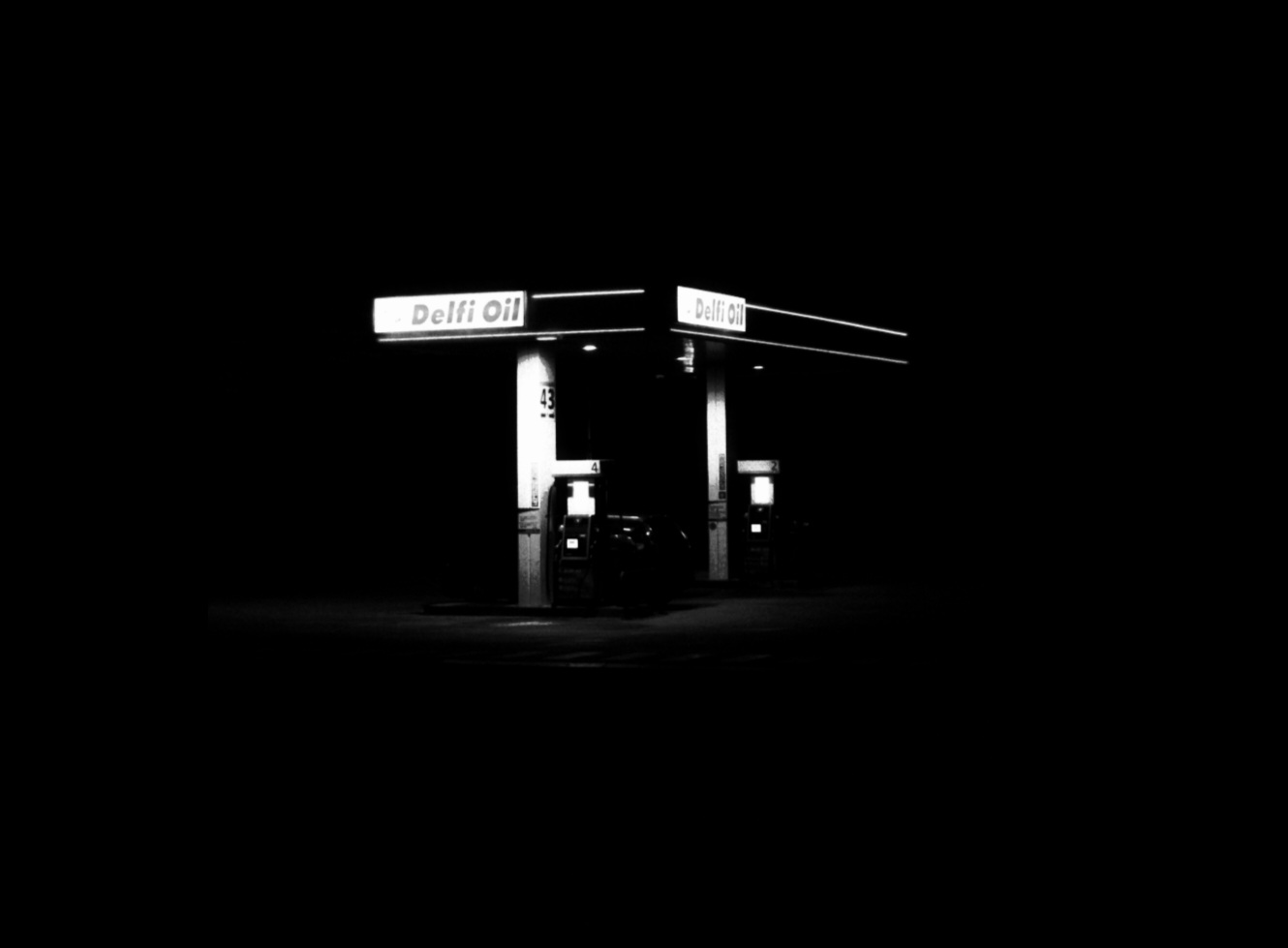
Behind everything reassuring is something shattering, or at least that’s what I learned when, surprised to find me out so late, the frost in the air battering us both with shakes, as though the cold were uneven ground, Lucinda stopped me next to the gas station to tell me the story of how I was born. I had always been confident in my life: at each checkpoint along the long road, whether one that frustrated me or one that gave me a pleasure beyond reckoning–even in spells of indifference and ennui–I had had the security of believing that I was following through with a vocation during my earthly sojourn, a calling meant for me and me alone. But the confidence stopped like sound in the cold, my heart’s beating with its self-esteem was suddenly squelched when, barely recognizing her at first, having to open my eyes to the cold all the wider just to see her, Lucinda, a small crinkled plastic bag in her hand with some alcoholic drink inside, pulled me aside by one of the pumps–the gas station was utterly empty of patrons save the two of us–and began:
Your mother, she told me, she was so excited to have a baby on the way, when she discovered that she was pregnant with you; she gathered all around her, friends and relatives and those she barely knew and who barely cared for her alike, to tell them about what she considered a miracle after her lengthy and patient waiting. Everyone was stunned to hear the news, celebrated with her, as was most proper, invited her here or there to share a meal or to prepare for your coming with little boy’s clothes, or toys, or cradles and other things for your future room. Oh, Lucinda stared at me smiling wide, you should have seen your mother, how uncontainable her joy was when she made the circuit from friend to friend and from relative to relative, or from the home of this person she barely knew to the home of that one, telling everyone He’s going to be a boy, and he will be a strong boy! Wendell, I’ll call him, like his father! she would shout to her sister and mother, neighbor and stranger in the grocery store, and all these supportive people grew to learn and love your name, even the mere sound of your name, long before you were born. Wendell, Wendell, Wendell, we all chanted, as though begging you to leave the womb even sooner than you were due, to get on with it and grace us with a load of hope in this rather dull and hopeless Midwestern town. You had a procession of cheer and good, strong wishes all around you even before you were born, she said, then took out the can of malt liquor from the shopping bag, cracked the can, offered me a sip which I refused, then took a long draught from it yourself; so long was your head tilted back that I was sure the can would be empty, but when you bent over to put it on the cement of the parking lot, I could see that it was barely budged by the wind and still probably nearly halfway full.
But your father, she went on, and here her free arms waved–she had put the plastic bag stealthily in her purse, and had wrapped around the can a brown bag like a sleeve which was just the right size–your FATHER, she let me know how she felt as her tongue lolled out with the word, and she rolled her eyes upwards and every which way, and mimed a gesture as though being behind bars, after having been diagnosed as infertile two or three years before–your brother was from someone else, she let slip out, although I knew perfectly well our half-relatedness; but sometimes it doesn’t matter, and a stranger can turn out more of a brother than the one made up entirely, like you, of the genetic concoction of your mother and father–he didn’t believe your mother, or thought something was surely suspicious, he couldn’t believe your mother and wanted there to be some investigation or other as to how she had become pregnant.
Me, I’ve known your mother a long time, Lucinda whispered to me, although, still, we were the only ones about at five in the morning at the gas station midway between her house and mine, at the intersection of the road that leads north and south for thousands of miles and the road that leads west and east for thousands of miles too, passing the cemetery rather close to mine, but probably passing many cemeteries on the way, the way to the sea, the way to another sea, the way to a sea yet again, or the way to the ice, the unthawing ice, until now and quiet recently, to the north, the deep north. Your father too, you know, she tugged at my denim jacket, the only thing I could find although the cold called for more, you know he’s one of my best friends. But, I don’t know, the big can of beer seemed to be going to her head with quickness, it was like your mother had forgotten, just because SHE had become pregnant at last, to take into account your father’s infirmity. Instead of staying silent at first and checking up on all the details, she spat out the word Details and pointed to me jokingly when she did so, making sure she knew WHAT’S WHAT, your mother went around, Lucinda danced now like a girl in a flower dress, the town BRAGGING to everyone for her good fortune. But she should be more careful, I thought, Lucinda sometimes spoke in my direction, sometimes in the direction of the empty road, sometimes in the direction of the small building, the gas station itself, with the lonely man behind the counter, and her voice grew stiller and stiller all the while, with quick unexpected bouts and bursts of loudness and emphatic cadence. Because I saw the look in his eyes, your father’s: it was more than the eyes suspecting something; they were violent–it caused my sisters and my mother and me to worry about you and your mother until the day you were born; then we could rest, even though that rest still wouldn’t be–all that restful!
Losing her a bit, and thinking that she was jumping ahead or behind or all over and I couldn’t keep track of the events she laid bare for me, I listened to her go on anyways, just as brash, just as harsh, and with just the same periods of hushedness as before: He sent off for his brother in Virginia, because he remembered–he was sharp your father, and always keeping sharp eyes on every angle of everything–that your mother had visited there not long ago when her own mother, his mother-in-law, was told that she had cancer and only had so long to live. He knew too how his brother could think of nothing more fondly than of you. Your uncle came and admitted–
–I stopped her here, and she didn’t seem to mind the least, she simply, and instead of interjecting back or continuing her train of thought and string of words, knelt down beside the can and, from that crouched position, took another long pull from the can so that it was emptied. She then backed up to the nearest pump and the garbage bin beside the pump, and tossed, like a lazy player, half-awake, the light aluminum, made lightest in a mere five minutes, into the dark lining of the dark container. It was predictable, the plot of what she was saying, so I said to her You don’t have to say anything else, Luce. I know, I know–You know! You knew, all this time, she exclaimed, and nearly jigged and strutted like a gambling man after a big win when she heard me. Well, I didn’t know, not until now. Not everything. For the first time during our encounter she appeared sorry, and came to a stop in her trot, her arms came to a stop too and dangled at each side of her white, charcoal-stained coat, stained in black and gray blotches as though she had been riding on a coal car, and just now had jumped off for some refreshments. Like that she looked beyond tired, and I thought She is probably still homeless, I should invite her to stay with me for a while but I didn’t, I only stood there with her, let the cold bite me and let her drunken eyes sting me too, they were so drunken and careless but at the same time so pitiable, like a lost child’s eyes, or a dog or some other abandoned creature who can say nothing more to you than the dream of the first utterance, when you came to her by chance, when you came to her, thinking last of all of seeing her here again, and at this hour.
My life at once fell from me as something designed for any greatness, or as a beautiful something whose road is bright and clear and promising prosperous journeys even along the dangerous stretches where certainty is the last thing anticipated; still, a voice had called out to me before with the You shall and You shall not, the one that warned me where to turn and when, when disaster was a gift and when gifts were disguised traps, but now that voice fell away and was gone from me. Lucinda was sorry, I could see that, no matter how drunk she was now, she wished she had kept her mouth shut. We swayed together awhile beneath the starless sky, as dawn was approaching, the birds were already, whether we were ready for them or not, practicing the tunes they would carry for the brighter hours to come. How stupid, I said it aloud so that Lucinda had to cover her ears, as though I were cursing. How terribly stupid, I then thought to myself, alone and beside the woman at the same time, and then I thought what she had said to me when I was a younger man–and she had been drunk then too; she is always drunk, drunk and truthful, I have always rather liked her however nasty or reckless she became–Behind, I remember every time she had to stall to remember the words, dart her eyes around, around at me, around at the sky and whatever else that surrounded us, to remember, Behind–she would start again and raise herself up more erect, and hold up too her right arm as though making a proclamation–Behind–these were true repetitions, three or four times every time she would share the phrase with me, as though I had to know what is hidden behind the screen of things, that what’s behind is most important of all–Behind every hero–there’s a fool! I thought she would say it now, but she didn’t, she only stared at me and the rising sun in equal proportion, stared at the colors changing above us, a streak of drool down her chin, she was wasted, even from one can of beer, an icy pool of her spittle forming between her and me, on the parking lot, freezing before it evaporated, as it was still cold although the sun was coming, was here.
His final words before dying were I am just doing something and, like so many other times in my life, I don’t know what it is but I’m doing it anyways…










 Love the Dust